
Are Dachshunds Good with Kids? Tips for Puppies and Seniors

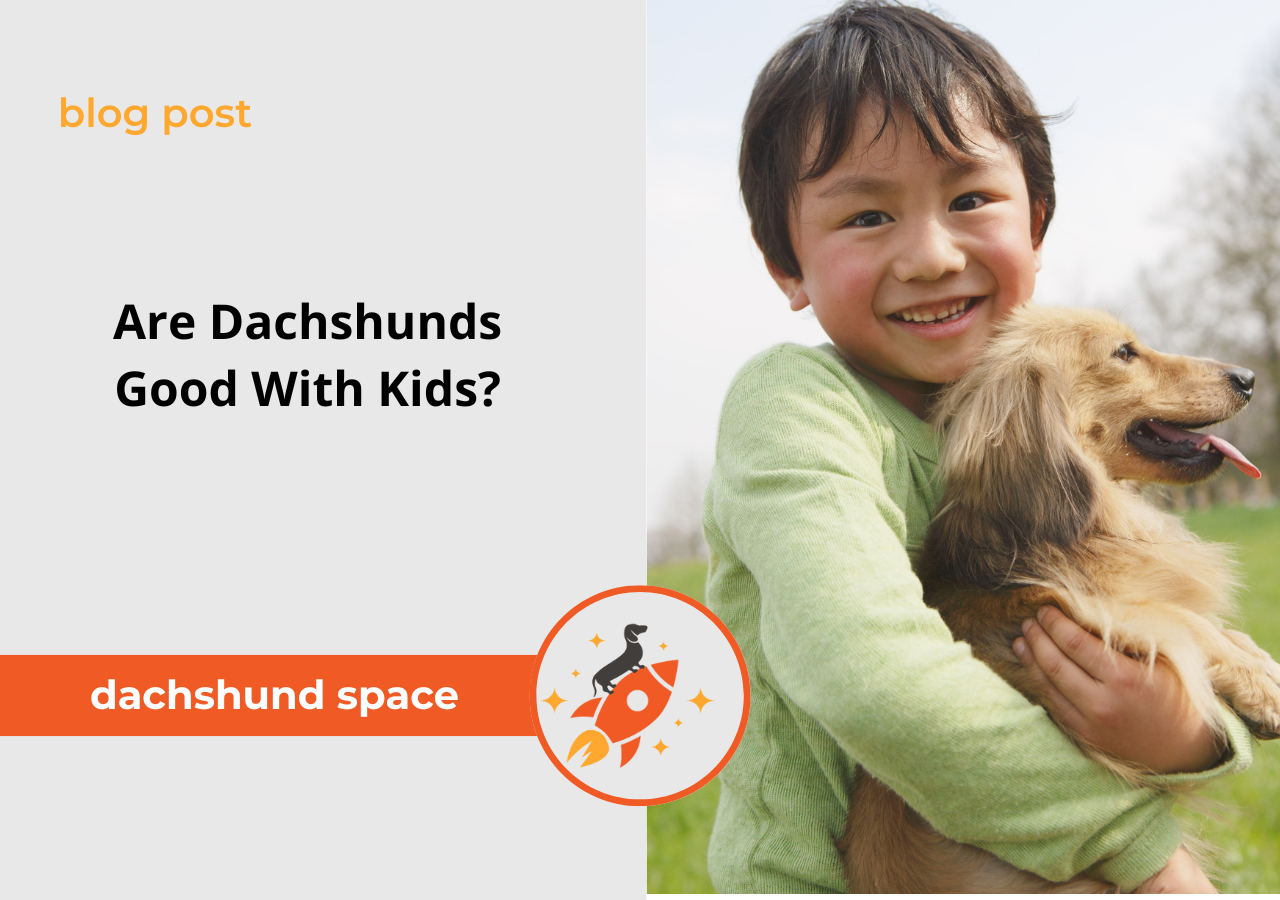
Wondering whether a wiener dog will be a good playmate for your children? Dachshunds often get a reputation for being stubborn or high-energy, but many families find them to be loving, playful companions.
Each dog has its own personality, but with the right socialization and training, a Dachshund often becomes a loyal little family pet. That means that you need to become your dog’s pack leader to expect him/her to behave well. Every dog needs to know who’s the boss in the house.
Our guide below covers what to expect from this pint-sized hound around children, plus tips on introducing pups or senior Dachshunds to kids.
Dachshund Temperament and Family Life
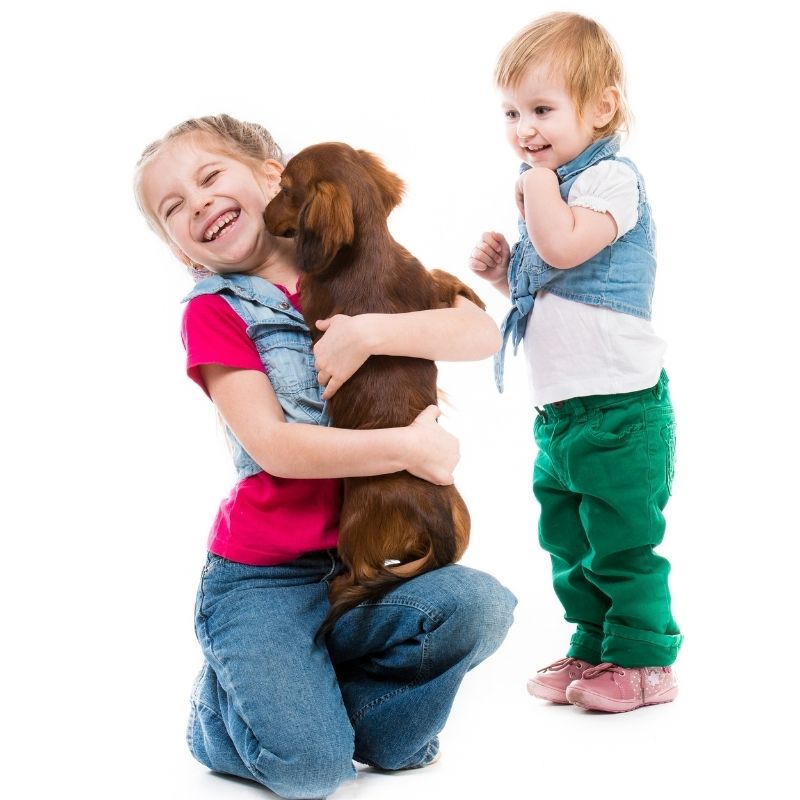
Dachshunds (or “Doxies”) are smart, curious dogs originally bred for hunting small game. This means they have a bit of a prey drive and can be quite bold – little watchdogs, if you will. Dachshunds often see their human household as their “pack” and can become very protective of family members.
In practice this means a Dachshund may bark at strangers or new people in the home to keep everyone safe. On the upside, this protective instinct can make them very loyal and cuddly with those they know and trust. Therefore, kids in their family need to treat them with respect and love. They don’t like being pulled to their tail and treated without respect. You kids should behave gently toward dogs to receive the same treatment.
The affectionate side of Doxies is great for families. Dachshunds generally love to play and will enjoy doing activities with energetic kids. In fact, they are an active breed that needs regular exercise, which can be a fun daily routine for the whole family. When a Dachshund gets enough playtime, it benefits both the dog and the children.
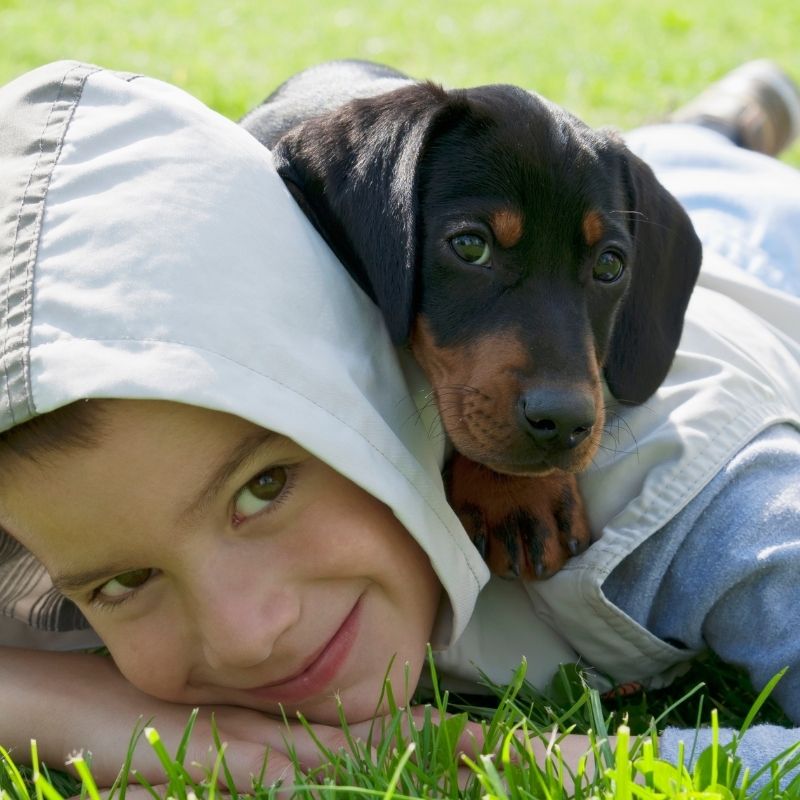
Teach your kids how to respect a dog
By teaching your kid how to play with your Wiener, they’ll create a positive bond. A family walk, tossing a ball, or running around the yard can keep a Dachshund happily engaged. And, to be honest, that’s good for everyone’s health.
Of course, Dachshunds have long backs and short legs, so their spine is more fragile than some bigger breeds. This doesn’t mean they can’t live with kids, but families should be aware that proper handling is crucial.
Kids should learn to support a Dachshund’s chest and rear when lifting. Because of their long bodies, kids need to learn how to properly hold them.
Socializing Your Dachshund to Kids
Like any breed, a Dachshund’s attitude toward kids depends a lot on socialization and experience. Puppies or dogs introduced to children early tend to do best. For instance, if a Dachshund grows up with young children in the home, it learns that kids are normal and friendly.
Prepare your Doxie for a baby
If you already have a Dachshund and are expecting a baby, it helps to prepare the dog before the baby arrives. Start getting your dog accustomed to new sights and sounds. This includes to play recordings of baby noises, let your dog sniff baby lotion or blankets, and rearrange the nursery before the birth so this change seems normal.
One good tip from dog trainers is to “carry and interact with a lifelike baby doll” so the dog gets used to seeing you holding a “baby.” Every time you pick up the doll, drop treats on the floor so the dog learns that seeing you hold the baby means treats. This rewards calm behavior around the baby and prevents jumping. These kinds of low-stress introductions can help avoid anxiety once the real baby arrives.
Dachshunds and Kids: How to Interact Safely
A critical part of a child-and-dog household is making sure the kids know how to behave around dogs. Many accidental bites happen not because of a bad dog, but because a child did something surprising or uncomfortable for the dog. One Dachshund expert lays out some clear guidelines for kids (and parents) to follow:
Stay calm and move slowly
Children should not run around or chase the dog. Sudden, erratic movements can trigger a Dachshund’s hunting instincts. If a child runs or shouts, a Dachshund might chase and nip out of excitement, which could knock a small child over.
Pet gently
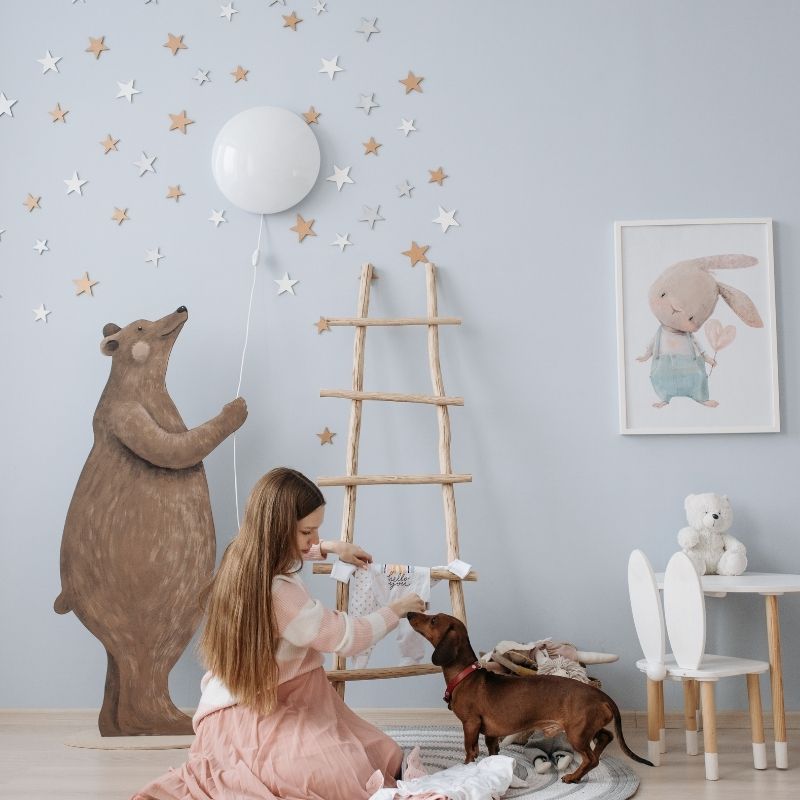
Kids should always stroke the dog softly, preferably on the dog’s back, along the direction of the fur. Rough handling or scratching against the grain of the fur can actually hurt a little Dachshund and make it squirm. In particular, children must never pull on the dog’s ears, tail, or legs. A tug on a Dachshund’s long ears or tail can cause pain, and a Dachshund in pain is likely to bite and snap defensively.
Recognize warning signs
Teach kids to watch the dog’s body language. If a Dachshund stiffens up, growls, shows its teeth, or turns to walk away, it’s signaling “leave me alone.” Continuing to bother the dog after it’s given this warning can push the dog into a “fight” response out of fear. Children should be told to back off and give the dog space if they see these signs.
Get down to dog level
Young kids and Dachshunds are similar height. It’s best if a child sits on the floor or at least kneels when meeting the dog. This makes the encounter less intimidating and keeps the child from towering over the pet. Let the Dachshund sniff the child’s hands first, and only pet the dog if it seems relaxed.
Proper lifting technique
If a child is going to pick up a Dachshund, make sure they know to support both the chest and hindquarters. Support under the dog’s back is essential. If a child isn’t strong enough, it’s safer to have them sit down with the dog on their lap instead of lifting.
If your children are still very young (infants or toddlers), they might not fully understand these rules yet. In that case, it’s crucial that an adult supervises every interaction. Never leave a baby or small child alone with any dog – not even a friendly one. Always keep sight or hearing on the dog when a child is around. Education and supervision together will help ensure a happy friendship.
Introducing a Dachshund to Your Child
Whether the Dachshund is new to the family or the baby is, taking a gradual, positive approach to introductions will set everyone up for success. Here are some steps to follow:
Set expectations
Before bringing the dog near the child (or vice versa), explain to older children what will happen. Let them know to sit quietly and speak softly. For example, ask kids to sit on the floor with the Dachshund at their level and allow the dog to sniff them. Give the dog freedom to choose how close it wants to get.
Use treats and praise
Whenever the Dachshund calmly approaches the child, give the dog a treat or gentle praise. This builds a positive association: the dog learns that the child is a source of good things. For instance, if the dog sniffs the child’s hand or lets the child pet it without stress, immediately reward the dog.
Let the dog come and go
Do not force the dog to interact. If it sniffs around and then walks away, that’s okay. Forcing closeness can frighten a pet and create negative associations. Give your Dachshund a break if it seems overwhelmed – they may need to retreat and rest. In fact, crate training or having a quiet room for the dog can help. A
crate provides a safe “time out” space where the Dachshund can relax if the household gets chaotic. It should represent his calm space that should never be interrupted. Therefore, always keep in mind that no one should touch his precious bed, toys or personal items. Otherwise, you can expect plenty of jealousy and refusal to cooperate.
First meetings with babies
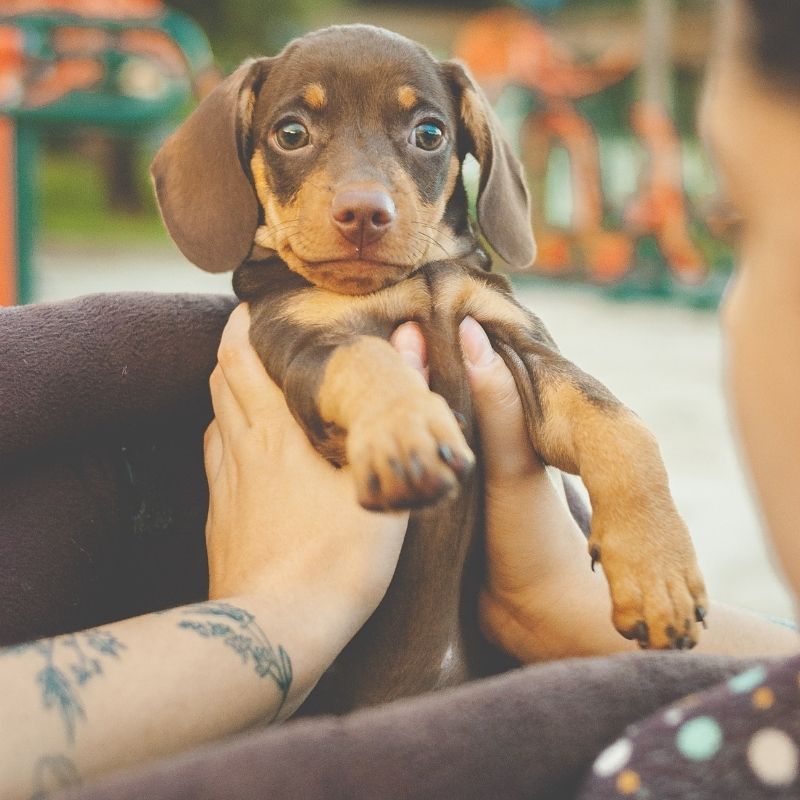
When a baby is introduced, keep it low-key. Have an adult hold the baby and let the Dachshund sniff the baby’s feet or the edge of the stroller while on a leash, rewarding calm behavior. Don’t make big gestures or force proximity. Over time, let the dog give gentle sniffs to the baby’s blanket or foot. Always speak in a calm tone. you need to carefully manage introductions to escape aggressiveness on both sides. Tiny, positive steps are better than a sudden big reveal.
Consistent routines
Once the child and dog are under one roof, try to keep the Dachshund’s routine as stable as possible (same feeding times, walks, and quiet time). When you start giving extra attention to a new baby or toddler, make sure to also schedule dedicated one-on-one time with the Dachshund. Walk the dog daily and play with it so it doesn’t feel neglected. A well-exercised Dachshund will be calmer and less likely to get nippy.
If the Dachshund was originally an only pet, watch for any jealous or anxious behavior. Sometimes dogs may feel unsure when “another child” arrives. In those cases, giving the dog a favorite toy or treat to enjoy while you’re busy with the child can help. Keeping the introduction slow, positive, and supervised is the best recipe for a good outcome.
Best Age to Get a Dog for Your Child
Thinking of giving the gift of a puppy? Timing matters. Many experts advises waiting until a child is beyond the toddler stage before adopting a dog. In fact, research shows most dog bites occur with very young children, so it’s “safest to wait until your child is older than age 4” before getting a puppy. By age four or five, most kids are better at controlling their movements. They start to understand simple rules about being gentle.
If you bring home a dog too early – for example, when you have a newborn or active toddler – there’s a risk the puppy will get nipped accidentally or that you simply won’t have enough time to train the dog properly. Consider your child’s age and maturity first. When that child can follow simple rules (“no hitting, pet softly”), then bringing home a Dachshund can be a wonderful experience for everyone.
Introducing a Baby to a Senior Dachshund
What if your family already has a senior Dachshund and you’re preparing for a baby? Older dogs often adjust just fine, but you should be extra gentle and patient. The key is to respect the dog’s comfort level and maintain its sense of security.
Slow pre-intro familiarization
Before the baby comes home, let your senior Dachshund become familiar with baby-related changes. Let the dog sniff the baby’s room, baby shampoo, lotion, or even a blanket from the hospital. Practice the dummy-doll trick described earlier. Carry and care for a lifelike baby doll while rewarding your dog’s calm behavior. This signals to your Dachshund that “baby activities” are nothing to worry about.
Respect your dog’s pace
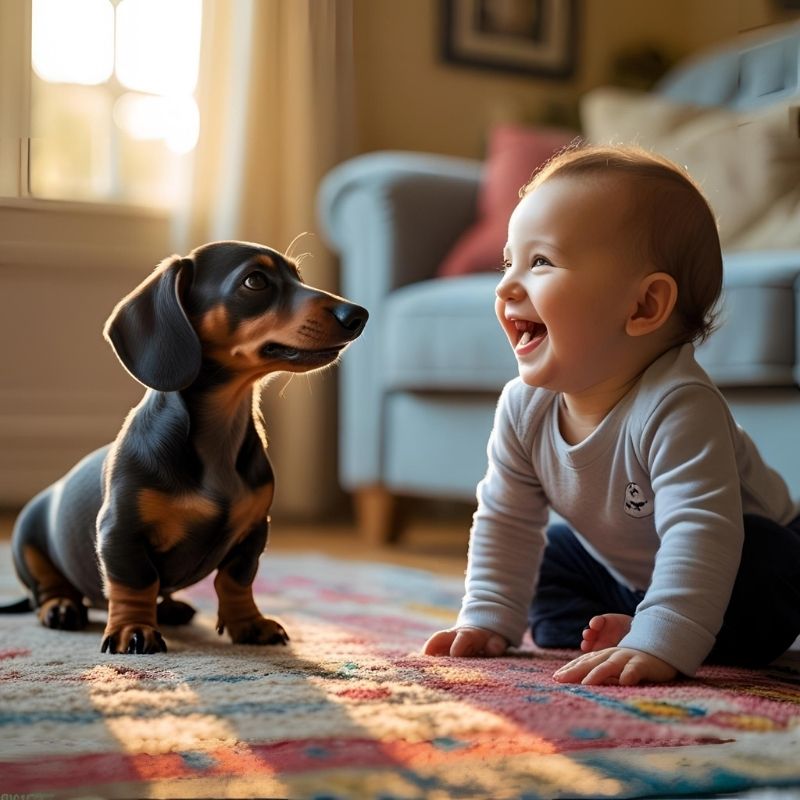
When the baby first arrives, sit with your Dachshund on the floor and let the baby (still in an adult’s arms or crib) come close. Observe how your dog behaves. If it licks or gently sniffs the baby and seems relaxed, praise it. But if your senior Dachshund shows any hesitation or stress, give it space. Create a cozy bed or crate in the nursery or living area where the older dog can retreat if baby noises become overwhelming. A peaceful nap spot with soft blankets and toys can be comforting.
Supervise always
Never leave your baby and senior dog unsupervised, even if they seem to get along. The first few months of adjustment are not a time to be casual. Keep those watchful eyes open.
Maintain your dog’s routine
Keep feeding, walking, and playtime for your Dachshund as normal as possible. Senior dogs thrive on routine, and having established habits will reduce stress. If the baby’s arrival means less hands-on time, try to include your Dachshund in some baby activities – for instance, put the dog’s bed near the baby so it still feels involved in family life.

Extra TLC for your doxie
Remember your senior pet needs love too. Praise and give treats to your Dachshund for good behavior around the baby, and continue affection and play one-on-one. If your older dog seems confused or sulks, giving it gentle massages or special walks can reassure it that it’s still an important family member.
With patience and care, senior Dachshunds often learn to accept a new baby as part of their “pack.” A gradual, reward-based introduction and strict supervision will help make sure both your dog and your new infant are safe and comfortable.
Conclusion
To be honest, Dachshunds can be wonderful companions for children. They’re affectionate, playful, and loyal family dogs. However, success depends on how you prepare and supervise. Early socialization (ideally starting in puppyhood) and teaching your kids dog-friendly behavior are essential. Always be cautious during those first meetings between dog and child: go slowly, keep interactions positive, and watch body language.
If you follow these tips – gentle handling, consistent training, and lots of love – most Dachshunds will become cherished playmates to the kids in their household. And if you want to learn more about this breed, check out our other Dachshund Space blog posts. We have guides on Piebald Dachshunds and Merle Dachshunds (both great with families!), as well as articles on Separation Anxiety in Dachshunds and a growth chart for Dachshunds from puppyhood to senior age.






 Dachshund Jackets & Coats
 Dachshund Hoodies
 Dachshund Sweaters
 Dachshund Shirts
 Dachshund Life Jackets
 Dachshund Costumes
 Dachshund Pajamas

 Dachshund Harnesses
 Dachshund Collars


 Dachshund Backpacks


