
What Does a Tick Look Like on a Dog?


Ticks on dogs are probably one of the biggest nightmares of dog owners during summer months. That’s why this blog post will help you learn what a tick looks like on a dog, how to remove it and what to pay attention to. Also, I will provide you with some useful tips on how to protect your Dachshund from ticks.
Imagine you’re giving your pup a belly rub, and your fingers catch on something small and firm. A scab? A skin tag? Then your stomach drops a little, because you realize it might be a tick. If you’ve ever had that moment, you know exactly how unsettling it feels. You’re probably thinking how to remove it and whether that tick is infected and dangerous to your dog’s health.
Here’s the good news. Once you know what to look for, ticks are pretty easy to spot and deal with. So let’s walk through it together. By the end, you’ll know what a tick looks like on a dog, how to tell a tick bite from other bumps, and exactly what to do next.
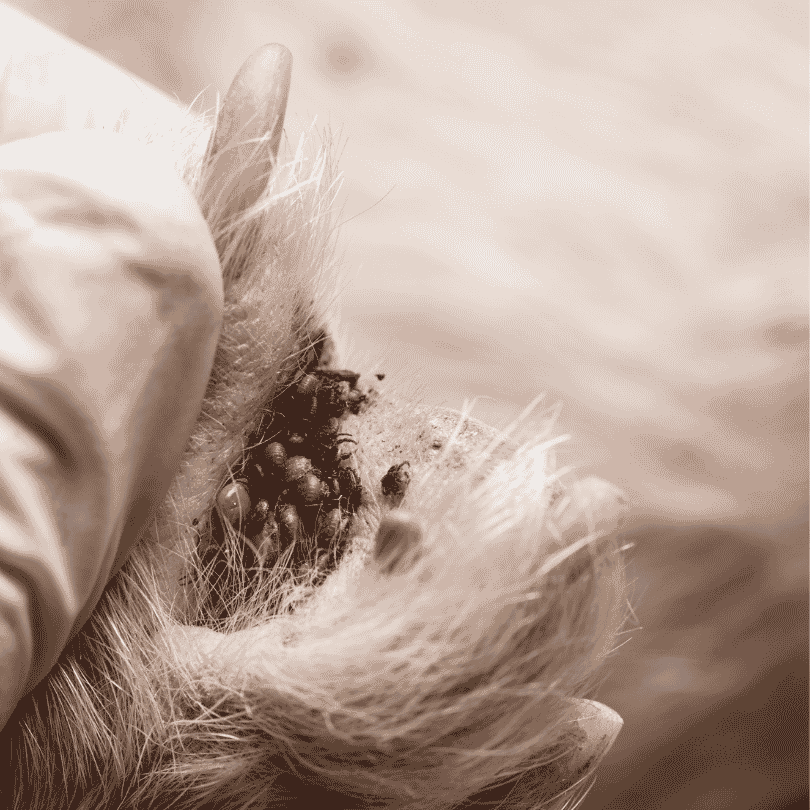
What Do Ticks Look Like on Dogs?
Ticks aren’t insects. They’re tiny arachnids, like spiders, with eight legs once they reach adulthood. That’s actually a handy detail, because it helps you tell them apart from fleas, which have six legs and zip around. A tick just sits there, latched on.
Size:
Size is where it gets tricky. Before a tick has fed, it can be alarmingly small, sometimes no bigger than a sesame seed or a poppy seed. Their color ranges from brown to reddish-brown to a grayish-black, and the exact shade depends on the species. Some tick species can also be white before feeding. Some are flat and oval. Some look almost like a little freckle with legs.
How does a tick change?
After a tick has been feeding on your dog’s blood for a while, it changes completely. It swells up, sometimes to the size of a small pea or even a coffee bean.
Color:
The color often shifts to a grayish, bluish, or pale tan as the body fills. People sometimes describe an engorged tick as looking like a tiny wart or a swollen seed stuck to the skin. That’s the stage most of us notice first, simply because it’s bigger and harder to miss.
So if you’re asking what ticks look like on dogs, the short version is this: a small, firm, oval body with legs near the head, attached to the skin, that gets rounder and lighter as it feeds.
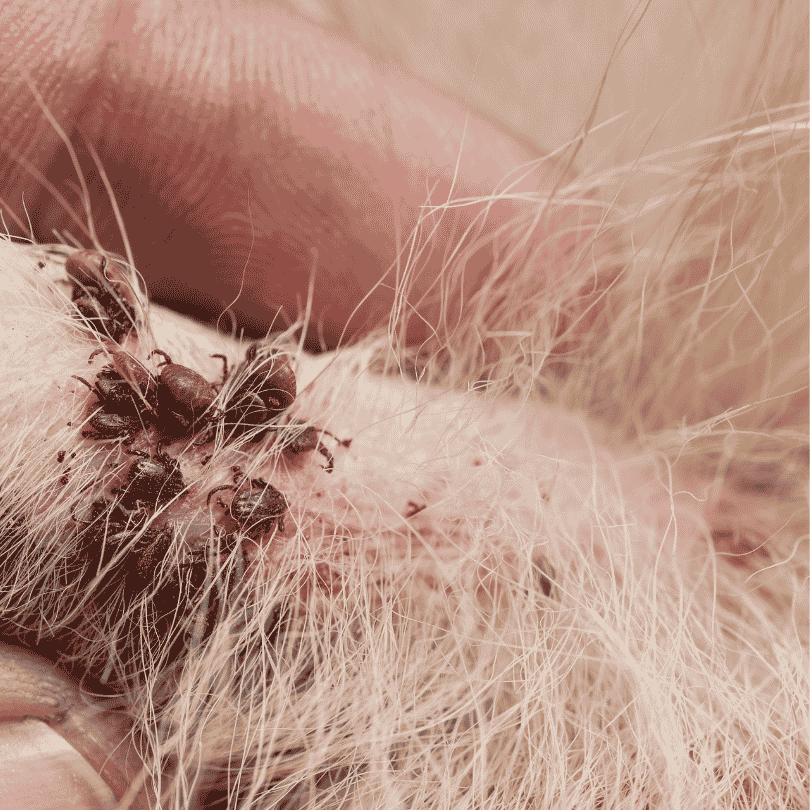
What Fully Embedded Ticks on Dogs Look Like
This is the part that trips up a lot of dog parents. When a tick bites, it buries its mouthparts into the skin to anchor itself and feed. Its body stays on the outside, but it’s gripping firmly, which is why you can’t just brush it away.
Fully embedded ticks on dogs often feel like a small raised bump under your fingers. With the fur in the way, you might not even see the legs at first. You just feel a firm little lump that wasn’t there yesterday. Part the hair and look closely, and you’ll usually spot the rounded body, and sometimes the legs tucked against the skin.
This is exactly why ticks get mistaken for other things. An embedded tick can look a lot like a skin tag, a wart, or a small growth, especially on a dachshund with a longer coat. If you’re ever unsure whether that bump is a tick or just one of the many ordinary lumps dogs can get, it’s worth understanding the difference. We covered the most common causes of bumps and lumps on a dachshund’s skin in a separate guide, and it’s a helpful read for telling harmless bumps apart from something that needs attention.
A quick trick: a skin tag is soft and part of your dog. A tick has a distinct body sitting on top of the skin, often with faint legs, and it usually appears suddenly after time spent outdoors.
What Do Tick Bites on Dogs Look Like?
Sometimes you find the bite before you find the tick, or you find the bite after the tick has already dropped off on its own. So it helps to know what tick bites on dogs actually look like.
Right after a tick detaches, you’ll often see a small red bump or a tiny raised welt where it was attached. There may be a bit of redness and mild swelling around it, and that’s pretty normal. Tick saliva is irritating, so a little local reaction makes sense, and it usually settles down on its own over a few days. If the red spot didn’t disappear in a day, then you should visit your vet immediately.
Sometimes the spot scabs over. Sometimes your dog licks or scratches at it. What you want to keep an eye out for is the bite getting worse instead of better, meaning more swelling, oozing, pus, a bad smell, or a sore that just won’t heal. Those can be signs of an infection, and that’s a call-the-vet situation.
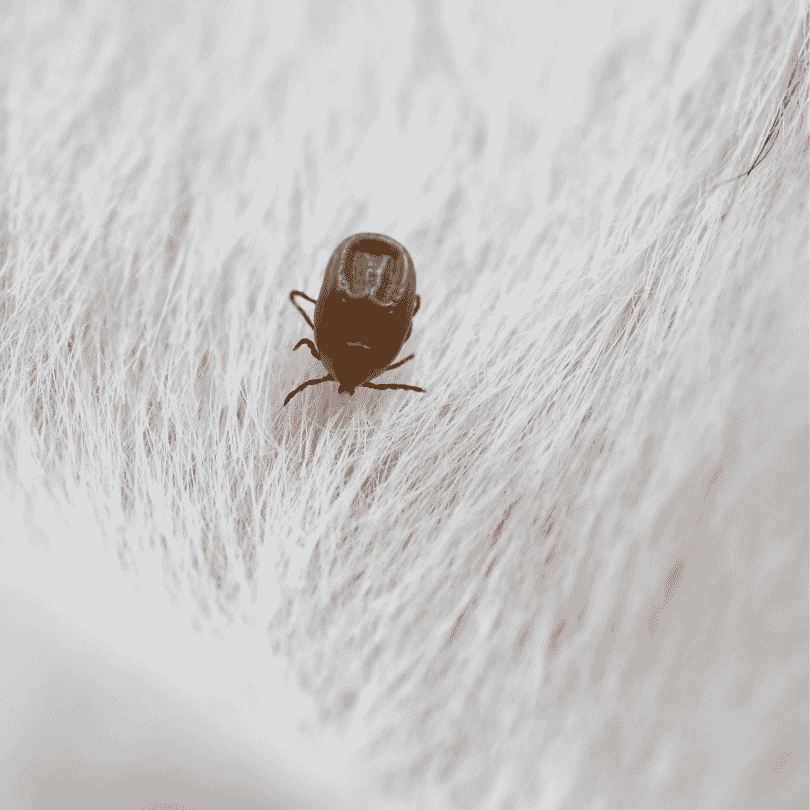
Bullseye Tick Bite on a Dog
Here’s something that surprises a lot of people, and it’s genuinely worth knowing. You’ve probably heard about the classic “bullseye” rash, that red ring with a clear center that’s a famous warning sign of Lyme disease. It’s real, but it shows up in people.
Dogs are different. A bullseye tick bite on a dog is not something you should expect to see, because dogs typically do not develop that target-shaped rash the way humans do. And for heaven’s sake, don’t sit and stare at the bite hoping a bull’s-eye will magically show up. Don’t relax just because you don’t see one. The absence of a bullseye tells you almost nothing about whether your dog is okay. The really important thing when it comes to tick-borne illness and dogs is what happens over the following weeks. When it comes to a tick-borne illness such as Lyme, telltale symptoms – fever, lethargy, lack of appetite, swollen joints, lameness that moves from one leg to another. They usually don’t start showing up for weeks. If you discover a tick on your dog and then he or she starts to seem ill during the following weeks, be sure to tell your veterinarian about the bite. That’s the telling detail.
A real story that could end up fatal
I’ll tell you why this part hits so close to home for me. Last summer, I had a really good friend whose dog had a tick lodged on him. My friend carefully pulled it out, and threw it straight in the trash. No issues, not a rash in sight, so they figured that was the end of it.
Well a few weeks later, the dog started to hobble, looked a little under the weather and a blood test came back revealing Lyme disease, thanks to the tick of course.
Well seeing as the tick wasn’t put into anything at the time, there wasn’t a lot for my friend to go back to and there wasn’t an easier way to have caught it all together. Through that experience I learnt a very quick but 2 good habits that I stick by!
Write the date down when you take out a tick and don’t bin it! Pop it in a sealed bag or a little rubbing alcohol so your vet can identify it later if your dog ends up unwell. It’s such a tiny thing to do, and it can genuinely make the difference.
Where Dachshunds Pick Up Ticks (and Where to Check)
Dachshunds have a special talent for finding ticks, and it’s not their fault. They were bred to dig and tunnel, so they love nosing through tall grass, leaf piles, and underbrush, which happen to be tick paradise. If you’ve ever wondered why your dachshund is so obsessed with burrowing, that same instinct is what puts their low-slung body right in the danger zone.
Ticks love warm, hidden spots, so after any outdoor adventure, run your hands slowly over your dog and check the usual hiding places: inside and around the ears, under the collar, the armpits, the groin, around the tail, and between the toes. Those furry little feet trap all sorts of things, which is one more reason regular dachshund paw care is a good habit. A slow, hands-on check after walks really is your best early-warning system.
What Kills Ticks on Dogs Instantly?
I’ll be honest with you, because this matters. If you’re searching for what kills ticks on dogs instantly, you’ve probably seen some scary “quick fix” advice, and a lot of it is genuinely harmful. Please don’t burn a tick off with a match, smother it in petroleum jelly or nail polish, or dab it with essential oils or vinegar. None of those reliably work, and worse, they can stress or irritate the tick enough that it spits its stomach contents back into your dog, which actually raises the risk of disease.
The truth is there’s no magic potion that vaporizes a tick on the spot. The safe, vet-approved way to deal with an attached tick is simple and fast:
- Grab a pair of fine-tipped tweezers or a proper tick-removal tool.
- Grip the tick as close to the skin as you can, right at the head, not the swollen body.
- Pull straight up, slow and steady, without twisting or yanking.
- Drop the tick in a little rubbing alcohol to kill it, then clean the bite and wash your hands.
If the head or mouthparts break off and stay in the skin, don’t go digging. Leave it, let the skin heal, and call your vet if it gets irritated. And if the tick is tucked somewhere awkward, like right by an eye, let your vet handle it.
How to Eliminate & Prevent Ticks on Dogs for Good
Pulling off one tick is a fix. Stopping the next ten is the real win, so let’s talk about how to eliminate ticks on dogs over the long run.
The most effective tools are the modern flea and tick preventives your vet recommends, whether that’s an oral chew, a spot-on treatment, or a quality collar. Most of these don’t repel ticks so much as kill them quickly after they bite, often within hours, which is exactly why staying on a year-round preventive is such a game changer. As one of the most popular anti-tick collars for dogs, I would like to recommend Bravecto and Simparica for dogs.
If you live in a house with a yard, then keeping your grass trimmed is one of the best things you can do. Clear away leaf litter and brush where ticks lurk, and make tick checks part of your routine after every outing.
If you’re searching for the natural tick repellants, then you can apply a few drops of eucalyptus and lavender oils onto your Dachshund’s coat. Besides your dog will smell great, it will also give him/her 24h protection. Our Dachshund Space shop offers you a shampoo for dachshunds that contains lavender oil. You can check it here: https://dachshundspace.com/products/dachshund-shampoo-and-conditioner

If skin troubles are already on your radar, our tips for preventing common dachshund skin problems pair nicely with a solid tick-prevention habit.
When to Call Your Vet
Reach out to your vet if you can’t remove the whole tick, if the bite looks infected, or if your dog seems unwell in the days and weeks afterward with fever, lethargy, limping, or a poor appetite. When in doubt, a quick call is always worth it.
Finding a tick is never fun, but you’ve got this. A little knowledge, a steady hand, and a good prevention plan are honestly all it takes to keep your best friend safe, comfortable, and free to keep on burrowing.






 Dachshund Jackets & Coats
 Dachshund Hoodies
 Dachshund Sweaters
 Dachshund Shirts
 Dachshund Life Jackets
 Dachshund Costumes
 Dachshund Pajamas

 Dachshund Harnesses
 Dachshund Collars


 Dachshund Backpacks


