
Hiking With Dachshunds: A Guide To Safe Adventures


Dachshunds are adventure dogs at heart—bold noses, active minds, and that attitude that says, “I’ll do it myself.” However, dachshund hiking doesn’t go smoothly like with other dog breeds. The back, the legs, and the low-to-the-ground nature of a wiener dog require a different strategy for a fun and safe experience.
This blog post will teach you how to get your dachshund ready for a fun-filled adventure, what to bring, and how the trails differ between summer and winter seasons. It will also cover some small dog-friendly trails in the USA.
Is hiking good for Dachshunds?
For many healthy adult dachshunds, hiking can be an amazing form of enrichment—sniffing, problem-solving, and steady movement that builds confidence and endurance. But it has to be the right kind of hiking:
- Think “steady walking” over “scrambling.”
- Avoid big jumps (up/down rocks, logs, steep steps).
- Choose short-to-moderate distances with predictable footing.
If your dachshund has a history of back pain, suspected IVDD, is overweight, or is a puppy/senior, talk to your vet before you start increasing mileage.
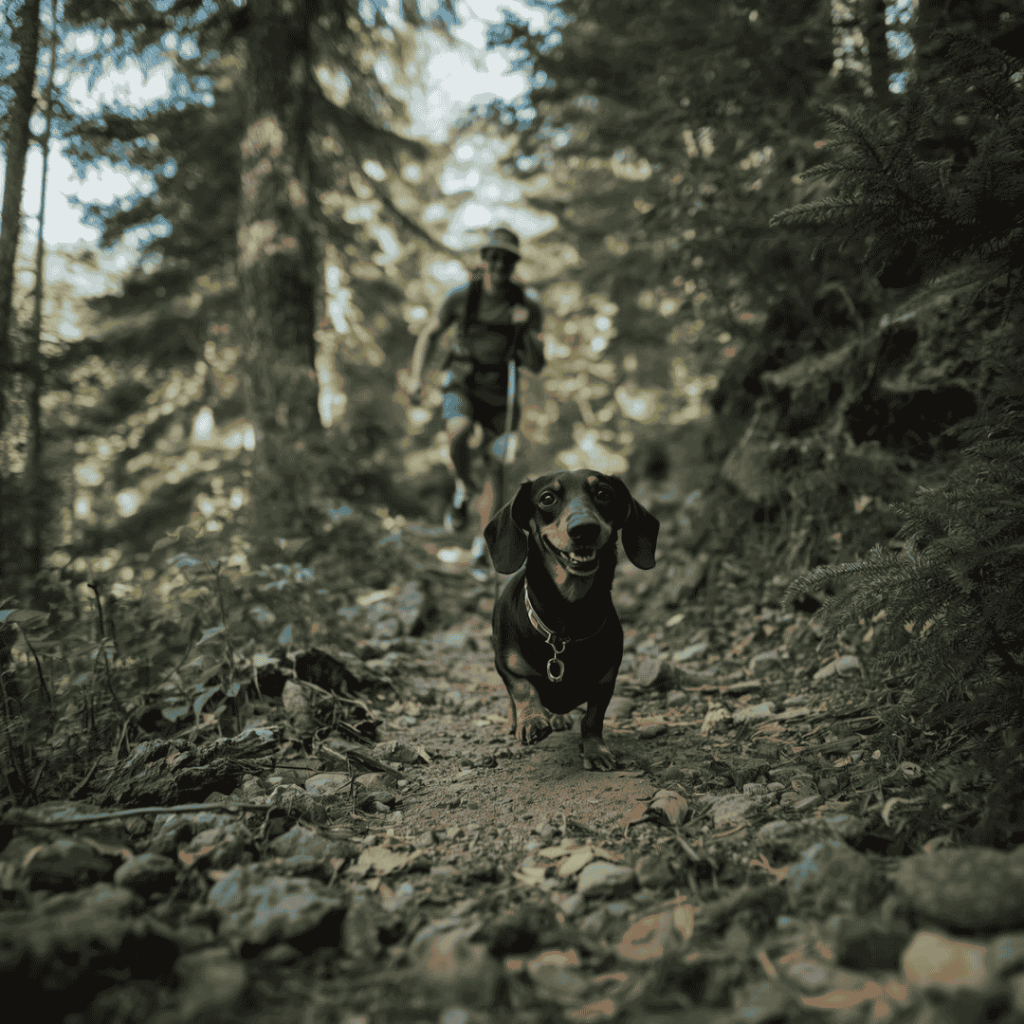
Step 1: How to prepare your dachshund for hiking (2–4 weeks plan)
If your dog currently does neighborhood walks, you’re already halfway there. The goal is to build endurance + trail skills without overloading joints or the spine.
Week-by-week conditioning
Week 1:
- 20–30 minutes of walking, 4–5 days/week
- Add 5 minutes of “sniff walks” (let your dachshund choose the pace)
Week 2:
- 30–40 minutes, 4–5 days/week
- Add gentle inclines (grass hills, not stairs)
Week 3:
- 45–60 minutes, 3–4 days/week
- Practice “trail manners”: heel/loose leash, “leave it,” “wait,” “come”
Week 4:
- Do one “mini hike” (60–90 minutes) on an easy trail surface
- Keep it fun—end before your dog is wiped out
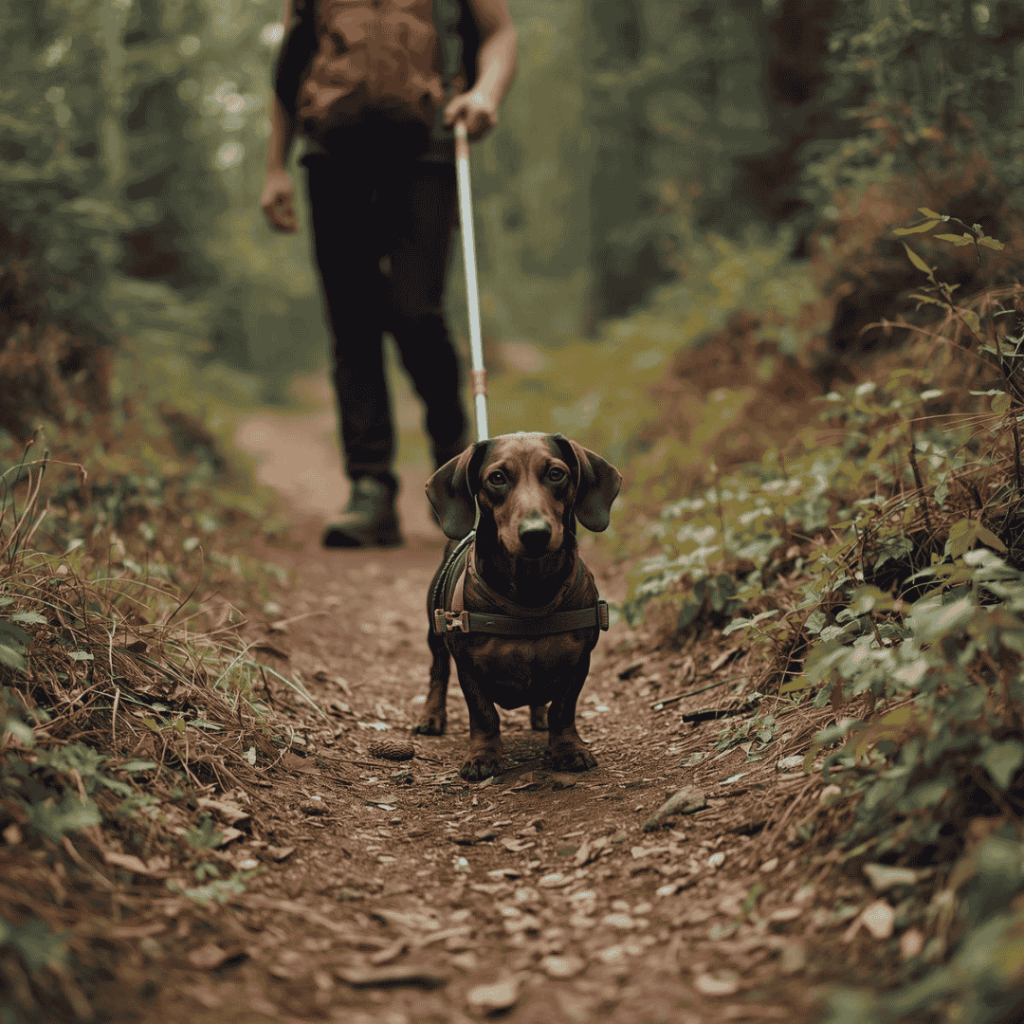
Trail skills that matter most
- Loose leash walking (less sudden jerks = kinder on neck/back)
- “Wait” at edges (roots, rocks, boardwalks)
- Comfort being carried (important if paws get sore or weather shifts)
Shenandoah National Park’s pet guidance puts it bluntly: plan for the “what if”—does your pet have the endurance, and what will you do if your pet becomes disabled on the trail?
Step 2: The best hiking gear for Dachshunds (what you actually need)
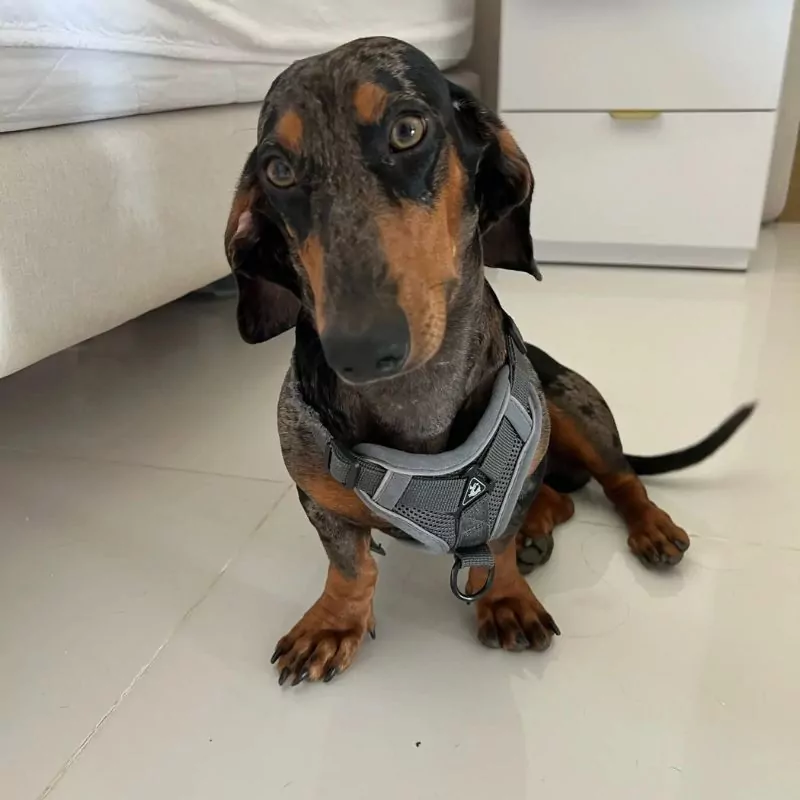
1) A hiking-safe harness (non-negotiable)
For dachshunds, a harness is usually safer than a collar for active walks because it spreads pressure across the chest/shoulders rather than the neck. Many owners choose a harness specifically to reduce neck strain and help protect the back.
DachshundSpace picks to recommend:
2) Leash + ID (and a backup)
- 4–6 ft leash (many parks require 6 feet or shorter)
- Collar with ID tags even if you hike on a harness
- Consider a GPS tag for frequent hikers
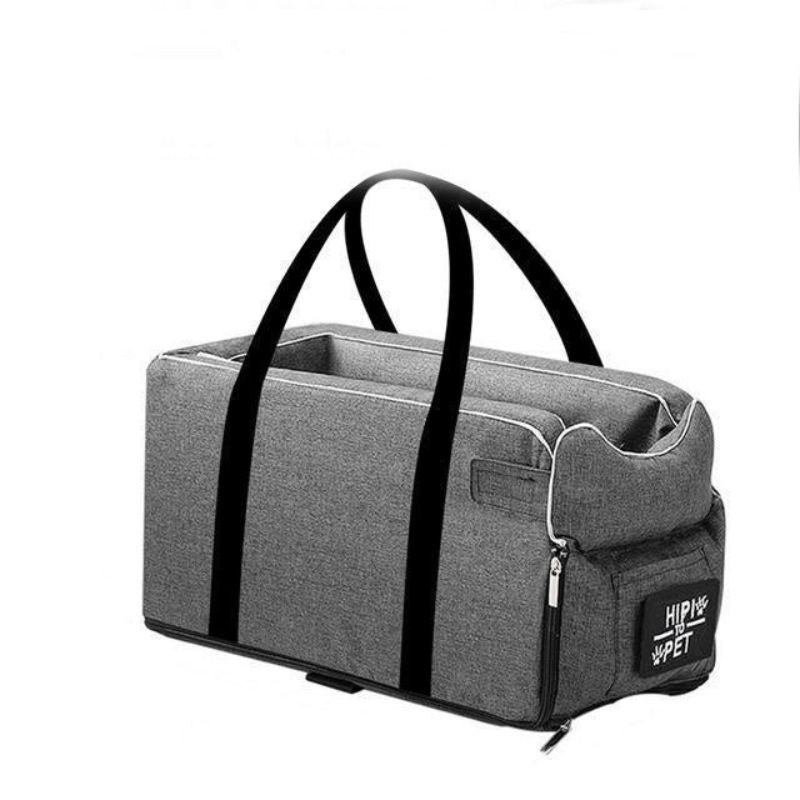
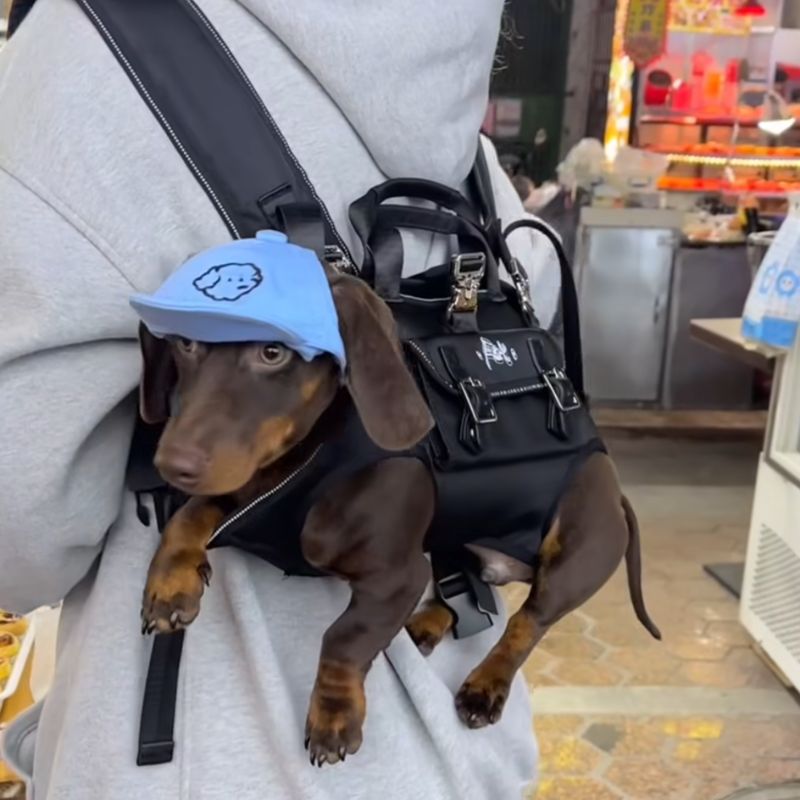
3) A carrier (yes, even if your dachshund “walks fine”)
Small dogs can hit a wall fast: hot ground, sharp gravel, snow crust, surprise long mileage, or a tired back. A carrier keeps hiking safe without pushing your doxie past the limit. If you still don’t have a good carrier for your Dachshund, we recommend you to check our collection of Dachshund carriers.
A travel carrier that doubles as a secure seat/booster can also make trail days smoother (car → trailhead → post-hike rest). Bellow you can find my top recommendations of carriers that you can use in the car and then for hiking:
4) Water system
Bring your own water and a portable bowl. Don’t rely on streams or lakes—AKC guidance notes natural water sources may not be safe. Water in nature is not always safe for our pets. In addition to being chemically defective, they can also be bacteriologically defective. If your dachshund drinks dirty water from a pond, lake or swamp, you must be prepared for possible stomach complications. Besides diarrhea, your wiener dog may also start to vomit or refuse food. A stagnant/slow-moving water can raise risks like leptospirosis exposure.
In order to make sure that your dog always has clean and fresh drinking water, I advise you to take a look at our drinking water: Dachshund Summer Water Bowl.

5) Paw + weather protection
- Summer: paw balm (hot, abrasive surfaces), cooling towel, shade breaks
- Winter: dog jacket, paw balm/booties, towel for drying paws
Cold-weather resources commonly advise washing/drying paws to remove ice, salt, and chemicals after walks.
The ultimate Dachshund hiking checklist (pack this every time)
Trail essentials
- Harness + leash + ID (and a backup clip/leash)
- Water + collapsible bowl
- High-value treats (recall + motivation)
- Poop bags (pack it out)
- Small first aid kit (gauze, antiseptic wipes, tick remover, wrap)
- Cooling towel (summer) / jacket (winter)
- Carrier (back-up plan for tired legs)
Nice-to-haves
- Lightweight long line (if rules allow—still keep control)
- Reflective gear or a light. This is especially important to use on short winter days. That’s how your dog will stay visible to others.
- Paw balm or booties. Depending on the terrain, you can choose waterproof dog boots, or just dog socks with anti-skid bottom.
Summer hiking with Dachshunds: heat rules you can’t ignore
Dachshunds are low to the ground, which can expose them more to heat radiating off dirt, rocks, and pavement. Your biggest risks are dehydration and heat illness. Their bodies are small, which means that they can’t control body temperature like big dogs.
Summer trail strategy
- Hike early morning or near sunset
- Choose shaded trails and keep breaks frequent
- Offer small sips of water often
- Avoid exposed rock/sand midday
Know the warning signs
Heavy panting, drooling, weakness, vomiting/diarrhea, confusion, collapse—treat these as urgent signs. My advice is to avoid going on hikes during the hottest part of the day. If you can, choose early morning or late summer evening hours. And, what’s more important, don’t forget to put on your Doxie a dog cooling vest. It should be worn wet, and as your dog walks, he/she will get a pleasant cooling effect.

To make sure your wiener feels safe in the summer, I recommend you to read my tips on How To Prevent Heatstroke in Dachshunds.
If your dachshund overheats
Move to shade, cool gradually (not ice-cold shock cooling), offer water, and contact a vet. Sprinkle your dog with water and offer him/her water to drink.
Winter hiking with Dachshunds: cold, salt, and “hidden” paw problems
Small dogs can lose body heat faster, and winter trails add new hazards: ice crust, sharp salt, frozen mud, and short daylight.
Winter trail strategy
- Keep hikes shorter, especially in wind
- Use a warm jacket for short-haired doxies
- Dry your dog thoroughly after
- Watch for shivering, lifting paws, slowing down—these are “I’m done” signals
Veterinary guidance warns that pets can suffer hypothermia and frostbite in cold weather conditions—don’t assume fur “solves” it.
Paw care matters more in winter
City/park paths can be treated with de-icing salts that irritate paws. To keep your wiener dog’s paws safe from hazards and street salt, my recommendation is to check the following Waterproof Dachshund Boots. If your dog is not a fan of wearing boots, then make sure you wash his/her paws with water after every stroll.

Here you can read useful tips on How to take care of a dachshund’s paws.
Trail etiquette (and why it protects your dachshund)
- Keep your dog leashed where required (many parks specify 6 feet or shorter)
- Pick up waste and pack it out
- Don’t let your doxie chase wildlife
- Stay on trail (avoids burrs, thorns, ticks, and surprises)
Great Smoky Mountains NP uses a simple “BARK” style message (bag waste, always leash, respect wildlife, know where you can go).
Best hiking trails for small dogs in the USA (practical picks)
Instead of “hardcore” summit hikes, most dachshunds do best on trails that are:
- flat to gently rolling
- predictable footing (crushed gravel, packed dirt, carriage roads)
- easy turn-around points
- shade + rest spots
Here are dog-friendly options with reliable, small-dog-friendly segments:
1) Cuyahoga Valley National Park (Ohio)
Leashed pets are welcome on many trails, and the park even suggests short, flatter options like portions of the Towpath Trail and Oak Hill Trail (1.5-mile loop, mostly flat).
2) Acadia National Park (Maine)
Pets are permitted on many trails and carriage roads, but Acadia specifically advises avoiding ladder/rung routes and lists several trails closed to pets (like Precipice and Beehive).
A great small-dog-style outing here is sticking to carriage road loops, such as the Eagle Lake Loop (5.9 miles—do as much as your dog comfortably enjoys).
3) Shenandoah National Park (Virginia)
Dogs (on a ≤6-foot leash) are allowed on most trails, with a short list of exceptions.
For mini dachshunds, this park shines because you can choose gentle segments and turn back anytime—just confirm your exact trail isn’t on the prohibited list.
4) Great Smoky Mountains National Park (Tennessee/North Carolina)
This park is stricter: only two trails allow leashed pets—Gatlinburg Trail and Oconaluftee River Trail.
If you’re visiting with a dachshund, plan around those two.
5) Rail-trails (nationwide “easy mode” for little legs)
Converted railbeds tend to have gentle grades, making them ideal for small dogs and senior pups. Rails-to-Trails Conservancy specifically calls out the ease of rail-trails for “a gentle stroll,” and lists options like Napa Valley Vine Trail (CA) and Burke-Gilman Trail (WA).
Post-hike care: keep your dachshund feeling great tomorrow, too
When you get back to the car (and again at home), do a quick 2-minute check:
- Paws: cracks, redness, tiny cuts, salt residue
- Coat/skin: burrs, ticks (especially behind ears, armpits, groin)
- Body: stiffness, limping, “tight” back, reluctance to jump up
- Hydration: offer water, then a small snack if your dog wants it
Also: never leave your dog unattended in a car—parks explicitly warn summer sunshine can be dangerous in vehicles.
FAQ: Dachshund hiking questions owners ask
How far can a dachshund hike?
Many healthy adult dachshunds can build up to a few miles comfortably—if conditioned gradually. Your best metric is how your dog recovers the next day. If they’re stiff, reluctant to move, or unusually tired, scale back.
Do dachshunds need booties for hiking?
Not always. But booties (or paw balm) help on:
- hot, sharp gravel
- icy crust
- salted winter paths
If your dog keeps stopping to lick paws, that’s your sign. Besides regular use of dog paw balm,
Is a collar or harness better for dachshund hiking?
For hiking and longer walks, many owners prefer a harness to reduce neck pressure and improve control—especially for a breed with a long spine. Besides, harnesses give you better control and safety for dogs. Some dogs tend to wiggle from collars so keeping them safe on harnesses will save you from unplanned situations. Doxies are driven by a great hunting instinct as they are known for finding moles. It is for this reason that you should keep them on a leash using a suitable harness.
How much can a dachshund hike?
Most healthy adult dachshunds can hike 2 to 5 miles on easy trails once they’re conditioned for it. However, it all depends on factors like age, fitness level, weight, temperature, and whether or not they have back pain/IVDD issues.
Start with 1 to 2 miles on flat, packed dirt trails, then extend it by 10 to 20 percent each week, provided your dachshund is doing well the next day, with no signs of limping, stiffness, or reluctance to move. For puppies, older dogs, overweight dogs, or for hot or icy weather, it’s a good idea to shorten the hike.
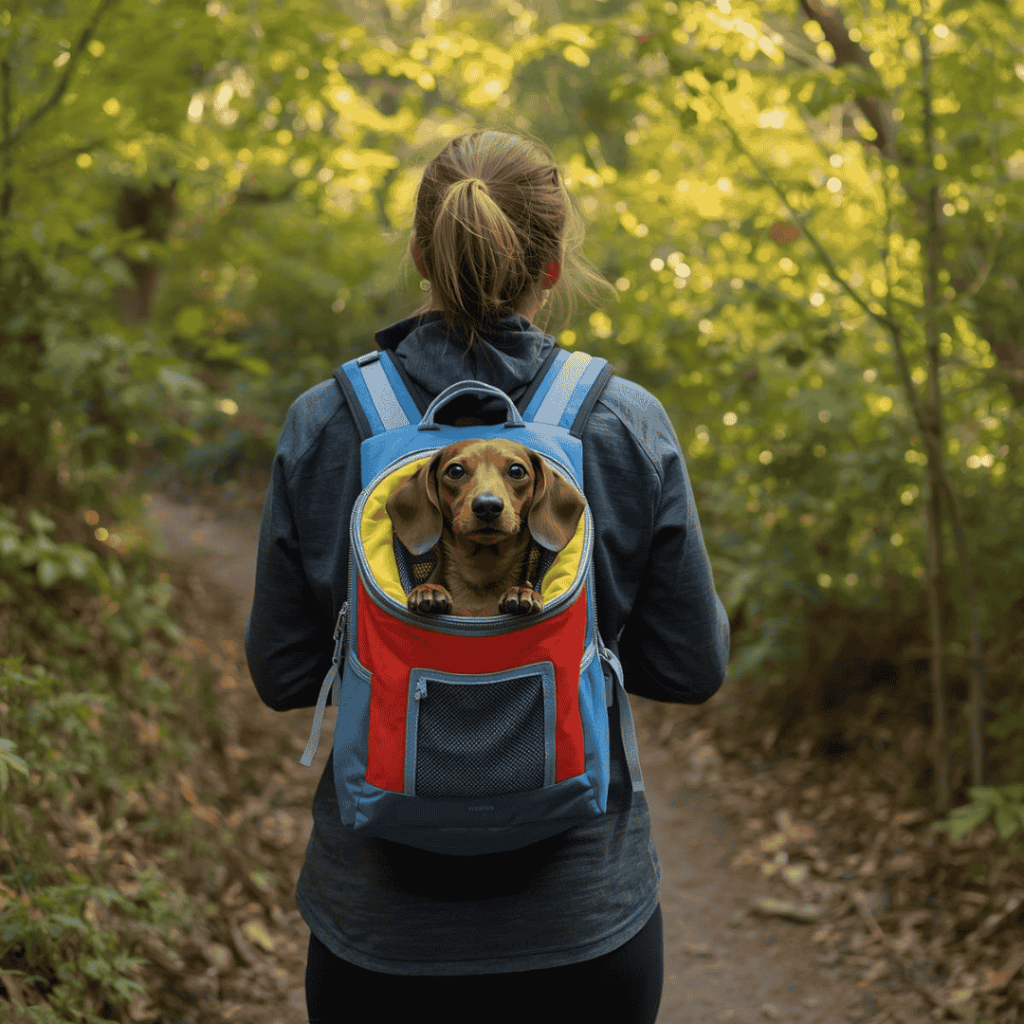
Be sure to stop every 10 to 15 minutes to let them drink water, avoid steep climbs, leaping off rocks, or long staircases. It’s also a great idea to have a backpack or a carrier for your dachshund, so you can carry them if paws get sore or fatigue strikes. Be sure to stop the hike if you notice them slowing down, shivering, heavy panting, or back issues.
Which dog breed is best for hiking?
There is not a single “best” hiking dog. There is a variety of great hiking dogs depending on the hiking locale, hiking style, and level of time or training commitment. Here is a list of the top dogs for hiking, organized by conditions:
Best All-Around Hiking Dogs
These dogs can handle a variety of hiking conditions. Note that this is not an exhaustive list, but these dogs have a reputation for being great hiking companions.
- Labrador Retriever: reliable, adaptable, with strong recall with training.
- Australian Shepherd/Border Collie: high energy, highly responsive to training.
- German Shorthaired Pointer/Vizsla: endurance machines, need lots of exercise.
- Belgian Malinois: this is an athlete, great for serious training.
Best Hiking Dogs for Cold or Snow Conditions
These dogs can handle cold weather, but this is not an exhaustive list.
Siberian Husky: great for cold weather, but can be independent.
Small but Mighty Hiking Dogs
These dogs have a small but mighty reputation for hiking.
Jack Russell Terrier: lots of energy, small package, need training.
An athletic, medium-sized, non-brachycephalic, healthy-jointed breed is a safe bet. Keep in mind that the fitness level of a single individual is more important than the breed.






 Dachshund Jackets & Coats
 Dachshund Hoodies
 Dachshund Sweaters
 Dachshund Shirts
 Dachshund Life Jackets
 Dachshund Costumes
 Dachshund Pajamas

 Dachshund Harnesses
 Dachshund Collars


 Dachshund Backpacks


