How To Help a Fat Dachshund Lose Weight?


If you’ve ever Googled a fat wiener dog and instantly felt guilty… you’re not alone. Dachshunds are basically engineered to steal hearts and snacks. They’re clever, persistent, food-motivated, and built with that iconic long silhouette that can hide extra pounds until the “big belly” becomes impossible to ignore.
In this guide, I’m going to walk you through a practical, safe, dachshund weight loss plan I’d use for my own dog: how to spot a fat dachshund, how to set a realistic goal, what exercise is safe depending on age and current size, and what to feed (including what I consider the best dog food for overweight dachshunds. I’ll also explain how to keep an overweight dachshund dog fit without stressing that long back.
Quick note (because I care about doing this the right way): I’m not your veterinarian. If your dog is an obese dachshund (or an obese wiener dog) or has pain, weakness, breathing issues, or suspected IVDD/back problems, partner with your vet before making big changes.
Why Dachshunds Gain Weight So Easily?
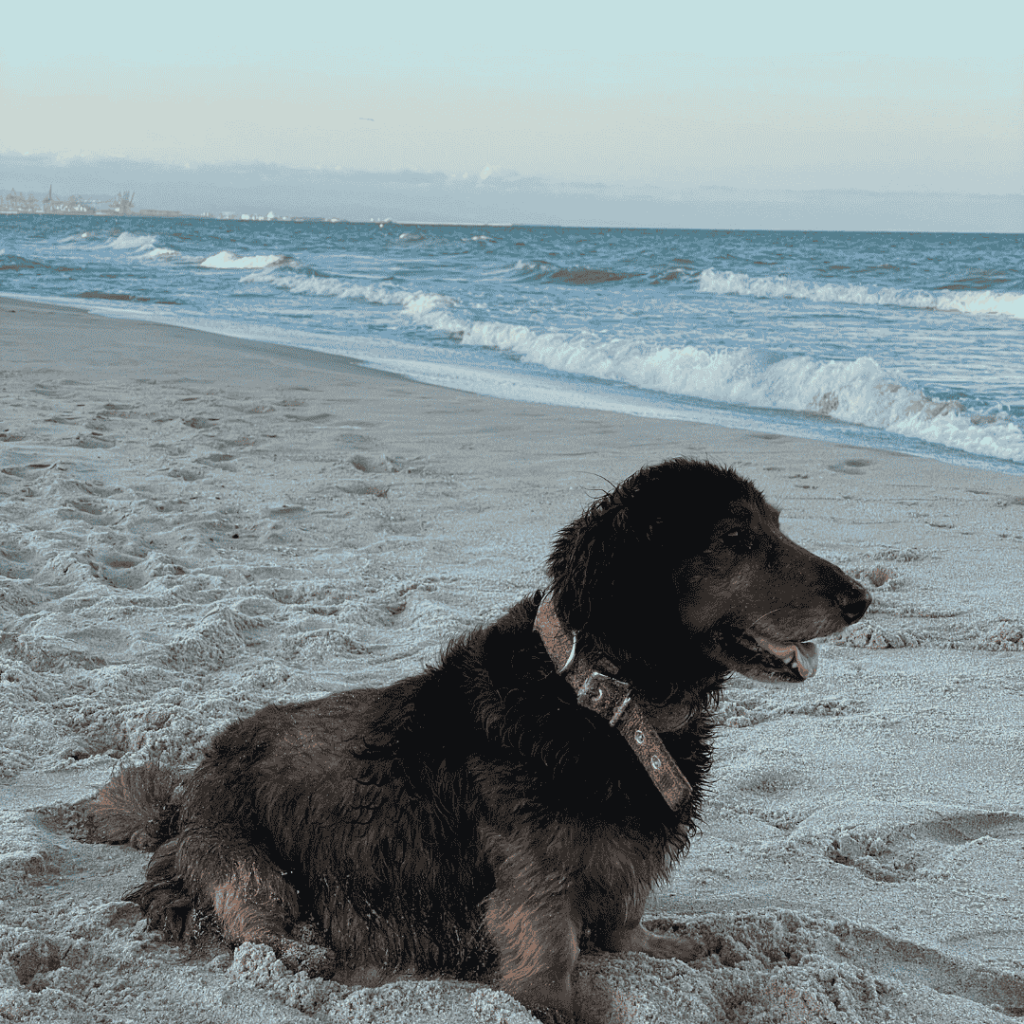
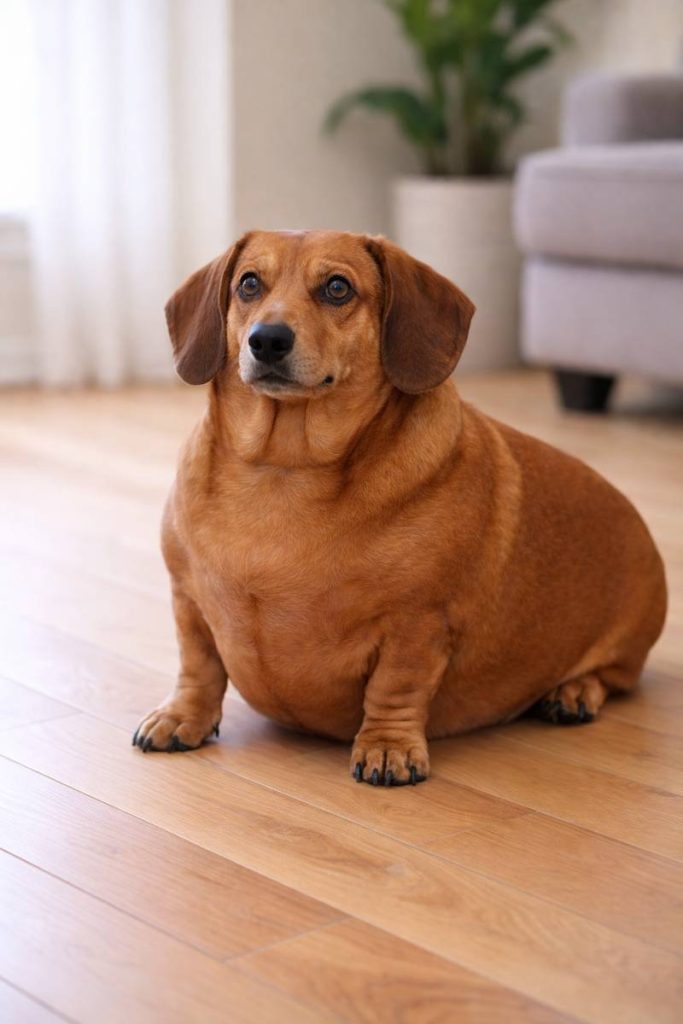
A Fat Dachshund Dog isn’t super cute and chunky. It’s a dog that’s just lugging around some extra weight, all on a long frame, short little legs, and tiny joints. And the thing is, all that extra poundage can really do a number on their mobility, zap their stamina and for a lot of Dachshunds, even just raise the risk of getting some ongoing health problems. Keeping your Dachshund lean is one of the biggest things you as an owner can do to take care of this breed.
Here’s the bottom line behind why Dachshund’s get fat:
- That sneaky portion creep: “Just a bit extra” kibble can easily turn into a whole lot over the course of a few weeks. So, if you want to toss in a reward for your guy during training, make sure you set aside a specific amount of their normal food for that.
- The treat stacking problem: training treats + dental chews + table scraps = way more calories than you’d ever think. My advice is to ditch the commercial treats and go with fresh fruits or veggies instead.
- Free-feeding or having multiple people feeding: If you’ve got a big ol’ olf canine like a Dachshund, tell your family members not to slip them a little something from the table. We all know those puppy dog eyes are hard to resist, but don’t fall for them.
- Not getting enough proper walks: just hanging out in the yard isn’t the same as a good, solid walk. One resource even found that Dachshunds just lounging around in the garden were more likely to develop back problems if they’re over three years old, whereas those getting good walks were fine.
- Spaying/Neutering + inactivity: You’ve probably heard that after getting spayed or neutered, dogs can start packing on the pounds due to hormonal changes. To keep that from happening to your Dachshund, try reducing the carbs and piling on the protein. And yeah, you gotta get them moving too.
Underlying medical issues (less likely, but worth a mention): like thyroid disease, Cushing’s, or even just pain that’s stopping them from getting around normally.
If you’re dealing with fat dachshunds, the solution is the same: control calories with precision and build fitness gradually.
First: Are You Sure Your Dachshund Is Overweight?
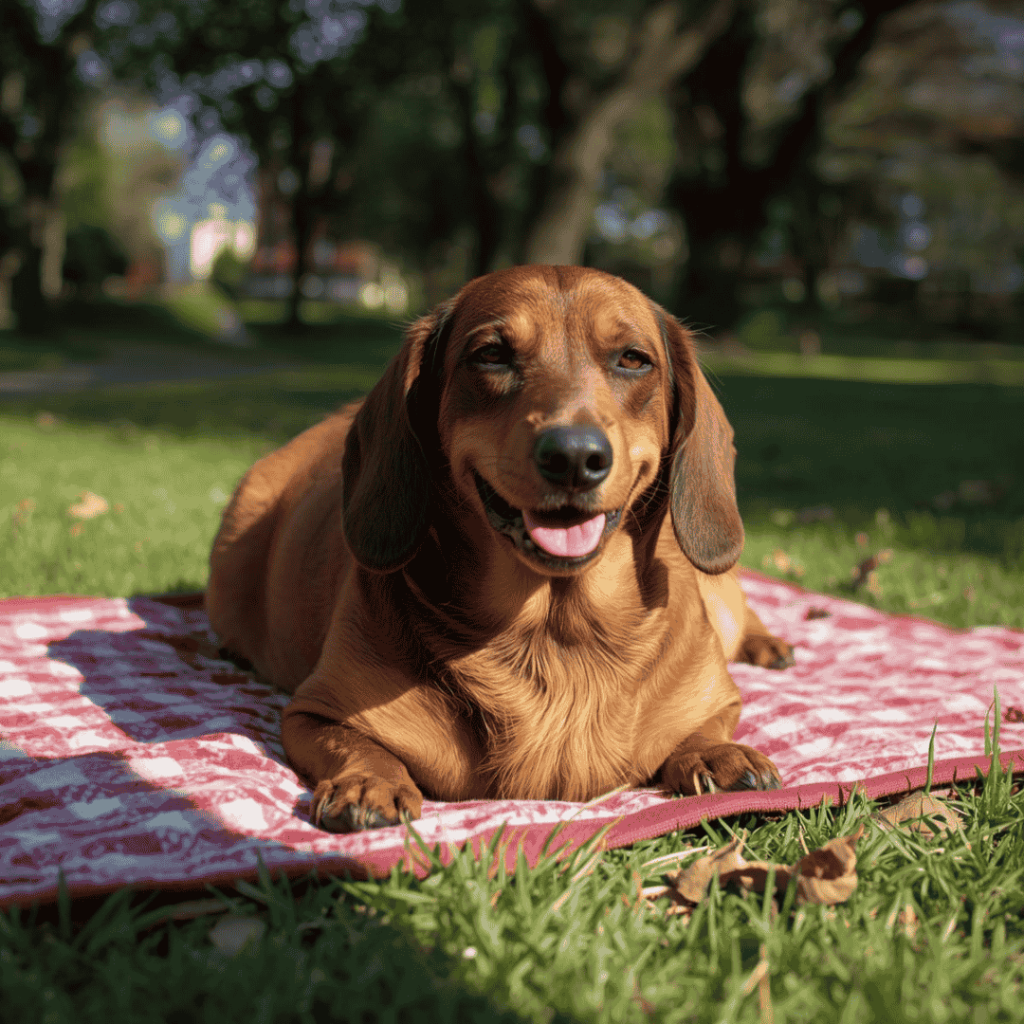
Owners often ask me what “normal” is for wiener dog weight. The answer is that a chart helps, but body shape matters more.
A helpful weight reference (not the whole story)
- AKC guidance commonly cited: standard dachshund weight is about 16–32 lb, and miniature is under 11 lb.
- UK Dachshund Health also discusses typical/ideal ranges and shows how broad “normal” can be depending on the dog.
So yes, you can look up dachshund weight ranges—but your main tool is a quick at-home body check.
My “rib + waist” test (simple and accurate)
Your Dachshund is closer to ideal if:
- You can easily feel ribs under a thin layer (not see them, not dig for them),
- There’s a visible waist from above,
- There’s a gentle tuck-up from the side (belly doesn’t hang straight down).
If ribs feel buried and the waist is gone, you’re likely looking at an overweight dachshund situation—even if your dog’s face still looks “normal.”
Step 1: Set the Goal the Right Way (and Don’t Crash Diet)
The safest long-term weight loss is steady, not dramatic. Cornell’s veterinary guidance often quoted in weight-management education suggests dogs typically lose about 1–2% per week on a plan.
Another widely used pet obesity resource recommends 1–5% per month (with many dogs doing well around 3–5% per month).
What I do in real life: I aim for slow progress you can maintain, because rebound weight gain is incredibly common when owners restrict too hard and then “feel bad” and compensate.
Vet check: when it’s non-negotiable
Please get a vet check first if your dog is:
- An extremely obese weiner dog. Is he/she very heavy and has poor stamina?
- Suddenly gaining weight,
- Showing pain, weakness, and reluctance to move,
- Drinking water or peeing a lot more than usual,
- Panting heavily at rest. If your fat wiener dog starts to breathe heavily after only 50 m crossed, then you gotta put him/her on a special diet.
Step 2: Feeding Rules That Slim Down a Chubby Dachshund Without Drama
Most weight loss is food math. Exercise helps, but it doesn’t cancel overeating—especially in a breed with short legs.
My non-negotiables
- Measure everything (a kitchen scale is best).
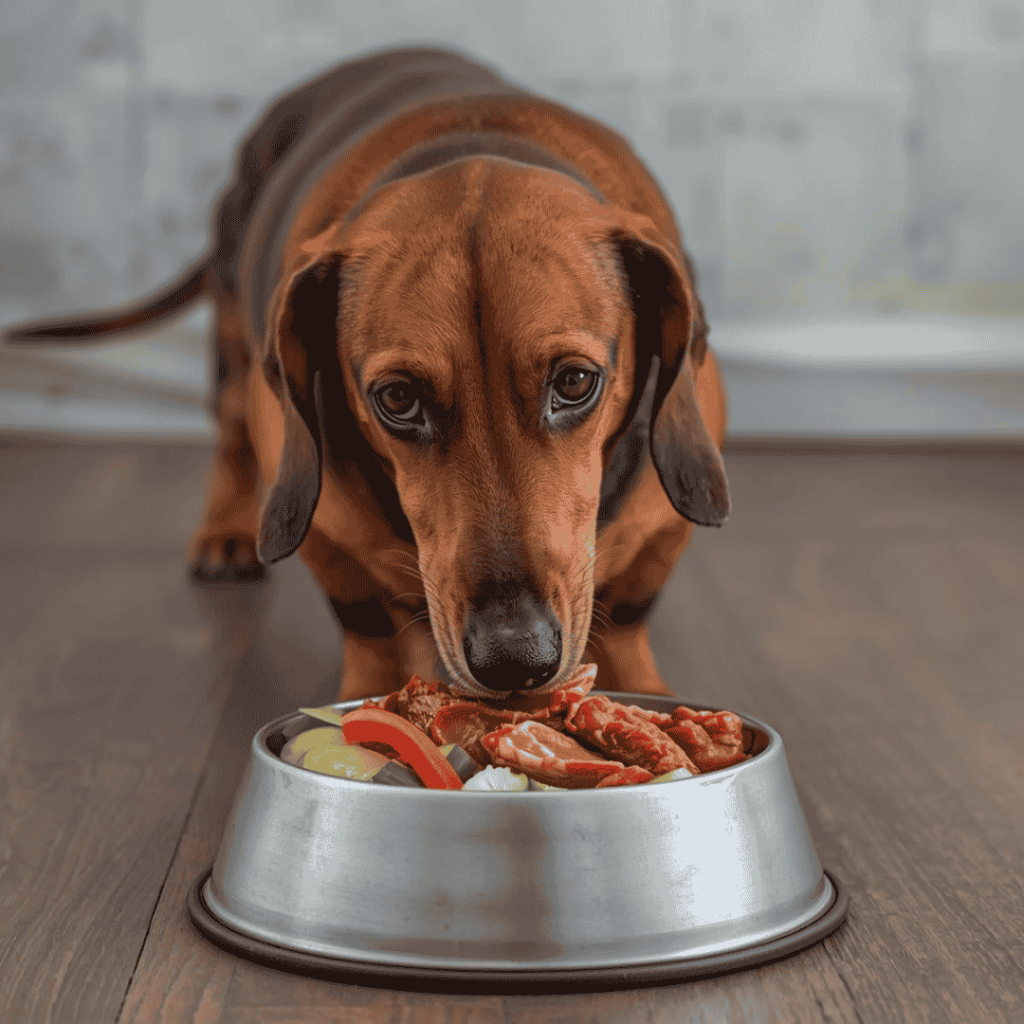
- Pick one feeding plan and keep it consistent. In fat wiener dogs, a raw diet works best. Choose more low-fat meat for your dachshund and a lower carbohydrate level. If you don’t have time to prepare meals on your own, then you should feed it with the best food for fat dachshunds.
- Treats come out of the daily calorie budget, not “on top.” You can reward your pet with a slice of an apple, cucumber, celery, or some other fresh veggie or fruit. You should avoid rewarding your pet with commercial treats.
- In case you live a busy life, then talk to your vet about what is the best dog food for overweight dachshunds. He/she will recommend dog food that is specially made for obese dogs.I don’t focus on brand names. Instead, I look for a few key things:
- Lower calorie density, which means fewer calories per cup or 100g.
- Higher protein to help maintain muscle during weight loss.
- More fiber to help me feel full.
- Complete and balanced nutrition, rather than a crash diet.
- Reduce the portions and feed your dog less. Even if your dog becomes nervous, anxious, and start to bark just to steal your attention and tell you that he/she is hungry, please don’t react. Instead, occupy your wiener’s attention with interactive toys and make him/her pleasantly tired. A pleasantly tired dog will be less prone to making problems at home.
A feeding structure that works for fat dachshunds
For most adult weiner dogs, I prefer:
- 2 meals per day (not free-feeding),
- A measured portion,
- A slow feeder or puzzle feeder for at least one meal.
Pro tip I swear by: If your dog acts starving all day, split the same daily amount into smaller meals. The stomach doesn’t know math—it knows routine.
Treat swaps (keep training, cut calories)
Instead of calorie-dense treats, I use:
- Single-kibble “treats” from the measured meal portion,
- Tiny pieces of lean protein (ask your vet if pancreatitis risk),
- Crunchy low-cal options (many dogs love texture more than flavor).
This is how I slim down a chubby dachshund without killing motivation.
Step 3: Exercise a Fat Wiener Dog Safely (Age + Weight Matter)
When owners ask, “How much activity is allowed for a fat dachshund?” my answer depends on two things:
- age, 2) current condition.
The dachshund back rule: avoid high-impact habits
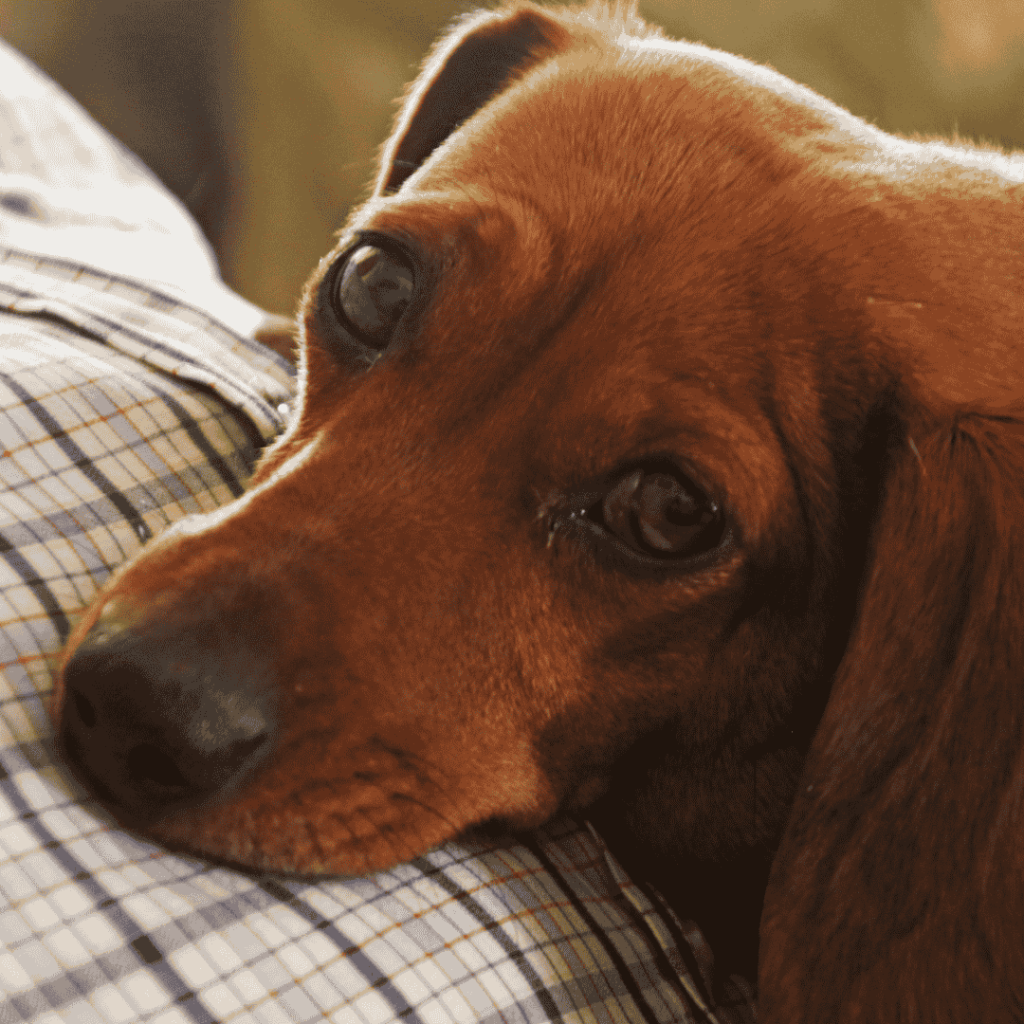
Many vets advise curbing your Dachshund’s high-impact antics. You should think carefully before letting them jump off furniture, run fast, or treat stairs like a challenge. Their long backs can be at risk.
So if your poor, fat little sausage is vaulting off the couch every single day, just losing weight isn’t going to break the habit. Your home has a part to play (ramps, blocking the stairs, no letting them run wild).
Activity Guidelines based on Age (definitely worth knowing)
Puppies (12 months or younger)
I keep things pretty low-key & fun, focusing more on new skills than how far they can run.
The reason for this is that their growth plates are still pretty fragile & wont fully close til around 1 1/2 to 2 years most likely (depending on size).
For a dachshund puppy, that means:
- lots of little walks for sniffing purposes,
- just casual play on some decent grip underfoot,
- the usual basic training & “brain food” stuff,
- try to avoid the repetitive jumping, sprinting and over the top fetch games.
Adults (1-7 years)
This is when you can start building some real endurance & muscle mass in your fat dachshund.
For an overweight dachshund dog, I usually go with:
- 2-3 shortish walks per day and then gradually increase the length of those walks,
- controlled pace (no all out sprinting to start),
- some low-impact strengthening (look below) to build them up.
A decent IVDD resource will tell you that proper walking (not just messing about in the yard) actually makes for better conditioning.
Seniors (7+ years)
Simply just keep them happy & healthy by keeping things gentle:
- shorter, but more often then just a few longer walks,
- a bit slower pace at the start & finish
- Consider supportive surfaces and gentle hill work if tolerated.
My Favorite Low-Impact “Fit Doxie” Routine
If you’re working with a fat doxie (or a truly obese dachshund), your job is to rebuild fitness without flare-ups.
Week 1–2 (foundation)
- 10–15 minutes walk, 2x/day
- One short training session (5 minutes): sit, down, touch, “find it”
- Food puzzle for one meal
Week 3–4 (build)
- 15–25 minutes walk, 2x/day
- Add 3–5 minutes of “strength snacks”:
- Slow controlled sit-to-stand
- Cavaletti poles (very low) or stepping over a broomstick laid flat
- Backing up 3–5 steps (great core work)
Week 5+ (maintain and shape)
- 25–40 minutes total walking/day (split)
- Add a new route weekly (novelty = more movement)
- Optional: swimming/underwater treadmill if available and vet-approved. If your dachshund is not a good swimmer, then you have to use a dog life vest. Our collection of dachshund life jackets offers you a wide range of items that are carefully made to suit their bodies.
If your dog is a long weenie dog with an especially long back, I prioritize core and control over speed.
The Part Most People Miss: Your Home Environment
If you want how to help a dog lose weight dachshund style, set the home up to remove “accidental sabotage”:
- No more free access to stairs (use gates).
- Ramp training for couch/bed access.
- Non-slip rugs on slick floors.
- Keep food out of reach (Dachshunds are creative thieves).
A fat weenie dog that jumps off furniture 10 times a day is putting more load on joints and spine than you think. Weight loss is easier when movement is controlled and consistent.
What Is the Leading Cause of Death in Dachshunds? (And What Weight Has to Do With It)
Breed-level surveys have reported major causes of death in Dachshunds including old age, cancers/tumors, and cardiac disease.
Other Dachshund health reporting also shows that IVDD/back disease is associated with a much younger average age of death compared to old age and cancer.
Weight isn’t the only factor—but keeping a dog lean and well-conditioned is a smart, owner-controlled way to support mobility and resilience over a lifetime.
FAQ
Are Dachshunds prone to being overweight?
Yes. Many wieners are extremely food-motivated, and their compact build means a small calorie surplus adds up fast. I rely on body condition (ribs + waist) more than the scale alone to catch an overweight dachshund early.
What is the best dog food for overweight Dachshunds?
The best dog food for an overweight Dachshund is one that is nutrient-dense but lower in calories. Look for formulas labeled “Healthy Weight,” “Weight Management,” or “Small Breed Light” diets. These typically have higher protein and fiber, lower fat, and controlled calories.
High protein helps preserve muscle while losing fat, and fiber helps the dog feel full. Some quality brands offer weight-control kibbles with around 300 kcal/cup or less. Additionally, since Dachshunds are prone to back issues, a food with joint support (omega-3 fatty acids, glucosamine, etc.) can be beneficial.
In my case, I chose a grain-free, high-protein light formula (with real chicken as the first ingredient) for Buddy. A popular choice among Dachshund owners is Taste of the Wild Grain-Free, or other premium brands that list meat first and have no corn/wheat fillers. Ultimately, the “best” food is one your dog does well on, likes the taste of, and that helps them lose weight at a steady pace. Always transition slowly to a new food and monitor your dog’s stool and energy to ensure it agrees with them
How do I slim down my Dachshund?
I do three things consistently: measured portions (ideally by gram), treats counted inside the daily budget, and low-impact daily walks that gradually increase. Aim for slow, steady loss—often around 1–2% per week is used as a safe guideline in veterinary weight loss plans.
Why does my Dachshund have a big belly?
A big belly in Dachshunds is often a sign of weight gain, but if you haven’t changed your dog’s diet much, it’s smart to look for other symptoms too. In many cases, it’s simply extra fat combined with low core conditioning. However, if the belly becomes suddenly enlarged, feels hard, seems painful, or your dog looks unwell, contact your vet—don’t assume it’s “just getting chubby.” A dog’s swollen abdomen can be the result of fast eating. So, if your Dachshund eats very fast, then you should consider buying him/her an anti-choke or slow-feeding dog bowl.





 Dachshund Jackets & Coats
 Dachshund Hoodies
 Dachshund Sweaters
 Dachshund Shirts
 Dachshund Life Jackets
 Dachshund Costumes
 Dachshund Pajamas

 Dachshund Harnesses
 Dachshund Collars


 Dachshund Backpacks


