
Dachshund Alopecia: Why Is Your Dog Losing Hair?


Dachshund alopecia is a condition causing progressive hair loss in dachshunds. We can describe them as pattern baldness in smooth-coated dogs or Color Dilution Alopecia (CDA) in blue and fawn dachshunds. CDA is genetic and has no cure. However, you can manage it with medicated shampoos, omega-3 supplements, and regular vet care. Other forms of baldness in dachshunds include hormonal or allergy-driven hair loss. They are often fully reversible once the root cause is treated. If your dachshund is losing fur, see a vet: early diagnosis makes a real difference.
If you’ve noticed your dachshund’s coat thinning, patchy bald spots appearing along their back, or their usually lustrous fur looking a little worse for wear, you’re probably worried. And that makes total sense — these little dogs are known for their personality, but also for that sleek, beautiful coat. Watching it disappear is unsettling. You don’t know how to help your dog and
The good news? You’re not imagining things, and you’re definitely not alone. Dachshund alopecia is real. And, unfortunately, it can affect many sausage dogs. That’s why you need to know that you can’t treat this condition on your own.
What Is Dachshund Alopecia, Exactly?
Alopecia simply means hair loss. However, in dachshunds, it’s not always a one-size-fits-all situation. There are actually a few distinct types that affect this breed, each with different causes and characteristics.
Pattern baldness (also called pinnal alopecia or post-clipping alopecia) is probably the most common form in smooth-coated dachshunds. It shows up as gradual thinning on the ears, chest, belly, and inner thighs. The skin itself usually looks healthy — the hair is just… gone. Interestingly, this type tends to affect male dachshunds more than females, and it often starts showing up around age one.
Then there’s Color Dilution Alopecia (CDA) — and this is where things get especially interesting if you have a blue or fawn dachshund. More on that in a moment.
There’s also alopecia caused by hormonal imbalances (like hypothyroidism or Cushing’s disease), allergic skin conditions, parasites, or even stress. So while dachshund hair loss is common, the underlying reason matters a lot for how it’s treated.
The Blue Dachshund Connection: Color Dilution Alopecia
Here’s something many dachshund owners don’t know until they’re already dealing with it: blue and fawn (isabella) dachshunds are genetically predisposed to a specific type of hair loss called Color Dilution Alopecia, or CDA.
Blue dachshunds get their striking steel-grey coat from a dilute gene (the “d” allele) that affects eumelanin. It’s the pigment responsible for black coloring. And as you can see, when a dog has two copies of this gene, it affects the melanin production in their hair.
The pigment in the hair gets all clumpy inside the shaft – think of little clumps of color. This makes the hair weak, brittle, and easy to break off. As a result, individual hairs don’t grow back properly.
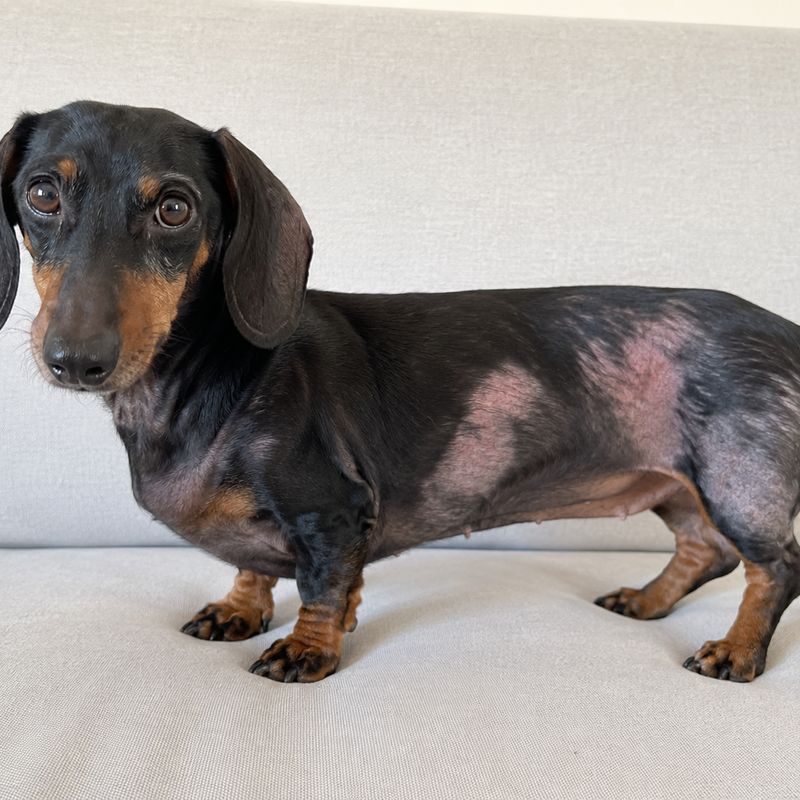
So, you get progressive hair loss – often on the back and sides – and you end up with flaky, dry, sometimes itchy skin. Bacterial skin infections (folliculitis) also tend to be common because these weakened hair follicles become a good entry point for bacteria.
The tricky thing about CDA is that when blue dachshund puppies are born, they look totally normal! That beautiful blue coat looks perfectly fine to many owners, sometimes even for a year or two. Then the hair starts to fall out. By age three to five, the hair loss is often pretty dramatic. This is worth knowing before you bring a blue dachshund home. The color is undeniably gorgeous, but it comes with a real health consideration. If you’re curious about the genetics behind dilute coat colors, read our deep-dive on blue and isabella dachshunds.
How to Spot Dachshund Alopecia Early
The earlier you notice something is off with your dog’s coat, the better. Here’s what to watch for:
- Thinning fur starting on the ears, temples, or along the back — often symmetrical
- Bald patches that appear without any scratching, rubbing, or obvious irritation
- Dull, dry, or brittle coat texture, even if the dog isn’t losing fur yet
- Flaky or scaly skin underneath the thinning areas
- Redness, bumps, or small pustules which can signal secondary bacterial infection
- Excessive shedding that seems out of proportion to the season
Quick heads-up: it’s probably dealing with an allergy, mange, or fleas. With true alopecia, especially patterned hair loss or CDA, the itchiness isn’t really caused by the condition itself (but it’s worth mentioning that any secondary infections will itch).
You know your dog better than anyone. If their coat looks different than it used to, trust your gut and get it checked out. It’s never a bad call. For a broader look at dachshund skin issues, this guide to dachshund skin conditions is a helpful reference.
Getting a Diagnosis: What to Expect at the Vet
So how do you get a CDA diagnosis? Your vet will likely start by taking a look and asking some questions. They’ll check out where your dog is losing hair, how the skin feels, and when this started. If it’s spread, whether your dog is itching, and the color of their coat. If you own a blue or grey dachshund, CDA goes right to the top of the list of possibilities.
The next step is a skin scraping and fungal culture. This is done just to rule out mange and ringworm, and it’s really important because both conditions can look like hair loss early on, but the treatment is entirely different.. The scraping and culture are quick, painless procedures.
If those tests come back clear, your vet will likely send samples for bloodwork, which checks your dog’s thyroid and hormone levels, and screens for cortisol, an indicator of Cushing’s disease. Hypothyroidism is actually quite a common cause of significant hair loss in dachshunds and it’s seriously under-diagnosed. Fortunately, it is very treatable, so finding it is definitely a good thing.
The definitive test for CDA is a skin biopsy, where a small sample is collected under light sedation and sent to a pathologist to confirm the presence of melanin clumping. It’s the only way to definitively diagnose CDA, rather than just assuming it’s the cause based on the coat color and clinical signs.
Another test some veterinary dermatologists may use is trichoscopy. It involves examining hair shafts under a microscope and can reveal structural damage. While it’s not available in all areas, if you’re seeing a specialist, it’s worth asking about the option.
Treatment Options for Dachshund Alopecia: What Actually Helps
This is where the answer genuinely depends on which type of alopecia your dachshund has.
For Color Dilution Alopecia: Let’s be honest — there is no cure for CDA. Because it’s rooted in genetics and the structural makeup of the hair follicle, you can’t reverse it. But you absolutely can manage it and significantly improve your dog’s quality of life:
- Antibacterial/antifungal medicated shampoos keep secondary infections under control — this matters a lot
- Fish oil or omega-3 supplements help with skin hydration and reduce the background inflammation
- Melatonin has shown mixed but sometimes real results for hair regrowth in dogs with alopecia; dosing varies by weight so check with your vet
- Retinoids (vitamin A derivatives) are occasionally used under vet supervision to support follicle health
- Dog-specific moisturizing conditioners help when the skin gets dry and cracked
- Sun protection — yes, really. Skin with sparse coverage burns. Lightweight shirts or dog-safe sunscreen for outdoor time is not excessive; it’s just practical
For Pattern Baldness: This type is considered cosmetic rather than medically serious. Many vets recommend monitoring rather than treating, unless the skin develops secondary infections. Some owners choose melatonin under veterinary guidance, which has had mixed but occasionally positive results.
For Hormonal or Thyroid-Related Alopecia: Good news here — these are often very treatable. Thyroid supplementation, hormonal therapy, or Cushing’s-specific medications can lead to significant or even full coat regrowth once the underlying condition is controlled.
For Allergy-Related Hair Loss: Identifying and eliminating the allergen (whether that’s a food ingredient, environmental trigger, or contact irritant) is key. Antihistamines, prescription allergy medications, or immunotherapy may be recommended. This breakdown of dachshund grooming and skin care covers some prevention-friendly practices worth building into your routine.
Living With a Dachshund Who Has Alopecia
Alopecia doesn’t change who your dog is. They’re still the same chaotic little creature who steals socks and demands to sit on your lap during every Zoom call. The hair loss is harder on the owners, honestly, than on the dog.
What shifts is your routine. I can tell you that regular baths with medicated shampoos help a lot. Check your wiener’s skin every time you’re petting them. It’s now a formal exam, but just a part of knowing their body. Adding Omega-3s into their food can also help. And last thing- you should keep vet appointments instead of pushing them.
For blue dachshunds with advanced CDA, some owners add a light shirt for walks in summer. If you own a blue dachshund, this thing is ‘’a must’’. You can find some gorgeous Dachshund shirts from our Dachshund Space collection that are made from lightweight fabrics. Be ready that not every dog loves wearing clothes. However, if your dog tolerates it, it genuinely helps. Doxie shirts can not only save your dog from UV rays but also from overheating.
For those days when you want to give your dog additional sun protection, check our blog post about dog cooling vests and how they help.

Fresh diagnosis and feeling overwhelmed? That’s normal. It takes a few weeks to build a new routine and stop feeling like something is wrong every time you look at your dog’s back. For a wider view of keeping them healthy, our dachshund health and wellness hub is a solid place to keep reading.
Quick FAQ: Dachshund Alopecia at a Glance
Can dachshund alopecia spread to humans? No. None of the primary forms of dachshund alopecia are contagious to people or other pets — with the exception of ringworm, which isn’t true alopecia but can cause hair loss and is contagious.
Is dachshund hair loss always permanent? Not always. Hormonally-driven and allergy-related hair loss often reverses with treatment. CDA and pattern baldness are generally permanent, though management can slow progression.
Should I avoid buying a blue dachshund because of CDA? That’s a personal decision. Many blue dachshund owners feel the extra care commitment is completely worth it. What’s important is going in with full awareness — not a surprise diagnosis two years later.
Dachshund alopecia isn’t a single condition — it’s an umbrella term covering pattern baldness, Color Dilution Alopecia in blue/fawn dogs, and hair loss tied to hormones or allergies. Blue dachshunds are genetically at higher risk due to a dilute gene that weakens hair follicles. Diagnosis involves a physical exam, bloodwork, and often a skin biopsy. While CDA has no cure, consistent skin care, supplements, and vet monitoring keep affected dogs comfortable and healthy. Reversible forms respond well to targeted treatment. Either way — a bald dachshund is still a very happy dachshund.
Dachshund alopecia is a condition causing progressive hair loss in dachshunds. We can describe them as pattern baldness in smooth-coated dogs or Color Dilution Alopecia (CDA) in blue and fawn dachshunds. CDA is genetic and has no cure. However, you can manage it with medicated shampoos, omega-3 supplements, and regular vet care. Other forms of baldness in dachshunds include hormonal or allergy-driven hair loss.
They are often fully reversible once the root cause is treated. If your dachshund is losing fur, see a vet: early diagnosis makes a real difference.
If you’ve noticed your dachshund’s coat thinning, patchy bald spots appearing along their back, or their usually lustrous fur looking a little worse for wear, you’re probably worried. And that makes total sense — these little dogs are known for their personality, but also for that sleek, beautiful coat. Watching it disappear is unsettling. You don’t know how to help your dog and
The good news? You’re not imagining things, and you’re definitely not alone. Dachshund alopecia is real. And, unfortunately, it can affect many sausage dogs. That’s why you need to know that you can’t treat this condition on your own.



 Dachshund Jackets & Coats
 Dachshund Hoodies
 Dachshund Sweaters
 Dachshund Shirts
 Dachshund Life Jackets
 Dachshund Costumes
 Dachshund Pajamas

 Dachshund Harnesses
 Dachshund Collars


 Dachshund Backpacks


