

How to Introduce a Dachshund to a New Baby (Step-by-Step Guide)


Bringing a newborn home when you have a dachshund? Here’s the three-phase introduction plan that keeps your sausage dog calm, safe, and connected to your growing family.
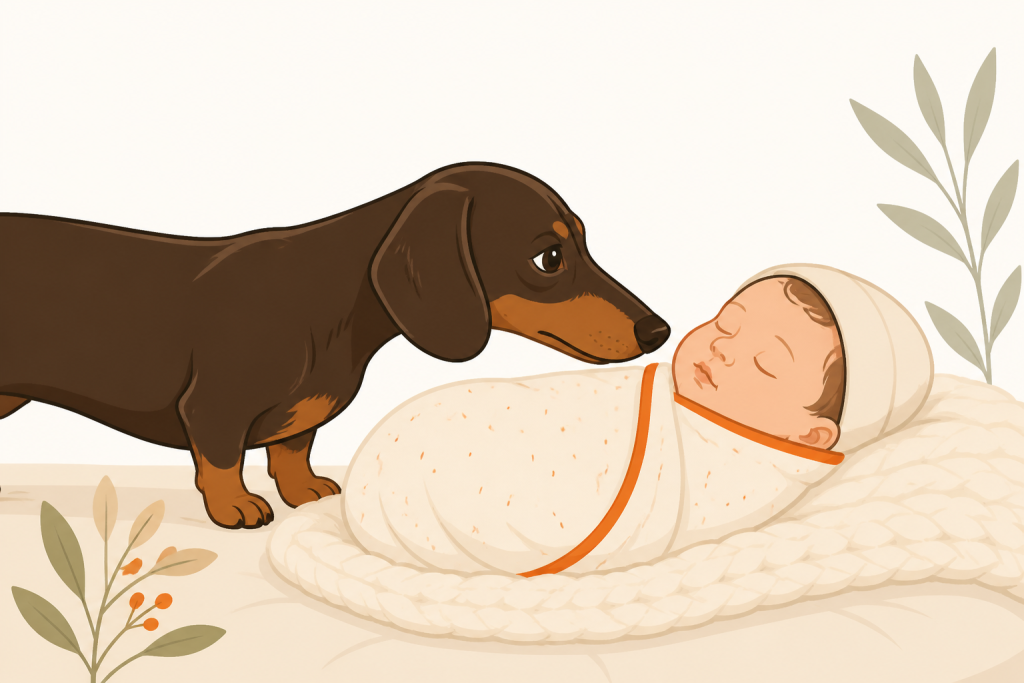
Start the introduction before the baby arrives – not when you walk through the door. Bring home a hospital blanket to introduce scent, play recordings of baby sounds, and refresh obedience basics in the weeks before your due date. On the big day, greet your dachshund first, keep the meeting calm and low-key, and reward every gentle interaction. In the weeks after, protect your doxie’s routine – daily walks, meal times, and one-on-one time are the glue that keeps them from unraveling. IVDD-prone dachshunds need extra attention during stressful transitions, so a vet checkup before the baby arrives is worth booking.
If you’ve ever watched a dachshund realize the universe has shifted – the wide eyes, the suspicious sniff, the theatrical retreat to their bed – you know this transition is going to require a game plan.
Bringing home a newborn is the biggest household change your doxie has ever experienced. Their person smells different, acts differently, and is suddenly carrying around a small, loud, unpredictable creature. As AKC GoodDog! Helpline trainer Hilarie Erb puts it: “Babies are scary creatures to most dogs. They make interesting noises, smell strange, and adults act differently around them.”
The good news? With a little preparation, most dachshunds not only cope – they eventually become fiercely devoted to the tiny new family member. Here’s how to get there.
Phase 1: Before Baby Arrives (Start Weeks Early)
The biggest mistake dachshund owners make is waiting until the baby comes home to start the introduction. By then, you’re exhausted, your routines are shattered, and your dog is already confused. Front-load the work.
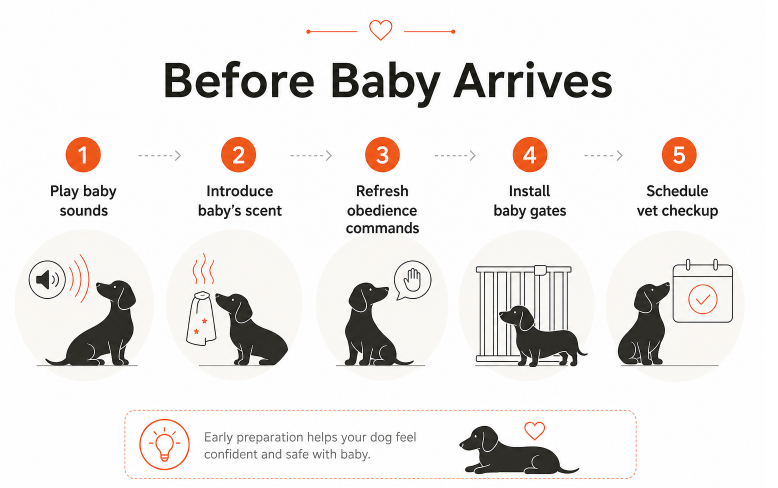
Before Baby Arrives checklist infographic
Play baby sound recordings. Find a recording of a newborn crying (YouTube has plenty) and play it at low volume around your doxie while doing something normal and positive – giving treats, playing, feeding them dinner. Gradually increase the volume over several days. The goal is a neutral reaction, not panic, by the time the real thing arrives.
The AKC recommends pairing baby sounds with treats consistently: “Give your dog a special treat while playing recordings of a baby crying.” It works.
Have a family member bring a used hospital blanket or hat home before you arrive. Let your dachshund sniff it on their own terms – don’t push it at them. By the time the real baby appears, the scent won’t be a shock.
Refresh obedience basics. Your dachshund needs to reliably sit, stay, and respond to “leave it” before the baby arrives – not during a 3am feed when you’re running on fumes. Practice these commands daily for at least a few weeks, and make “go to your bed” a rock-solid habit. You’ll use it constantly.
Install baby gates and establish off-limit zones. If there’s a nursery or a designated feeding area, start gating it off now. Your dog needs to learn the new spatial rules while everything is still calm, not when they’re already stressed. A dachshund that respects a gate before the baby arrives is a much easier dachshund to manage after.
Book a pre-baby vet checkup. This matters more for dachshunds than most breeds. Stress disrupts routines, and disrupted routines – irregular walks, less exercise, anxiety-driven jumping – are exactly the conditions that exacerbate IVDD. Get a spine-health baseline before the chaos starts, and discuss whether your dog’s current weight and fitness level is where it needs to be.
Phase 2: The First Meeting (Calm Is the Goal)
You’ve been in the hospital for a day or two. You’re running on no sleep. Your dachshund has been waiting, and they know something is different the moment you pull into the driveway.
Here’s what to do.
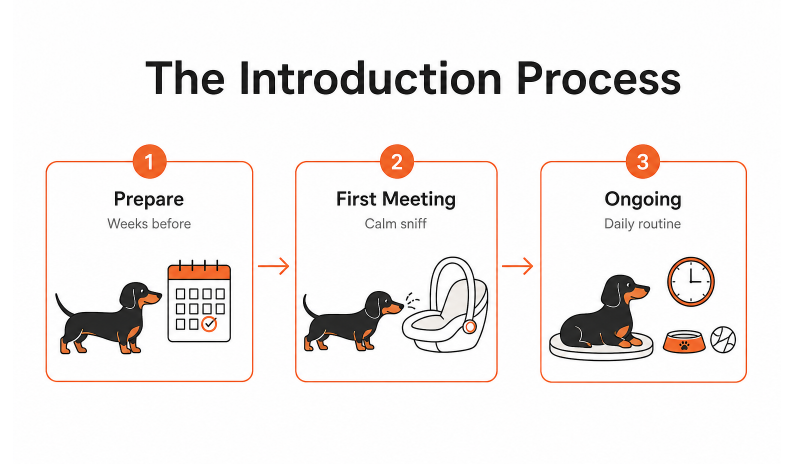
The three-phase introduction process
Greet your dachshund first. Before you bring the baby inside, have one parent go in and give the dog a proper hello – let them do their zoomies, get the excited energy out, get some pets in. Then, calmly bring the baby in the carrier and set it on a stable surface.
Let your doxie approach at their own pace. Don’t carry the baby toward the dog or hold the baby down at their level. Place the carrier down and let curiosity do the work. Most dachshunds will approach cautiously, sniff, back away, sniff again. This is perfect. Don’t narrate it, don’t make it a big event, don’t use the squeaky excited voice.
Stay matter-of-fact. Dogs read your emotional state constantly. If you’re tense and whispering “gentle, gentle, gooood boy” in a high-pitched nervous tone, your dog thinks something is wrong. If you’re calm and relaxed, they take the cue from you.
Reward calm instantly. Every time your dachshund sniffs the baby gently and then backs off – that’s the behavior you want. Mark it immediately with a quiet “yes” and a treat. You’re building the association: baby nearby = good things happen.
Never leave them unsupervised. Even in the first meeting, even with the world’s most gentle dachshund: the baby is on your lap or in the carrier, you are in the room, an adult is watching. This isn’t negotiable and doesn’t change as the baby gets older.
Phase 3: Ongoing Management (The Long Game)
The first week is the most intense, but the real work is the month after that – when you’re chronically tired, the novelty has worn off, and it’s tempting to let your dog’s routine slip.
Don’t let the routine slip.
Protect daily walks and feeding times. These are the anchor points of your dachshund’s world. If walks become irregular, ask a friend or hire a dog walker. This isn’t just about exercise – it’s about telling your dog: your place in this family hasn’t changed.
Many Reddit owners describe the same pattern: dogs that seemed withdrawn or jealous in the first week came around once they realized their routine was still intact.
Create a safe retreat space. Your dachshund needs somewhere they can go when it all gets too loud. A crate, a dog bed in a quiet room, or a gated-off corner – somewhere the baby can’t reach them and they know they’re safe. This isn’t time-out. It’s sanctuary. Teach it before the baby arrives and reinforce it regularly.
Give your dog a job. Some dachshunds thrive when they have a role – lying calmly next to the baby during tummy time, “patrolling” beside the stroller on walks, positioning themselves under the high chair at mealtime.
This is dachshund psychology working for you. Bred as hunting dogs, they want purpose. Give them one.
Watch for stress signals and respond early. Excessive panting, pacing, accidents in the house, loss of appetite – these aren’t bad behavior, they’re communication. Address them with your vet or a certified behaviorist, not with punishment.
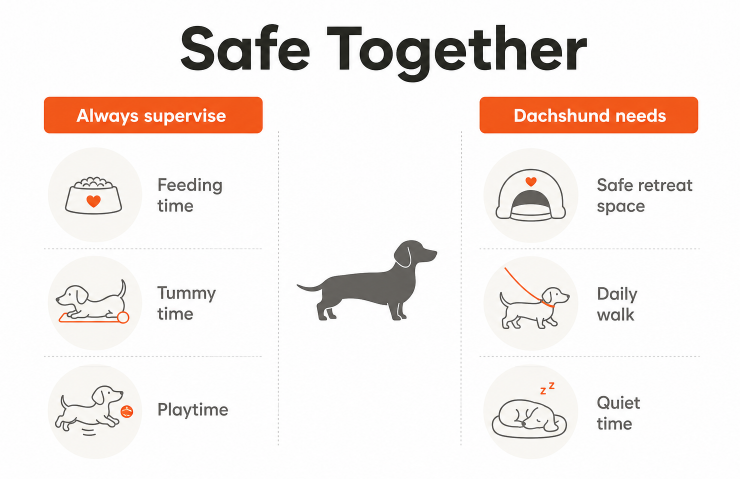
Safe supervision guide for dachshunds and babies
As the baby grows, teach them too. Once your child is mobile, they become the variable – dachshunds are small and vulnerable to being grabbed, dropped, or chased. Start early: the dog’s crate is off-limits, the food bowl is off-limits, we ask before we touch the dog. These rules protect both of them.
When to Call in Reinforcements
Most dachshunds adjust with patience and consistency. But if yours shows:
- Growling, snapping, or lunging at the baby
- Extreme anxiety that isn’t improving after two weeks
- Destructive behavior or complete appetite loss
- IVDD symptoms – hunched posture, yelping when touched, reluctance to move
…please contact a certified behaviorist or your vet, not a training app. These behaviors are solvable, but they need professional eyes on them. A few sessions with the right person can turn things around quickly – and you’ll feel a lot less like you’re failing.
Gear Up with Dachshund Space
Getting a new baby settled and keeping your doxie happy at the same time is a lot to juggle – and the right gear makes a difference. Our shop, Dachshund Space, carries everything from carriers built for long-backed dogs to cozy apparel that keeps your sausage dog comfortable and content while you’re navigating the fourth trimester. Over 514 products, 10,000+ five-star reviews, and a community of dachshund owners who’ve been exactly where you are.
Frequently Asked Questions
How do I introduce my dachshund to a new baby for the first time?
Let your dachshund greet you first when you arrive home from the hospital – before you bring the baby inside. Put the carrier on a stable surface and let your doxie approach on their own terms, at their own pace. Reward calm sniffing with a quiet treat and praise. Never force them together or make the moment ceremonial.
Can dachshunds be trusted around newborns?
With proper preparation and supervision, most dachshunds do great around babies. The key word is supervision – no dog, no matter how gentle, should ever be left unsupervised with a newborn. Dachshunds are small but have strong prey instincts and can be startled by sudden movements or loud cries. A structured introduction and consistent boundaries make all the difference.
How long does it take for a dachshund to adjust to a new baby?
Most dachshunds adjust within a few weeks, though the timeline varies. Some dogs relax within days; anxious or protective dachshunds may need a month or more. The biggest factor is how consistent you are with the routine – feeding, walks, and one-on-one time should stay as predictable as possible throughout the transition.
Will my dachshund get jealous of the new baby?
Jealousy is real and common. Dachshunds bond fiercely with their owners, so the sudden shift in attention can leave them confused and withdrawn. The antidote is deliberate: dedicate at least 10–15 minutes of daily one-on-one time with your doxie, keep their routine intact, and actively reward calm behavior around the baby. Over time, most dachshunds come to see the baby as part of their pack.
Can the stress of a new baby trigger IVDD in dachshunds?
Stress doesn’t directly cause IVDD, but it can contribute to the conditions that worsen it – disrupted exercise routines, weight gain, less mental stimulation, and increased anxiety-driven movement (jumping, climbing). Keep walks consistent, avoid letting your dachshund jump on and off furniture unsupported, and schedule a pre-baby vet checkup to get a spine health baseline before the chaos begins.






 Dachshund Jackets & Coats
 Dachshund Hoodies
 Dachshund Sweaters
 Dachshund Shirts
 Dachshund Life Jackets
 Dachshund Costumes
 Dachshund Pajamas

 Dachshund Harnesses
 Dachshund Collars


 Dachshund Backpacks


