

Heat Rash in Dogs: How to Spot It & Treat It


Heat rash in dogs is a real summer concern, especially for dachshunds. Learn what it looks like, where it shows up, how to treat it at home, and when to call the vet.
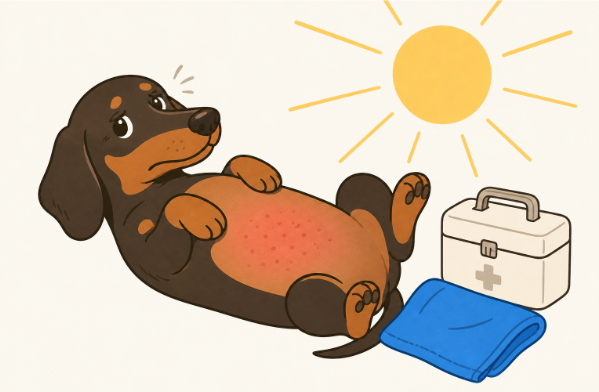
Heat rash in dogs is caused by heat, humidity, and trapped moisture – not allergies or parasites. It shows up as clusters of small red bumps on the belly, armpits, groin, or neck folds. Dachshunds are especially prone because their belly sits so close to the ground. Treat mild cases at home with cool compresses, gentle cleaning, and a soothing cream. If the rash isn’t improving within 48 hours, visit your vet. Prevention comes down to timing walks in cooler parts of the day, drying your dog thoroughly after water play, and keeping them cool indoors.
If you’ve noticed some small red spots on your dachshund’s belly or a rash forming under their arms after a warm walk, you’re not alone. Heat rash in dogs is one of those conditions that sneaks up on owners during summer – and because dachshunds carry their belly so close to the ground, they’re genuinely more exposed to the heat than most breeds.
This guide will walk you through what heat rash looks like, exactly where it tends to show up on your doxie, how to treat it at home, and – most importantly – how to stop it from happening in the first place.
What is heat rash in dogs?
Heat rash (sometimes called “miliaria” or prickly heat) happens when heat, humidity, and moisture get trapped against your dog’s skin. The warmth softens the skin’s protective barrier, and the moisture that can’t evaporate fast enough creates the perfect environment for irritation. The result: small, red, itchy bumps.
It’s worth knowing that heat rash is not the same thing as a hot spot. Hot spots are caused by allergies or trauma and spread fast with licking. Heat rash develops more slowly from environmental exposure. That said, left untreated, heat rash can absolutely turn into a hot spot – which is why catching it early makes a big difference.
What does heat rash look like on dogs?
This is the question most owners type into Google at 11 PM while their dachshund is scratching away. Here’s what to look for:
- Small clusters of red or pink bumps – not one big sore, but a scattering of tiny spots
- Warm, irritated-feeling skin in the affected area
- Itching and restlessness – your dog may scratch, lick, or rub the area repeatedly
- Scabs or crusting if they’ve been scratching for a while
- A faint smell from the area – this usually signals a secondary infection is starting
In early stages, the bumps are mild enough that you might feel them before you see them – a slight roughness or texture when you run your hand along your dog’s belly. In darker-coated dachshunds, the texture change often shows up before the color change, so don’t rule it out just because the skin doesn’t look obviously red.
Red spots on a dog’s belly after hot weather are one of the most reliable signs of heat rash – especially if your dachshund has been walking on warm pavement or lying on a sun-heated floor.
Why dachshunds are especially vulnerable
Most dog breeds can get heat rash, but dachshunds deal with a few factors that put them at higher risk.
Their body shape is the main culprit. Those famously short legs mean the belly is practically skimming the ground at all times – hot pavement, warm grass, sunbaked deck boards, you name it. Where a taller dog might have a few inches of airflow under their abdomen, your dachshund has almost none. That limited circulation means heat and moisture build up faster against their skin.
There’s also the weight factor. Dachshunds have a tendency to carry extra pounds, and overweight dogs have a harder time regulating temperature. Less efficient cooling means the skin stays warm and moist longer – exactly the conditions heat rash loves. Check out our post on why dachshunds are prone to unique health quirks for more context on the breed’s physical characteristics.
If your dachshund has any loose skin folds around the neck or chest, those pockets trap moisture and warmth too – and they’re easy to miss during a quick visual check.
Heat rash on a dog’s belly and other common spots
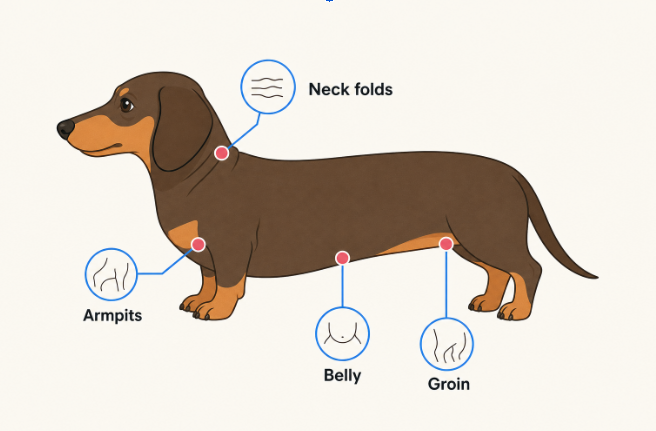
Diagram showing the four most common heat rash locations on a dachshund – belly, armpits, groin, and neck folds
Heat rash concentrates in spots where skin is thin, the fur is sparse, and airflow is limited. The belly is the most common location for a rash on a dog’s stomach – it’s the largest area of exposed skin and the part closest to warm surfaces. But it’s not the only place to check.
Belly/abdomen – the most common location. Look for red spots on a dog’s belly, especially toward the lower abdomen and inner thighs.
Armpits/underarms – dog rash under arms is often overlooked because it’s tucked away. Lift your dachshund’s front legs and check the soft skin in those creases.
Groin area – another high-moisture, low-airflow zone. The inner thighs and groin are warm and often trap sweat and moisture after exercise.
Neck folds – less common, but worth checking if your dachshund has looser skin around the neck. Moisture from drooling or drinking can collect here.
Run your hands over all these areas after any warm-weather walk or outdoor session – particularly if your dog has been on sun-heated pavement. Quick checks take 30 seconds and can catch a rash before it has a chance to escalate.
Heat rash vs. other dog rashes – how to tell the difference
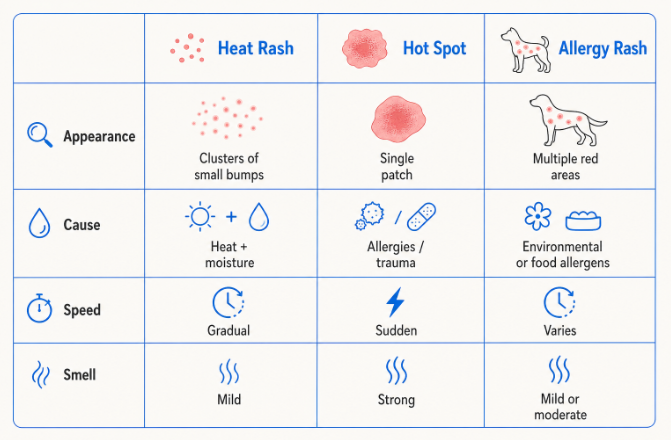
Comparison chart showing heat rash vs hot spot vs allergic rash in dogs – key differences in appearance, cause, and progression
Not every rash in summer is heat rash, and it’s worth knowing the difference before you start treating. Here’s a quick breakdown:
Heat rash – scattered clusters of small bumps in warm, damp body areas; develops gradually; improves when you cool and dry the skin; no strong smell unless infected.
Hot spot – a single, wet, rapidly expanding sore; usually caused by allergies, an insect bite, or trauma; often has a strong foul smell from the start; worsens quickly with licking.
Allergic rash – tends to affect multiple areas of the body simultaneously (including paws and ears); persists despite cooling and drying; doesn’t improve just from temperature management. If your dachshund also has hair loss alongside the rash, it could point to a different skin condition.
Flea or mite rash – concentrated around the lower back and tail area; often accompanied by tiny brown specks (flea dirt) in the fur; you may spot live parasites on inspection. Related: what does a tick look like on a dog.
If the rash is localized to the belly and armpits, appeared after hot weather, and the skin feels warm – heat rash is a very reasonable first assumption. If the rash is widespread, came on suddenly with no temperature trigger, or is accompanied by lethargy or ear inflammation, that’s a vet conversation rather than a home-treatment situation.
How to treat rash on dogs at home
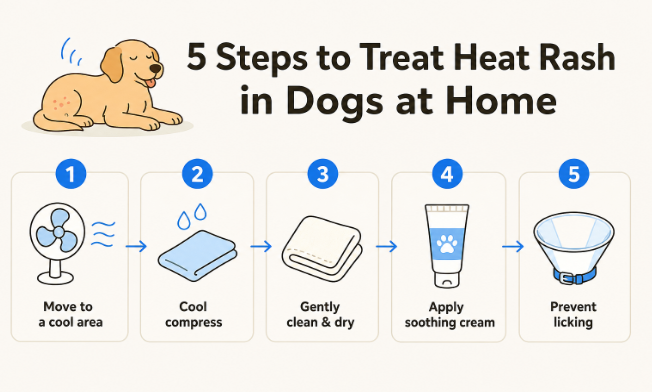
Five-step home treatment process for heat rash in dogs – from cooling down to preventing licking
Good news: mild heat rash responds well to home care. Here’s the process, in order:
- Move to a cool space. Get your dog out of the heat immediately – into an air-conditioned room if possible. This stops the trigger from continuing to do damage.
- Apply a cool compress. Dampen a soft cloth with cool (not icy) water and hold it gently against the rash for 5-10 minutes, two to three times a day. According to veterinary sources like Montgomery Veterinary Associates, this is one of the most effective immediate interventions.
- Gently clean and dry the area. Use a mild, fragrance-free cleanser and cool water. Pat – don’t rub – the skin completely dry afterwards. Any residual moisture is counterproductive.
- Apply a soothing topical product. A 1% hydrocortisone cream (applied 3-4 times daily on intact skin) can reduce itching. Oatmeal-based shampoos and hydrogels also work well for calming irritation. Stick to products labeled for dogs – avoid anything ending in “-caine” (like lidocaine), zinc oxide, or human medicated creams.
- Prevent licking. A comfortable cone or recovery collar is your best friend here. Licking keeps the area moist, introduces bacteria, and can turn a manageable heat rash into an infected hot spot fast.
The critical window is 48 hours. If you see improvement within that time – less redness, less scratching – you’re on the right track. If things are getting worse or staying the same after two days of consistent home care, it’s time to call your vet.
When to call the vet
Home care handles most mild cases, but some situations call for professional help right away:
- The rash is spreading or looks noticeably worse after 24-48 hours
- You notice discharge, pus, or a strong foul odor
- The skin is swollen, bleeding, or has open sores
- Your dog seems lethargic, is off their food, or appears to be in pain
- This is a recurring problem – rashes keep coming back in the same spots
Recurring heat rash that keeps flaring up is worth investigating because there may be an underlying skin condition making your dachshund more susceptible. A vet can prescribe medicated shampoos, stronger topical medications, or oral antihistamines depending on what they find.
How to prevent heat rash in dachshunds
Once you’ve dealt with heat rash once, you’ll want to make sure it doesn’t happen again. These habits make a real difference:
Time your walks wisely. The hottest part of the day typically runs from 11 AM to 6 PM. Early morning or evening walks keep your dachshund off hot pavement when it matters most. Our post on dachshund shoes is worth reading here too – pavement that burns paws is pavement that overheats bellies.
Dry thoroughly after water play. Whether it’s a paddle pool, a bath, or an accidental puddle encounter – moisture trapped against the belly and in skin folds is a direct route to heat rash. Dry the undercarriage and armpits every single time.
Check for and clear skin folds. If your dachshund has any loose skin, wipe those folds gently with a soft dry cloth daily, or use vet-approved chlorhexidine wipes as needed.
Keep them cool indoors. Air conditioning, a fan near their sleeping spot, and breathable bedding all help manage ambient temperature. Cooling mats and elevated beds that allow airflow underneath are worth considering for summer.
Consider summer clothing. This might sound counterintuitive, but UV-protective dog summer clothes can actually reduce direct sun exposure on sensitive belly skin, especially during necessary outdoor time in warmer months.
Try Dachshund Space
If your dachshund is prone to overheating, a cooling vest is one of the most practical things you can add to your summer routine. The Doxie Chill Cooling Vest from Dachshund Space is designed specifically for the dachshund body shape – keeping your dog’s core temperature down during walks and outdoor time, which directly reduces the heat and moisture buildup that triggers rashes. It’s sized and shaped for doxies, so it actually fits the way it should.
Browse the full summer collection for more heat-management options – from cooling bandanas to breathable carriers – all designed with the dachshund breed in mind.
Frequently Asked Questions
What does heat rash look like on dogs?
Heat rash in dogs appears as clusters of small red or pink bumps, often on the belly, armpits, groin, or neck folds. The skin may look irritated or feel warm to the touch. In early stages it’s mild redness; if untreated, the bumps can become scabby or develop a faint odor. Learn more in our guide to dachshund skin conditions.
Can dogs get heat rash on their belly?
Yes – the belly is one of the most common spots for heat rash in dogs, especially dachshunds. Their low-to-the-ground build means their abdomen is constantly close to warm pavement, grass, or hot flooring, making belly rash in dogs a real summer concern. A cooling vest can help keep your doxie’s core temperature down during hot days.
How do I treat heat rash on my dog at home?
Move your dog to a cool area, apply a cool (not ice-cold) damp compress to the rash for 5-10 minutes, gently clean and pat dry the area, and use a soothing 1% hydrocortisone cream or oatmeal-based product on intact skin. Prevent your dog from licking with a cone if needed. If the rash hasn’t improved within 48 hours, see your vet.
How is heat rash different from a hot spot?
Heat rash shows up as scattered small bumps in warm, damp areas and develops gradually from heat and moisture. A hot spot is a single, rapidly expanding moist patch caused by allergies, trauma, or excessive licking. Heat rash can turn into a hot spot if your dog won’t stop scratching – which is why treating it early matters.
How do I prevent heat rash in my dachshund?
Keep walks to early morning or evening (before 10 AM or after 6 PM), avoid letting your dachshund lie on hot pavement, dry their belly and skin folds thoroughly after any water exposure, and consider a cooling vest during hot weather. Check out our picks for the best dog summer clothes for dachshunds to help beat the heat.






 Dachshund Jackets & Coats
 Dachshund Hoodies
 Dachshund Sweaters
 Dachshund Shirts
 Dachshund Life Jackets
 Dachshund Costumes
 Dachshund Pajamas

 Dachshund Harnesses
 Dachshund Collars


 Dachshund Backpacks


