

How Much Water Should Dachshunds Drink Through Life Stages?

If you have a dachshund, you know they can be pretty dramatic about everything. This includes food, routines and where their water bowl is placed.. When it comes to drinking water it’s really important for owners to pay attention. Water is not just a basic need. How much water should Dachshunds drink is the first topic to analyze as a new dog owner.
Water is not something your dog needs to survive. It helps with digestion keeping body temperature circulation, joint health and making sure organs work properly. Even a little dehydration can make your dog feel unwell. If it’s hot outside or your dog is sick things can get serious quickly. The general rule for adult dogs is to drink about 44 to 66 milliliters of water per kilogram of body weight every day. Some vets say it can be between 40 to 60 milliliters per kilogram per day.
As a dachshund owner it’s key to understand that water needs change based on your dogs life stage, size, diet, weather and how active they are. For dachshund owners, the most important thing to understand is this: water needs change by life stage, body size, diet, weather, and activity level. So instead of asking whether all dachshunds should drink the same amount, it is better to ask what is normal for your dog right now.
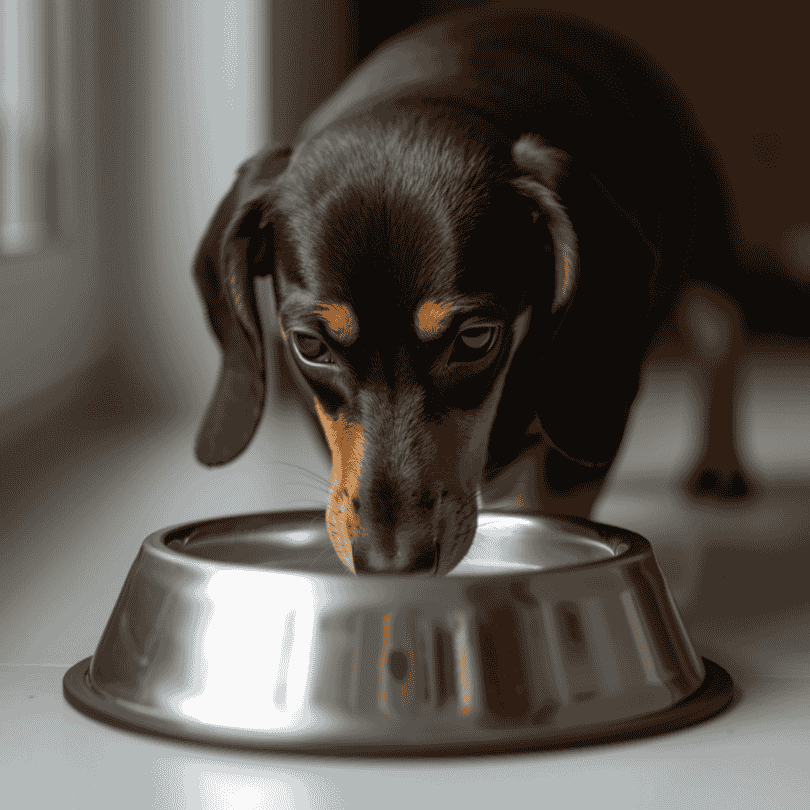
Newborn Dachshund Puppies: Milk Comes First
In the first weeks of life, dachshund puppies do not depend on a water bowl the way older dogs do. Their hydration should come primarily from their mother’s milk, or from a properly formulated puppy milk replacer if they are being bottle-fed. Veterinary guidance for orphaned puppies notes that fluid needs are relatively high during this stage, around 130 to 220 mL/kg/day, with an average total daily fluid volume of about 180 mL/kg/day, including milk replacer. This is one reason newborn puppies can decline quickly if feeding is not going well.
For breeders and new puppy owners, this stage is less about measuring water in a bowl and more about making sure puppies are nursing well, gaining weight, and staying warm and hydrated. If a very young puppy seems weak, cries constantly, feels cool, or is not feeding well, that is not a “wait and see” situation.
Weaned Puppies: Hydration Starts Becoming a Habit
Once a dachshund puppy starts eating food, fresh water should always be there.
At this point most puppies can follow the dog range but many growing puppies naturally drink more water because they are growing, playing and burning more energy and all these things increase their needs. This stage is also when owners start to notice how much what they eat matters.
Puppies eating food may seem to drink less water from the bowl because canned food already has a lot of moisture in it unlike dry kibble.Dogs, on food usually need to drink more water to make up for it.
This is something many small-breed dog owners get wrong.A puppy that rushes to the bowl is not always drinking much water.A puppy that hardly drinks from the bowl is not always okay either.You have to look at everything: what they eat, the weather how active they’re their energy level.
Adult Dachshunds: A Practical Daily Range
For a healthy adult dachshund, the usual starting point is still about 44 to 66 mL/kg/day. That sounds technical, but it becomes much easier when you turn it into real-life examples:
- A 5 kg mini dachshund may drink around 220 to 330 mL per day
- A 7 kg dachshund may drink around 308 to 462 mL per day
- A 9 kg standard dachshund may drink around 396 to 594 mL per day
That means many adult dachshunds land somewhere around 1 to 2.5 cups of water a day, depending on their size and routine. On cooler days, a calm house dog may stay near the lower end. On warm days, after walks, during travel, or after play, intake can rise noticeably and still be normal.
For dachshunds specifically, I always think owners should treat hydration as part of everyday back-and-body care. These dogs are low to the ground, often stubborn about stopping when they get excited, and many owners underestimate how quickly a short-legged dog can get overheated on warm pavement or during summer outings. A dog does not need to be visibly exhausted before hydration starts to matter.
Senior Dachshunds: Watch the Pattern, Not Just the Bowl
Senior dachshunds do not automatically need a separate “high water” target, but they do need closer observation. The normal adult range still applies as a starting point. What changes is that owners should pay more attention to sudden increases or consistent excessive drinking. Veterinary guidance commonly considers more than 100 mL/kg/day to be excessive water intake and something worth discussing with a veterinarian, especially if it comes with more urination, weight loss, appetite changes, vomiting, or lethargy.
What is Polydipsia and Polyuria in Dachshunds?
This matters because in older dogs, changes in thirst can sometimes be one of the first visible clues that something is not right. They mean a dog is urinating too much and drinking too much. Polydipsia is a condition when a dog drinks more than 100 mL per kg of body weight per day. On the other hand, polyuria has a urine output of more than 50 mL per kg per day. Polyuria refers to passing large volumes of urine, not just going more often.
An important distinction between polyuria and pollakiuria is that pollakiuria refers to the need to frequently urinate small quantities of urine. It occurs due to an issue with the bladder or other parts of the lower urinary tract (for example, bladder irritation). Polyuria indicates an excessively high total daily output of urine.
If this occurs, vets usually check for PU/PD with an exam and by asking about the pets history. They also do some tests like urinalysis and bloodwork. Sometimes they use imaging too. They may need to do tests to see how well the kidneys work.
When to Worry About Dehydration
A dachshund does not have to collapse to be dehydrated. There are some early warning signs to look out for.
Signs can include tacky gums, slower capillary refill in the gums, lethargy, reduced appetite, hard stools, vomiting, diarrhea or heavy panting in hot weather.
For example, a dachshund may be panting hard when it is hot outside. In serious cases of heat related problems dachshunds may show frantic panting, excessive drooling, weakness, vomiting, loss of coordination or even collapse.
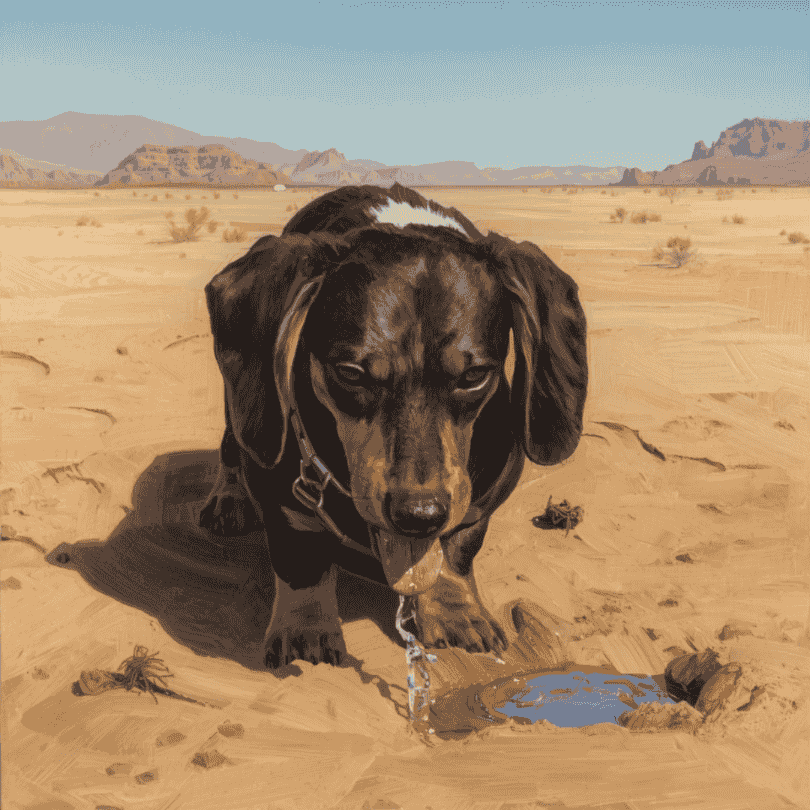
So what can you do to keep your dachshund safe?
- The safest everyday habit is simple.
- You should keep clean water available at all times for your dachshund.
- You should also carry water on walks when the weather is warm.
- You should learn what is normal, for your own dachshund.
Dachshunds can regulate its water intake well when water is freely available. So water should not normally be restricted for your dachshund.
FAQ: What Dog Owners Ask About Dachshund Water Intake
How much water should a dachshund drink per day?
A healthy dachshund will usually drink around 44 to 66 mL of water per kilogram of body weight per day under normal conditions. That means a small mini dachshund may drink much less than a larger standard dachshund, and both can still be perfectly normal. Hot weather, dry food, exercise, and travel can all push water intake higher without it meaning something is wrong.
How much water should a mini dachshund drink?
For a mini dachshund weighing about 5 kg, a practical daily range is roughly 220 to 330 mL per day. That is just a starting point, not a strict rule. Some dogs drink a bit less because they eat wet food, while others drink more in summer or after a longer walk. What matters most is knowing what is normal for your own dog and noticing any big change.
Do dachshund puppies need water, or is milk enough?
Very young puppies get their hydration mainly from their mother’s milk or a proper milk replacer. As they begin weaning, puppies should also start having access to fresh water. AKC notes that puppies generally begin needing a steady fresh water source as they transition to solid food, and some breeders introduce water at around 3 to 4 weeks.
Why is my dachshund drinking so much water all of a sudden?
A sudden increase in drinking can happen for simple reasons like hot weather, more exercise, stress, dry food, vomiting, or diarrhea. But if your dachshund is drinking far more than usual for more than a day or two, especially alongside more urination, weight loss, tiredness, or appetite changes, it is worth checking with your vet. Veterinary guidance commonly uses more than 100 mL/kg/day as the point where water intake is considered excessive.
Can a dachshund drink too much water?
Yes, although most dogs regulate themselves well when fresh water is always available. The bigger everyday concern is usually excessive drinking caused by an underlying issue, but dogs can also rarely drink too much too fast during play, swimming, or hose games. Water intoxication is uncommon, but it can be serious.
Does wet food count toward my dachshund’s water intake?
Yes, absolutely. Dogs that eat mostly wet or canned food often drink less from the bowl because canned food already contains a lot of moisture. Dry food contains much less water, so kibble-fed dogs often need to drink more separately. This is why two dachshunds of the same size can have very different bowl-drinking habits and both still be normal.
How do I know if my dachshund is dehydrated?
Common signs of dehydration in dogs include dry or sticky gums, thick saliva, lethargy, loss of appetite, panting, vomiting, dry-looking eyes, and reduced skin elasticity. In more serious cases, dogs may seem weak or collapse. If your dachshund is not drinking, is vomiting repeatedly, has diarrhea, or seems overheated, it is best not to wait too long before calling a veterinarian.
Should dachshunds drink more water in summer?
Yes, many dachshunds naturally drink more in warm weather because they lose more fluid through panting. Summer walks, car rides, sun exposure, and play can all increase hydration needs. That is one reason it is smart to bring fresh water on outings instead of assuming your dog can wait until you get home. Read our blog on how to prepare your dachshund for the summer season.
Is it normal for my dachshund to drink less water when eating wet food?
Yes. This is one of the most common reasons owners think something is wrong when it actually is not. A dachshund eating a moisture-rich diet may not visit the bowl as often because some of that hydration is already coming from food. The better question is not only “How much is my dog drinking?” but also “What is my dog eating, and has anything changed?”
When should I call the vet about my dachshund’s water intake?
Call your vet if your dachshund suddenly starts drinking much more than usual, drinks very little for an extended period, shows signs of dehydration, or has other symptoms like vomiting, diarrhea, lethargy, more frequent urination, or weight loss. A change in thirst can be one of the earliest signs that something is off, especially in older dogs.






 Dachshund Jackets & Coats
 Dachshund Hoodies
 Dachshund Sweaters
 Dachshund Shirts
 Dachshund Life Jackets
 Dachshund Costumes
 Dachshund Pajamas

 Dachshund Harnesses
 Dachshund Collars


 Dachshund Backpacks


