
How to measure your dachshund for perfect fitting clothes: A complete guide


If you’ve ever tried to dress your dachshund in standard dog clothes, you already know the struggle. That adorable sweater you ordered online? Too short in the back. The cute jacket from the pet store? Too wide around the middle. The problem isn’t your wiener dog. It’s that most dog clothing is designed for breeds with completely different proportions. That’s why is very important to know how to measure your dachshund.
The first time I bought clothes for my dachshund, I ordered a “medium” sweater like I would for any small dog. It fit around the chest but left half of her back exposed. That’s when I realized dachshunds need completely different measurements than other breeds.
Their elongated backs, short legs, and deep chests mean standard sizing charts simply don’t work. But here’s the good news: once you know how to measure your dachshund properly, finding clothes that fit becomes straightforward.
This guide walks you through exactly how to measure your dachshund for perfect fitting clothes. Whether you’re shopping for cozy sweaters or protective jackets and coats, these steps will ensure you get the right fit every time.
Why dachshunds need special measuring
Dachshunds aren’t shaped like other dogs. They are different. Very different. Their distinctive silhouette (long back, short legs, barrel chest) evolved from their history as badger hunters in Germany. While this body type made them excellent at burrowing into tunnels, it makes clothes shopping a challenge. You’ll always have a feeling that the clothes you want to buy are not just right.
Here’s what sets dachshunds apart:
- Elongated back: A dachshund’s spine can be up to three times longer than their height at the shoulder, according to breed experts at the American Kennel Club. Standard dog clothes are designed for more squarely proportioned breeds.
- Deep chest: Their ribcage is surprisingly deep and barrel-shaped. Clothes that fit the chest are often too loose around the waist.
- Short legs: Those stubby little legs mean garments designed for taller breeds drag on the ground or restrict movement.
The result? When you buy “medium” dog clothes for your standard dachshund, you typically get something that’s too short along the back, too baggy around the middle, and awkwardly proportioned everywhere else.
Proper fit matters beyond just looks. Ill-fitting clothes can restrict your dachshund’s movement, cause chafing, or even create safety hazards if they trip over fabric that’s too long. Getting accurate measurements ensures your doxie stays comfortable, mobile, and happy in their outfits.
What you’ll need before you start
Before you begin measuring, gather a few simple supplies:
- Flexible measuring tape: A soft cloth or vinyl tape measure works best. Avoid metal construction tapes, they don’t wrap around your dog’s curves properly.
- Treats: Small, high-value treats keep your dachshund cooperative and still during the process.
- Notebook or phone: You’ll want to record measurements immediately. Trust me, you won’t remember them all.
- A helper (optional): An extra set of hands makes the process faster, especially if your dachshund is wiggly.
Timing matters too. Measure your dachshund when they’re relaxed, perhaps after a walk when they’ve burned off some energy. A calm dog stands straighter and holds position better, which means more accurate measurements.
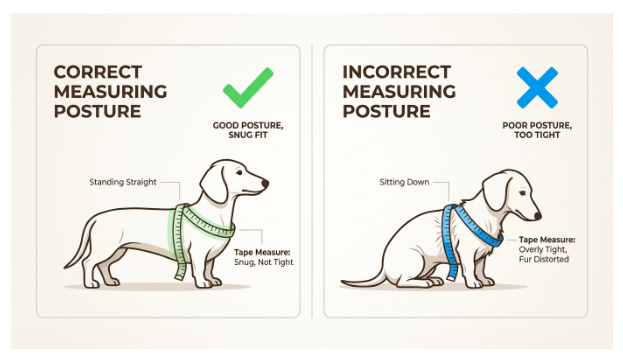
The most important factor? Your dog’s posture. Always measure when your dachshund is standing on a flat, level surface. Sitting or lying down compresses their body and gives you incorrect numbers. The standing position ensures you capture their true proportions. Therefore, my advice is to measure your dog only when it’s in a standing position.
The four critical measurements for dachshunds
Every dachshund owner needs to know these four measurements. Write them all down, even if you’re only shopping for one type of clothing. Having the complete set makes future purchases easier.
Step 1: Measure neck circumference
Start at the base of your dachshund’s neck, right where it meets the shoulders. This is typically the widest part of the neck and it also serves as a point for taking measures for a collar.
Wrap your measuring tape around this area, keeping it snug but not tight. You should be able to slide one or two fingers comfortably between the tape and your dog’s fur. If you can’t fit a finger, the measurement is too tight. If the tape slides around loosely, it’s too loose.
Why this matters: Neck measurements determine how collars, harnesses, and neck openings on shirts and sweaters will fit. Too tight and your dachshund will be uncomfortable or have trouble breathing. Too loose and the garment will shift around or slip off.
Pro tip: Add one finger’s width of space for short-haired dachshunds, two fingers for wire-haired or long-haired varieties to account for coat thickness.
Step 2: Measure chest girth
This is the most important measurement for most dachshund clothing. The chest girth determines whether a garment will actually fit around your dog’s body.
Find the widest part of your dachshund’s chest. I always tell my Doxie to stand up so I can take the right measure. This part is typically just behind the front legs. Wrap the measuring tape around this area, making sure it stays level and parallel to the ground. The tape should sit snugly against the fur without compressing it.
Why this matters: The chest is the widest part of a dachshund’s body. If a garment doesn’t fit here, it won’t fit at all. This measurement is usually the determining factor for what size to order, especially for hoodies and coats.
Pro tip: Take this measurement twice to ensure accuracy. A difference of even half an inch can mean the difference between a perfect fit and a return.
Step 3: Measure back length
Here’s where dachshunds really differ from other breeds. Their backs are significantly longer relative to their body size, which is why standard dog clothes always fall short.
Place the start of your measuring tape at the base of your dachshund’s neck (the same spot where you measured neck circumference). Run the tape straight along the spine to the base of the tail. Keep the tape straight and level, don’t let it sag or curve around the body.
Why this matters: Back length determines whether a coat, sweater, or shirt will actually cover your dachshund’s back or leave them with an exposed midsection. Given how long dachshund backs are, this is a critical measurement for proper coverage.
Pro tip: Your dachshund must be standing straight for this measurement. If they’re hunched or sitting, you’ll get a shorter measurement than reality, leading to clothes that don’t fit.
Step 4: Measure waist circumference
The final measurement is around the narrowest part of your dachshund’s abdomen, just before the hind legs begin.
Wrap the measuring tape gently around this area. Unlike the chest, which is deep and barrel-shaped, the waist is relatively narrow on a dachshund.
Why this matters: Waist measurements ensure garments don’t slip backward or bunch up around the hips. This is especially important for coats, sweaters, and the Cozy Comfy Dachshund Hoodie, which need to stay in place during walks and play.
Pro tip: Some dachshunds carry their weight differently. If your doxie is on the stocky side, measure both the narrowest point and slightly forward to get a complete picture of their body shape.
Standard vs. miniature dachshund sizing
Not all dachshunds are the same size. Understanding whether you have a standard or miniature dachshund helps contextualize your measurements.
| Size | Weight | Typical Back Length | Typical Chest Girth |
| Miniature | Under 11 lbs | 11-14 inches | 12-16 inches |
| Standard | 16-32 lbs | 15-18 inches | 16-20 inches |
These ranges are guidelines, not rules. Individual dachshunds vary based on genetics, diet, and activity level. Some standard dachshunds run smaller, while some miniatures are on the larger side.
If you have a puppy, remember that dachshunds don’t reach their full size until about 12 months old. Measure every 4-6 weeks during the first year to track their growth. Adult dachshunds should be remeasured every 6 months or whenever you notice weight changes.
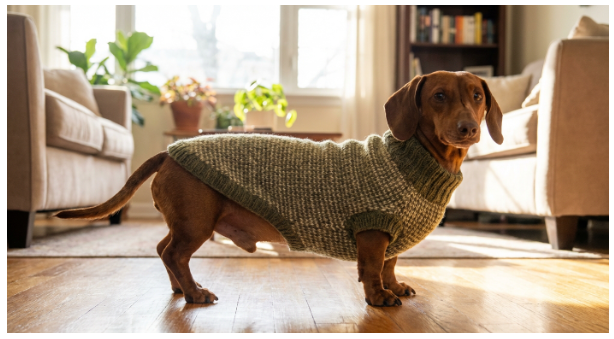
Common measuring mistakes to avoid
Even with the best intentions, it’s easy to get measurements wrong. Here are the most common mistakes dachshund owners make:
- Measuring while sitting or lying down: This compresses the body and gives shorter measurements than your dog’s actual size. Always measure standing.
- Pulling the tape too tight: You want snug, not strangling. If the tape leaves an indent in the fur, it’s too tight.
- Not accounting for coat type: Wire-haired and long-haired dachshunds need slightly larger sizes than smooth-coated dachshunds with the same body measurements.
- Guessing instead of measuring: “He looks like a medium” is a recipe for returns. Always measure. My friend ordered the wrong size just because he didn’t want to follow the size guide under the product.
- Using weight alone: Two dachshunds can weigh exactly the same but have completely different body proportions. Weight is a reference point, not a sizing guide.
- Measuring only once: Take each measurement twice. If the numbers differ by more than half an inch, measure a third time.
Here are some pro tips to make measuring easier:
- Measure twice, order once: Double-check every measurement before placing an order.
- Have treats ready: Reward your dachshund after each measurement to keep them cooperative.
- Keep sessions short: If your dog gets restless, take a break and come back to it.
- When in doubt, size up: A slightly loose garment is more comfortable than one that’s too tight.
Using your measurements to shop for dachshund clothes
Now that you have your measurements, it’s time to shop. But here’s something important to understand: every brand sizes differently.
A “medium” from one company might be a “large” from another. Always check the specific size chart for the brand you’re considering. Compare your four measurements to their chart and choose the size that best accommodates your dachshund’s largest measurement (usually the chest).
Different clothing types prioritize different measurements:
- Sweaters and hoodies: Chest girth is usually most important
- Coats and jackets: Back length and chest girth matter equally
- Harnesses: Neck and chest measurements are both critical
Consider fabric stretch too. A knit sweater has more give than a waterproof raincoat. If your dachshund’s measurements fall between sizes, stretchy fabrics can accommodate the smaller size, while rigid fabrics require sizing up.
Before ordering from any retailer, check their return policy. Even with perfect measurements, sometimes the fit isn’t quite right. At Dachshund Space, we design our clothes specifically for dachshund proportions, which takes much of the guesswork out of sizing.
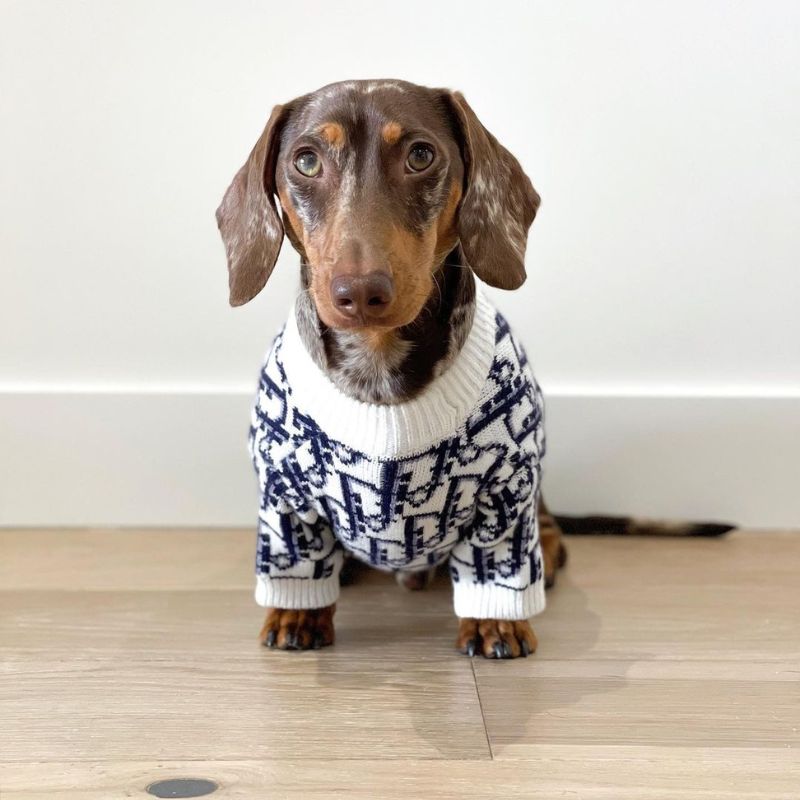
Some of our most popular items include the stylish Dogior Sweater, the warm Dog Face Puffer Jacket, and the adorable Teddy Bear Jacket. Each is designed with your doxie’s unique body shape in mind.
Find perfectly fitting clothes for your dachshund today
Getting accurate measurements is the difference between clothes your dachshund tolerates and clothes they genuinely enjoy wearing. When garments fit properly, your doxie can move freely, stay comfortable, and look adorable without any restriction or irritation.
The key is understanding that dachshunds aren’t shaped like other dogs. Their elongated backs, deep chests, and short legs require a breed-specific approach to sizing. Once you master the four critical measurements (neck, chest, back length, and waist), you’ll never have to guess at sizes again.
At Dachshund Space, we understand these challenges because we live with them too. That’s why we design every item specifically for dachshund proportions. Our sweaters, jackets and coats, and hoodies are made to fit your long-bodied buddy perfectly, right out of the package.
Ready to find clothes that actually fit? Browse our collections and use your new measuring skills to find the perfect size for your dachshund.
Frequently Asked Questions
How often should I remeasure my dachshund for clothes?
Adult dachshunds should be remeasured every 6 months or whenever you notice weight changes. Puppies need measuring every 4-6 weeks during their first year while they’re still growing.
What if my dachshund’s measurements fall between two sizes?
When in doubt, size up. A slightly loose garment is more comfortable than one that’s too tight. For stretchy fabrics like knits, you can often go with the smaller size. For rigid materials like raincoats, always choose the larger size.
Can I use a regular ruler instead of a flexible measuring tape?
A flexible measuring tape is strongly recommended because it wraps around your dachshund’s curved body. If you only have a ruler, use a piece of string to measure around your dog, then measure the string with the ruler.
Do I need different measurements for harnesses versus clothes?
Harnesses primarily require neck and chest measurements. Clothing needs all four measurements (neck, chest, back length, and waist) for the best fit. Always check the specific sizing requirements for the item you’re purchasing.
How do I measure a wiggly dachshund who won’t stand still?
Try measuring after a walk when they’re tired, use high-value treats to reward stillness, or enlist a helper to hold them gently in position. You can also take multiple quick measurements and average the results. For example, my dog stands still by showing him his favorite toy.
Should I measure my dachshund with or without their collar on?
Remove the collar before measuring neck circumference. You want to measure the actual neck size, not the neck plus collar. This ensures clothing neck openings fit properly without being too tight.



 Dachshund Jackets & Coats
 Dachshund Hoodies
 Dachshund Sweaters
 Dachshund Shirts
 Dachshund Life Jackets
 Dachshund Costumes
 Dachshund Pajamas

 Dachshund Harnesses
 Dachshund Collars


 Dachshund Backpacks


