
Dachshunds and Babies: How to Introduce Your Doxie to Your Newborn


Bringing home a new baby is an exciting and life-changing event – not just for you, but also for your dachshund. If you are a first-time parent, you may feel worried about how your doxie will react to the new baby. The good news is that dachshunds and babies can absolutely become best buddies with the right preparation and introduction. Dachshunds are loyal, affectionate dogs, but they also have big personalities that can include stubbornness or jealousy.
In this blog post, we will share helpful tips on getting your dachshund ready for a new baby. We will also discuss how to prevent jealousy or aggression. Finally, we will show you how to create a safe and loving bond between your wiener dog and your baby.
Preparing Your Dachshund Before the Baby Arrives
Start early
Ideally, begin preparing your dachshund during pregnancy, a few months before the baby’s arrival. Dogs thrive on routine, and a new baby will bring many changes to your household. Gradual preparation will help your pup adjust. Here are some steps to take before you bring the baby home:
Introduce baby sights, sounds, and smells
Let your dachshund get used to baby-related items and noises in advance. Set up the nursery early and allow your dog to explore it under supervision. It’s an important thing that helps a pet get used to a new environment and items.
Start using the baby’s lotion, powders, or shampoo on yourself or around the house so these new scents become familiar. Play recordings of a baby crying or cooing at a low volume. Slowly increase the volume over several days. Reward your dog for staying calm. You certainly don’t want to deal with your dog’s barking when you bring a baby home.
If possible, expose your dachshund to real infants or toddlers in a controlled setting. For example, have friends with babies visit for a short, supervised playdate. This teaches your pup that small humans are just part of normal life.
Teach obedience and new commands
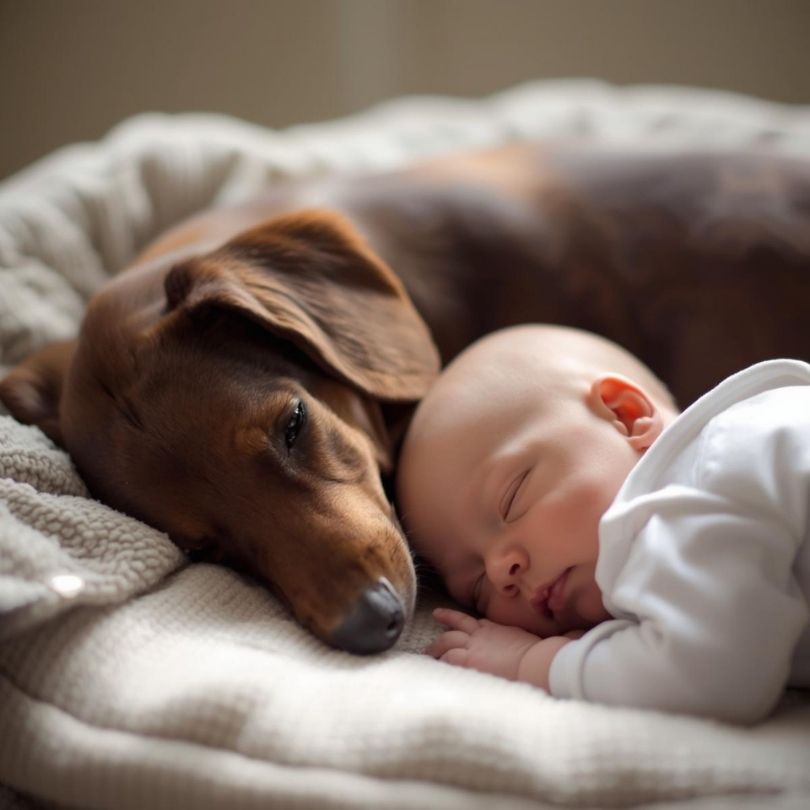
Brush up on basic obedience skills that will be invaluable when the baby comes. Important commands include sit, stay, down, leave it, and come. A dachshund that will stay on command or leave a dropped pacifier when told is much easier to manage around a newborn.
You can also teach a special cue like “gentle.” For example, practice having your dachshund take treats softly from your hand. Say “gentle” while doing this. This helps them learn to be calm and slow around small fingers. Another useful command is teaching your dog to go to a specific spot or bed on cue (sometimes called “place” or “go away” training).
This way, if things get hectic, you can ask your dog to settle on their bed for a while. Think about using a crate or a playpen as a safe space for your dachshund, if you haven’t done so already. A crate or dog bed in a quiet corner gives them a safe space when they feel stressed. This will be important when the baby starts crawling.
Read our blog post on How to choose the best bed for a Dachshund.
Adjust your dog’s routine gradually
Think about how your daily schedule will change with a newborn. Will your dachshund get walks at different times? Will feeding times shift? Start implementing those changes now before the baby arrives.
If you usually walk your dog for an hour each evening, but you will be busy at bedtime, consider a shorter walk. You can take this shorter walk in the late afternoon instead. If some areas will be off-limits, like the nursery or the couch during feeding, set those rules ahead of time. Consistency and early practice will prevent your pup from feeling suddenly displaced by the baby.
Practice with a baby “stand-in”
It might sound a little silly, but many trainers recommend using a lifelike baby doll to simulate holding your baby. Carry a doll around the house, talk to it, rock it, and even use baby blankets. While you do this, encourage your dachshund to remain calm nearby. Reward them with treats and praise when they observe calmly or sit at your feet
Solve any behavior issues now
If your dachshund shows any bad behaviors, like barking too much or guarding toys, it’s smart to fix them before the baby arrives.
For example, if your dog growls when someone gets close to their food bowl or toy, train them to stop this behavior. You don’t want that happening when a curious toddler crawls over in the future.
The First Meeting: How to Introduce Your Dachshund to the Baby
After all that preparation, the big day will arrive when your baby comes home. First impressions are important for dogs and babies alike. Your dachshund will be curious and maybe a little nervous about the tiny new “creature” in your arms. Here’s how to handle the introduction safely and calmly:
-
Calm atmosphere
When you walk through the door with your new baby for the first time, try to keep the atmosphere as calm as possible. It really helps if another adult is around to lend a hand. Let your dog greet you without the baby right away.
Have a helper take the baby to another room for a moment. You can also leave the baby safely in the car seat. Then, say hello to your dachshund. Your doxie hasn’t seen you for a couple of days and will probably burst with excitement. Give them a chance to wiggle, zoom, and get that happy energy out. Once things settle, clip on a leash. Even if your dachshund is usually an angel, a leash just gives you a little extra control during the first introduction.
-
Use treats and praise
Arm yourself (or your helper) with small tasty treats. Now bring the baby into the room, carried by one adult while the other adult keeps the dachshund on leash. Keep your voice cheerful and relaxed – your dog can read your tone. If you act nervous or on edge, your dachshund might think there’s something to worry about.
Instead, speak softly and positively: “Look, here’s the baby! Good girl, sit nicely.” As the dog notices the baby, reward any calm or curious-but-gentle behavior. You can ask for a simple command like “sit” or “down” and give a treat for compliance, so that the very first moments are full of praise and rewards. The idea is to help your dachshund associate the baby with good things from the start.
-
Let the dog sniff, but safely
If your dachshund’s body language is relaxed (tail wagging low, no stiff posture, no growling), allow them to sniff the baby briefly under control.
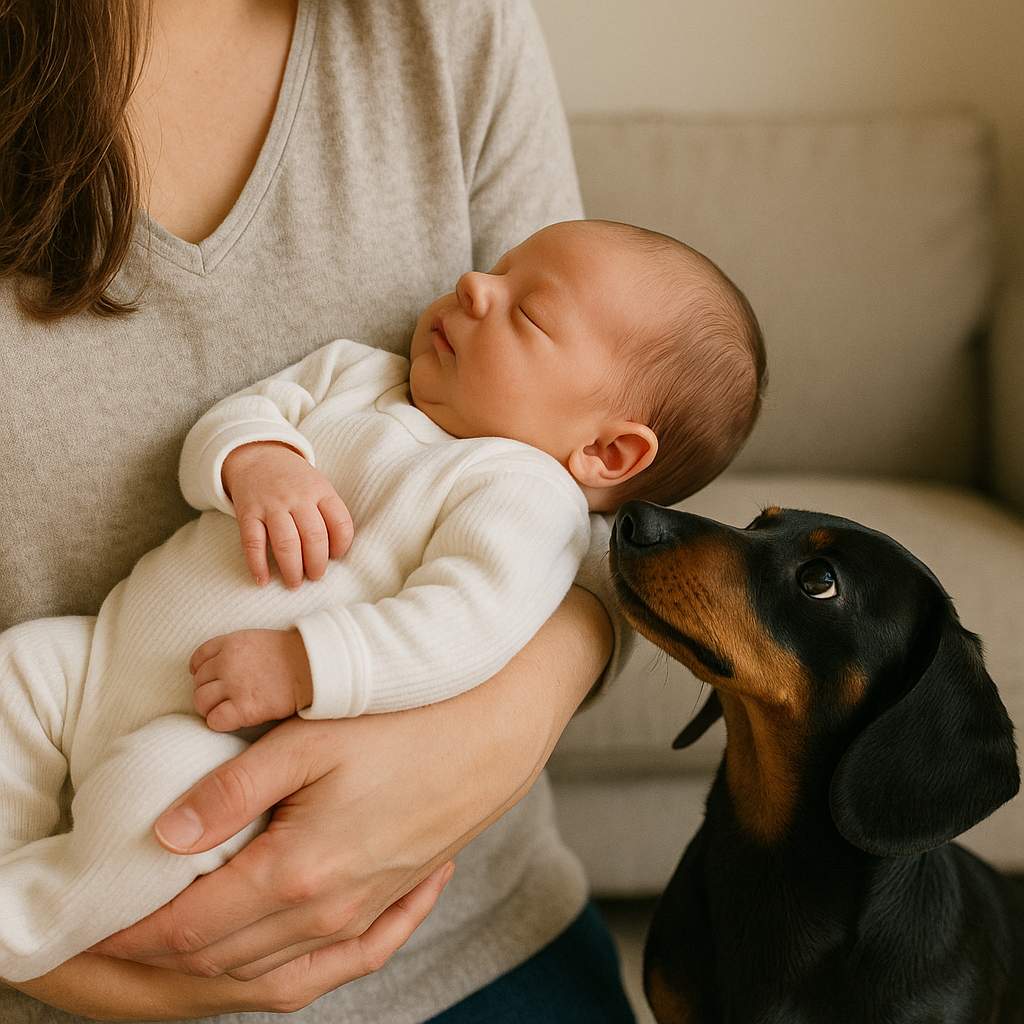
Many parents let the dog sniff the baby’s feet or the edge of a blanket the baby is wrapped in. Keep the baby in your arms, and do not put the baby’s face right up to the dog. It’s best to let the dog approach at their own pace, and only as close as you are comfortable.
A gentle sniff of tiny toes is plenty for a first meeting! Continue to speak calmly and praise your pup for being gentle. If your dachshund seems too excited or anxious, like trying to jump or whining, have your helper gently pull back on the leash. This will help refocus the dog’s attention.
Keep initial interactions short and sweet. After a minute or two of polite sniffing and calm praise, you can end the intro. Perhaps give your dog a favorite chew toy or a food puzzle (prepared in advance) and let them relax in a familiar spot. This teaches your dachshund that meeting the baby leads to yummy treats and then something fun for them, which is a great first lesson.
-
Never force it
Every dog is different. Some dachshunds may be curious and want to lick the baby. You should usually discourage this, especially on the face. Others might hang back as if unsure. Do not push your dog to interact if they seem nervous.
It’s perfectly fine if your dachshund decides to sniff from a distance and then walk away to their bed. Respect that! Forcing close contact can create a negative association or frighten your pup. Over the next days and weeks, you can continue slow introductions.
-
Extra tips for first meetings
Some families choose to have the dog stay with a friend or relative for the very first day or two after bringing baby home. This isn’t strictly necessary, but if you anticipate feeling completely overwhelmed. We all know newborns are a handful, and moms especially need recovery time.
A short separation can help you settle the baby in, and then you can reintroduce the dog when you have a bit more energy. Whether you do this or not, remember to remain calm and upbeat during interactions.
Dogs pick up on our emotions. If you keep yelling “No, no, no!” when the dog gets close to the baby, your dachshund may think the baby is scary. They might also believe they are not allowed near the “new pack member” at all. We want them to eventually be friends. Therefore, supervision with positive reinforcement (and some gentle control) is the way to go.
Preventing Jealousy: Making Your Doxie Still Feel Loved
Dachshunds are sometimes known for having a jealous streak. They love being the center of your world, and a new baby can make them feel left out if you’re not careful. Imagine: your pup has been your “baby” for years, and suddenly they see you cuddling this new little human all the time. It’s natural for your dog to wonder about their place in the pack. Yes, dachshunds can get jealous, but you can manage it proactively. Here’s how to keep those short legs and long faces free of envy:
- Maintain routines (as much as possible): Dogs find comfort in the familiar. Try to keep feeding times, walks, and playtime on a consistent schedule even after your baby arrives.
- Give attention when the baby is around: You might think to only play with your dog when the baby is asleep. After all, that’s when you have free time. However, dog trainers suggest the opposite: whenever possible, engage with your dog while the baby is present and awake.
- Carve out one-on-one time: That said, you should also ensure your dachshund still gets some solo cuddle time with you each day. It might be 15 minutes in the evening after the baby is asleep. You and your pup can relax on the couch. Or you could have a quick play session with their favorite squeaky toy in the backyard. Another adult can watch the baby during this time.
- Involve the dog in “helping” with the baby: Dachshunds are curious and can be quite clever. You can give your pup small “jobs” or involve them in a supervised way. For example, let your dachshund sit nearby when you’re nursing or bottle-feeding – maybe they lie at your feet on their blanket. You can even give your dog a command like “fetch diaper” (some dogs will learn to retrieve a baby item or at least accompany you to the diaper bin!). These little inclusions make the dog feel like part of the team.
- Look for signs of jealousy or stress: Even if you try your best, your dachshund may show some jealous behaviors at first. This could be whining when you pick up the baby, trying to wedge themselves between you and the baby, or even having accidents or chewing things due to stress. Don’t punish your dog if they regress or act out; instead, provide reassurance and stick to the tips above.
Safety Rules for Dachshunds and Babies Coexisting
Safety is paramount when you have any dog around a baby, and that includes our beloved but sometimes headstrong dachshunds. By following some simple rules, you can keep both the baby and the dog safe and happy:
- Always supervise interactions: This cannot be stressed enough. Never leave your dachshund alone with the baby, even for a few minutes. Babies are unpredictable (sudden shrieks or flailing limbs) and dogs, even small ones, have teeth and strong reactions. Until your child is much older and your dog is proven 100% trustworthy, an adult should always be present and watching when they’re together. If you need to leave the room, either take the baby with you or secure the dog (e.g., behind a baby gate or in their crate for a short time). It only takes a second for an accidental scratch or worse. Supervision is the number one safety rule.
- Create dog-only and baby-only zones: It’s healthy for both your dachshund and your baby to have their own space. Consider using baby gates to section off parts of the house. Perhaps the dog isn’t allowed in the nursery, or you set up a baby playpen where the baby can have tummy time without a wet nose intruding. Likewise, make sure your dog has a space where they can retreat that the baby can’t access (like a dog bed in a corner or a crate that’s off-limits to the child). Teaching your dog that they can take a break from the baby will help if they ever feel overwhelmed. As your baby becomes a toddler, keep reminding them that the dog’s bed or crate is a “no touch” area. This is the dog’s safe space.
- Train gentle interactions on both sides: We’ve talked about training your dog to be gentle, but eventually you’ll also be teaching your child how to behave around the dog. Even as a baby, you can narrate like, “We pet the puppy softly,” and gently stroke the dachshund so your baby later mimics that. Dachshunds have long backs that can be injured by rough handling, so it’s important that kids learn never to yank the dog or pick them up improperly.
- Mind the body language: Learn the basics of dog body language so you can spot when your dachshund is uncomfortable. Common warning signs of stress or potential aggression include: ears back, lip licking, yawning (as a stress signal), stiff posture, growling, showing teeth, or trying to walk away.
- No high places with baby: One specific tip for dachshunds – many of them love to snuggle on the couch or bed with you. When you have a newborn, be careful about letting the dog jump up on furniture when the baby is there.
- Keep dog health in check: Make sure your dachshund is up to date on vaccinations and flea/tick preventatives when you bring a baby home. You don’t want any parasites or illnesses that could possibly transfer.
What If My Dachshund Shows Aggression Toward a Baby?
It’s uncommon for a well-socialized dachshund to be aggressive toward a newborn in the home – after all, the baby smells like family. Dachshunds are protective of their pack, and many treat the new baby as a tiny pack member to watch over.
However, dachshunds are brave, prey-driven dogs and can have an obstinate streak. If not trained or if they feel threatened, any dog can show aggression.
First, distinguish between curiosity, jealousy, and true aggression. A little growl when the dog is sniffing the baby’s blanket might just mean, “I’m not sure about this object.”
You should take it seriously, but remain calm. If your dog’s hackles go up, or they snarl or try to nip the baby’s clothing, stop the interaction immediately. Firmly say a basic command like “No” or “Come” and lead your dog away to a safe area. It may be wise at that point to consult a professional dog trainer or behaviorist for guidance before further introductions.
Often, what people interpret as “aggression” in this scenario is actually fear or anxiety in the dog.
Dachshunds can be alarmed by the strange noises and smells of a baby. They may also feel their territory is being invaded by this new creature. The key is to manage the environment so your dog never feels cornered or overly stressed by the baby’s presence. This means always allowing the dog an exit. I don’t recommend that you hold the dog in your arms and force them to “meet” the baby. I remember when my friend did it, and his dog didn’t react pleasantly at all.
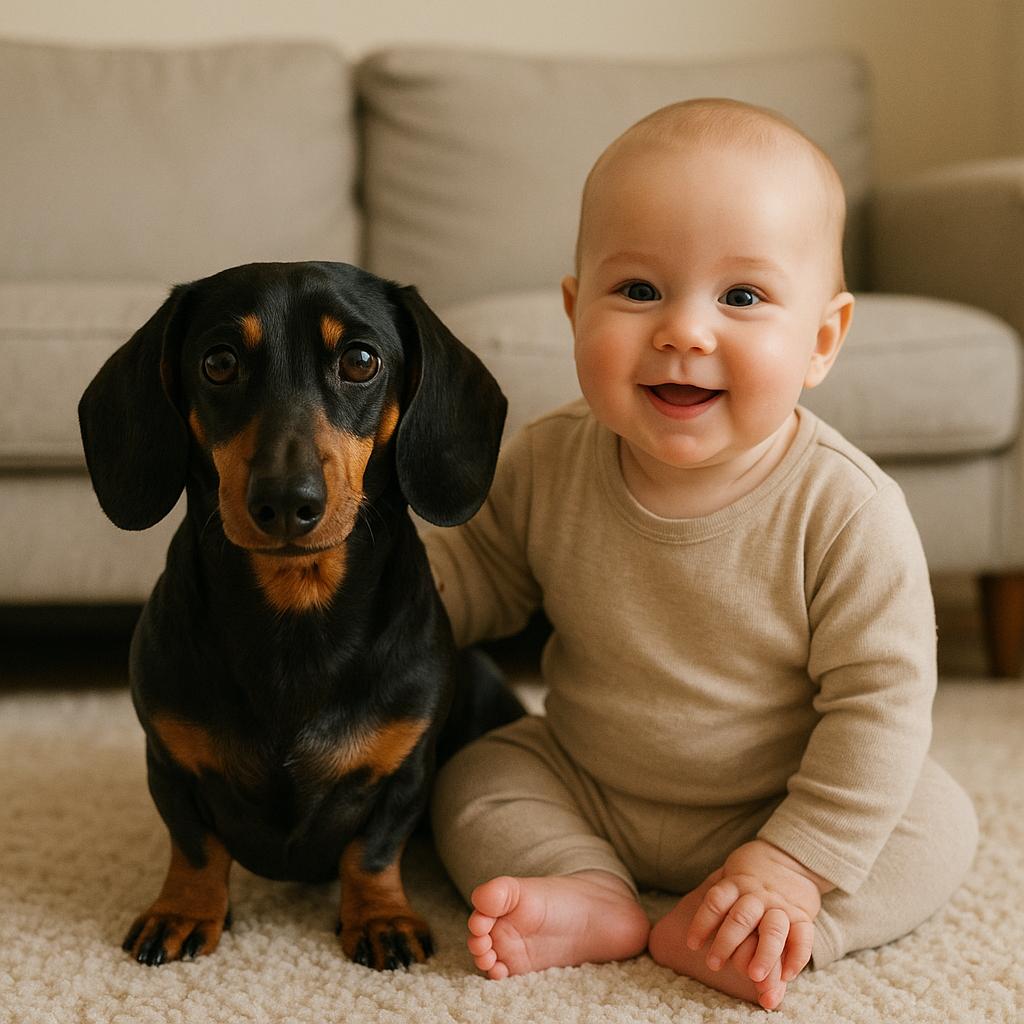
Dachshunds and Babies Can Be Best Friends
Don’t let the prep and the worrying get you down. Your dachshund will soon warm up to the new family member. You will see a heartwarming sight as their friendship begins to grow.
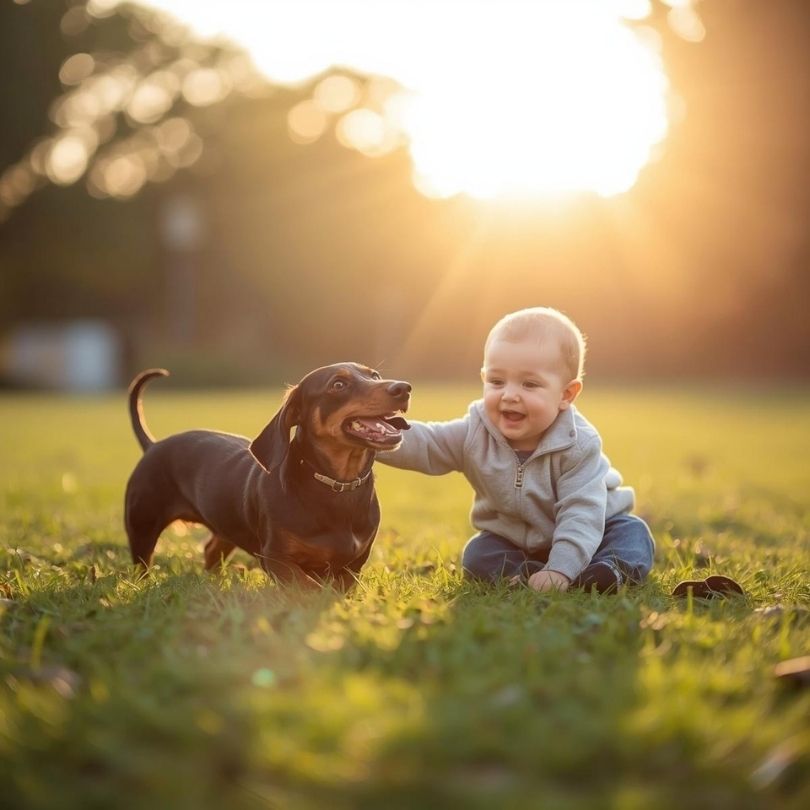
You’ll have many moments that will melt your heart. Your dachshund will curl up right next to the baby’s bouncer during naptime. It will also start bringing toys over to the baby as “gifts”.
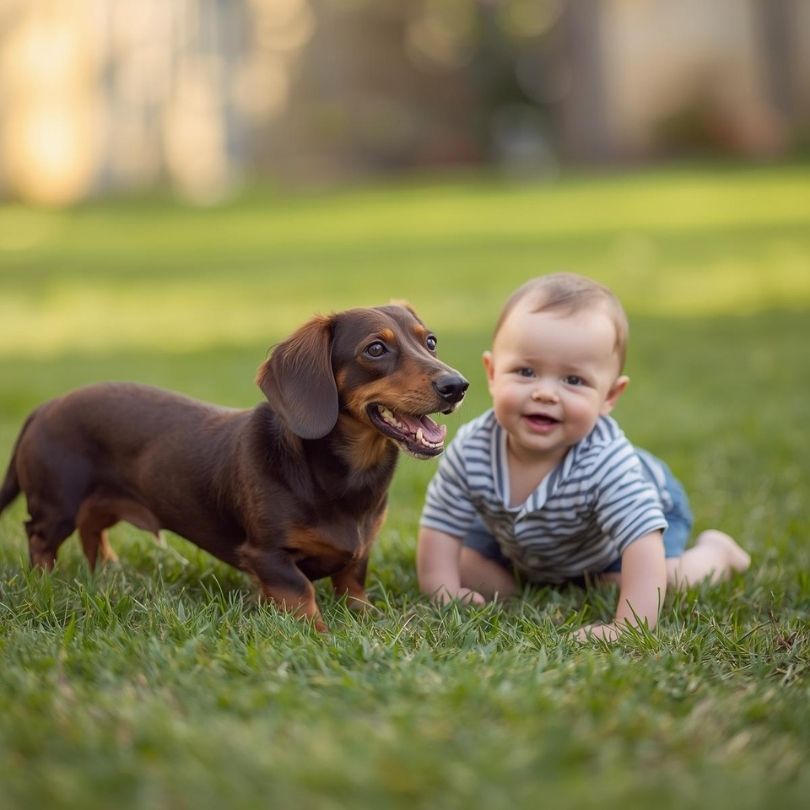
As your baby starts to grow up, the chances are your dachshund will turn into their little guardian and playmate. Dachshunds and babies don’t have to be at all opposites. They can live happily together. That’s why it’s important to make your pooch ready before baby arrival. Take things slowly and keep their routine going normally.






 Dachshund Jackets & Coats
 Dachshund Hoodies
 Dachshund Sweaters
 Dachshund Shirts
 Dachshund Life Jackets
 Dachshund Costumes
 Dachshund Pajamas

 Dachshund Harnesses
 Dachshund Collars


 Dachshund Backpacks


