
Dachshund Tail: Long, Strong, and Telling a Story


Dachshunds are famous for their long, wagging tails – those cute little rudders that never seem to stop moving. In this post, we’ll dive into everything about the dachshund tail, from its unique look and purpose to what different tail positions mean.
We’ll also discuss common dachshund tail problems, and whether dachshund tails should ever be docked. So grab your wiener dog (if they’re not too busy burrowing under a blanket) and let’s talk tails!
What Kind of Tail Does a Dachshund Have?
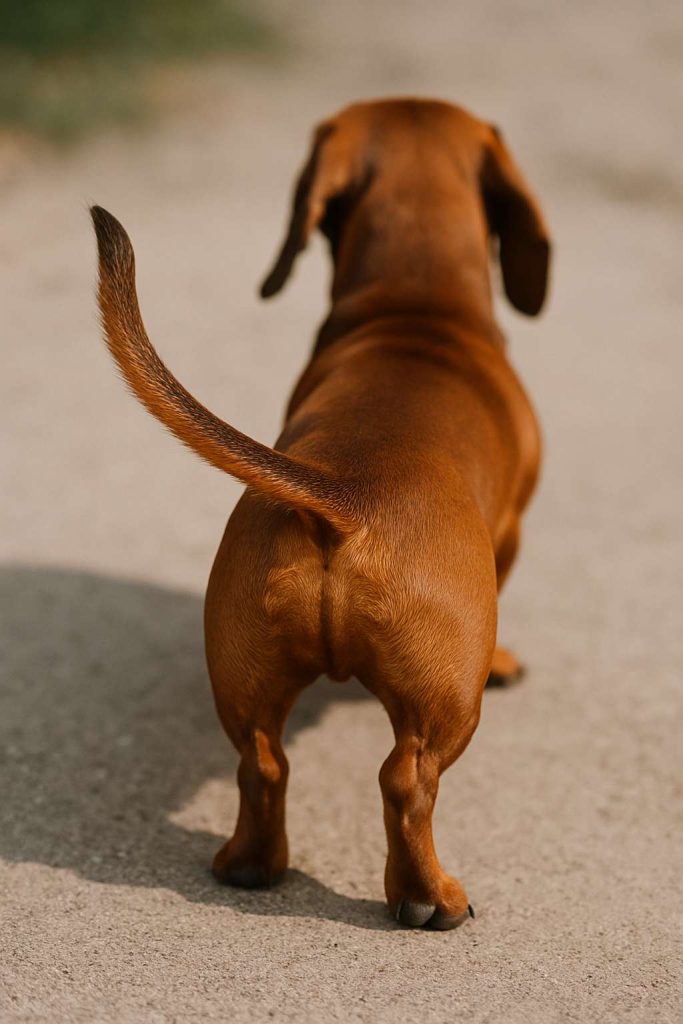
Dachshunds have long, sturdy tails that are actually an extension of their spine. Since they play an important role in their bodies, you need to know what you need to pay attention to. Unlike curly-tailed breeds or those with short “bobbed” tails, a dachshund’s tail is fairly straight and tapers to a point.
It’s usually carried in line with the back (the “topline”) when the dog is standing or trotting, neither arched over the back nor dragging low. This gives the dachshund a balanced silhouette despite their long body. In fact, the tail’s length typically reaches the dog’s hock (the ankle joint of the hind leg) when gently stretched out.
If you have a long-haired dachshund, the tail will be feathered with elegant flowing hair. It will look almost like a little flag waving behind them. For wire-haired dachshunds, the tail is covered in the same rough coat as the body – sometimes looking a bit bristly. Smooth-coated dachshunds have a sleek tail with short fur. In all varieties, the tail should not be too thick or too thin, and it shouldn’t have any kinks. It’s a saber-like tail that stays fairly straight.
You might be wondering, do dachshunds have long tails compared to other dogs? Absolutely – their tails are proportionally long for their body size. This isn’t an accident of nature; it’s by design. The long dachshund tail has a purpose rooted in the breed’s history.
Why Are Dachshunds’ Tails So Long?
Dachshunds were originally bred in Germany as hunting dogs, tasked with flushing out badgers and other burrow-dwelling animals. That extra-long, sturdy tail was no cosmetic whim – it served as a practical “handle” for hunters! If a dachshund wriggled its way into a tunnel after a badger, a hunter could grab the dog’s tail to pull it back out of the burrow if needed. The tail had to be strong and well-attached for this purpose, which is why the breed developed a robust, lengthy tail. In fact, early dachshund breeders specifically valued a strong tail for this very reason. It’s amazing to think that your petite couch-loving doxie’s tail was meant for such daring rescues.
Because of this history, dachshunds were never meant to have docked (shortened) tails. The full length was important for working dachshunds. As one dachshund expert notes, these pups were designed to dig into badger dens, and their long tails gave humans a way to retrieve them from tight spots. Today, even though our dachshunds are more likely to be hunting treats under the couch than badgers in a tunnel, they’ve kept those long waggly tails as part of their charming look.
Dachshund Tail Communication: Wagging, Positions, and Emotions
A dachshund’s tail isn’t just for show – it’s also a big indicator of how they’re feeling. Dogs use their tails as a communication tool, and dachshunds are no exception. Let’s decode some dachshund tail language:
Happy Wags
If you see that tail swishing side to side like crazy, you’ve got one happy dachshund! Dachshunds wag their tails to express excitement, joy, and friendliness. So when your dachshund greets you with that windmill tail, it’s a sign of pure love.
Tail Held High
Ever notice your dachshund prancing around with their tail flagged up in the air? A tail that’s carried upward (above the horizontal line of their back) often means a dog is feeling confident, alert, or even a little bold. Why is my dachshund’s tail always up? Probably because your doxie is feeling happy, in control, or checking out what’s going on – dachshunds are curious pups with a proud stance.
Relaxed or Neutral Position
When a dachshund is calm and content, you might see their tail carried in a neutral position, roughly in line with their body or just slightly lowered. Maybe it gently wags now and then, showing they’re at ease. This means “I’m okay, just chilling.” During naps or lounging, they might even let it completely relax on the ground.
Dachshund Tail Between the Legs
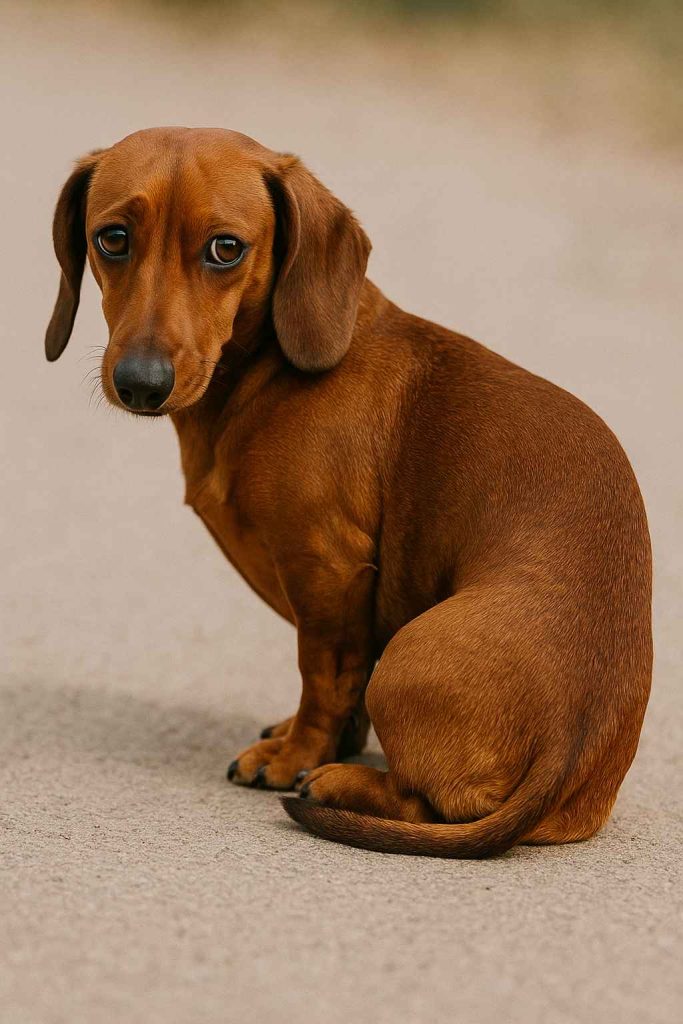
A dachshund tail between the legs is a classic sign that the dog is fearful, anxious, or feeling submissive. If your wiener dog tucks their tail low under their hindquarters, they’re basically saying “I’m scared” or “I’m no threat, please be gentle.” This body language is seen in any dog breed. It’s an instinctual response to fear or discomfort.
For example, a dachshund who meets a much bigger dog at the park might momentarily put their tail between their legs if they feel intimidated. Or if they’re in trouble, the tail might go down because they’re anticipating a scolding.
In normal situations though, tail-tucking means your dachshund is either frightened or showing submission (“Okay, you’re the boss.”). Give them some time, space, and gentle encouragement to rebuild their confidence.
Stiff, High Wag or Rapid Twitching
Sometimes a dog’s tail wag can be misleading – not all wags mean happiness. A tail held very high and stiff, with just the end twitching quickly, can indicate agitation or high alertness. You might see this if your dachshund spots a squirrel or hears a strange noise: their tail goes up like an antenna, possibly vibrating with anticipation.
Common Dachshund Tail Problems and Care
Just like any other part of the body, tails can sometimes have issues. While dachshunds aren’t particularly prone to tail problems, there are a few things owners should be aware of:
“Limber Tail” (Sprained Tail)
Believe it or not, dogs can sprain or strain their tails. A condition nicknamed limber tail (or “cold tail” or “frozen tail”) can occur in any breed, though it’s more common in working dogs like Labs. It usually happens after excessive exercise or exposure to cold water. If your dachshund overexerts themselves or somehow strains the tail, the result is a limp, painful tail that just hangs down and refuses to wag.
Your pup might act as if it hurts to lift their tail (because it likely does). The good news: limber tail syndrome is temporary and typically resolves within a few days to a week with rest and anti-inflammatory treatment. Dachshunds are small, so they’re less likely to get this than big swimmers, but it can happen if, say, an enthusiastic doxie wags too hard or gets their tail caught. If you notice your dog’s tail suddenly not wagging and they seem uncomfortable, give the vet a call. Minor tail injuries usually heal on their own, but a vet can confirm it’s just a sprain and not something more serious.
Tail Tip Injuries
The dachshund tail is pretty sturdy, but the tip can get scrapes or cuts, especially if slammed in a door or stepped on by accident. A common issue in big dogs is “happy tail”. They whip the tail so hard it hits objects and gets cuts. However, most dachshunds aren’t large or strong-tailed enough to do serious damage that way.
Still, check your dachshund’s tail occasionally for any sores or bleeding at the tip or along the length. If your dog has a minor cut, clean it gently and keep an eye on it. If the tail is swollen or very sore, see the vet – never ignore a severely lumpy or swollen tail, as it could indicate an infection or bite that needs treatment.
Hair Loss on the Tail
Some dachshund owners notice their pup’s tail getting a bit bald or thin-haired, especially near the base. One possible reason is hypothyroidism. It’s a thyroid hormone deficiency that can cause a phenomenon vets call “rat tail” – where the tail hair thins out a lot.
Cushing’s disease (excess cortisol hormone) can similarly lead to a sparsely furred tail and back. If you see patchy hair loss on the tail or rump, it could also be flea allergy dermatitis. Flea-bitten dachshunds often chew the base of their tail like crazy, leading to bald spots and irritated skin.
Anal Gland Issues
This one isn’t exactly a tail problem, but it’s adjacent and can affect tail posture. Dachshunds, like many small breeds, can have trouble with their anal glands (two little scent glands under the tail).
If they get full or infected, it’s quite painful. A dog with anal gland pain might tuck their tail, scoot their bum on the floor, or lick/chew near the tail base. If your dog’s tail is down and they’re acting uncomfortable back there (for example, straining or yelping when pooping), impacted anal glands could be the cause.
IVDD and Tail Paralysis
One of the scary health issues dachshunds are prone to is back problems, specifically Intervertebral Disc Disease (IVDD). When a disc in the spine herniates (slips or ruptures), it can press on nerves and cause pain or paralysis. If the herniated disc is in the lower back, near the tail region, it might affect the nerves that control the tail and even bowel/bladder.
In such cases, you might notice your dachshund can’t wag their tail or is holding it limp, coinciding with difficulty walking or other signs of back trouble. If your dachshund ever suddenly stops wagging their tail and seems weak or wobbly in the hind legs, take it seriously – it could be a sign of IVDD or spinal injury.
Treatment may involve anti-inflammatories, rest (often strict crate rest), or even surgery in severe cases. The good news is many dogs recover well if treated promptly. To prevent back issues, always support your dachshund’s rear when lifting them, use ramps for furniture, and keep them at a healthy weight. (For more tips on dachshund back health and other dachshund health problems, you can read our in-depth guide on that topic.)
Growths, Lumps, or Infections
Sometimes lumps or bumps can appear on a dog’s tail. These could be benign cysts, infected bug bites, or in rare cases, tumors. If you feel a strange lump on your dachshund’s tail that wasn’t there before, have the vet take a look. It might be nothing serious, but it’s better to be sure. Infections at the tail base can also occur, especially if there’s been scratching or fleas. Redness, swelling, or discharge are signs of an infection that needs treatment (usually antibiotics).
Dachshund Tail Docking: Should You Dock a Dachshund’s Tail?
Short answer: No. Dachshunds are not a breed that requires or benefits from tail docking. In fact, most people would agree that you should not dock a dachshund’s tail. Historically, as we mentioned, dachshunds needed their long tails for work, and breeders did not dock them. Today, docking (surgically cutting off part of the tail) is generally considered unnecessary and even cruel for dachshunds.
Do dachshunds get their tails docked?
In general, no, they don’t. Unlike some breeds (e.g. Rottweilers, Dobermans, certain spaniels) where tail docking became a traditional practice, dachshunds have largely been spared this fate. The official breed standards do not call for a docked tail, and a dachshund with a natural full tail is completely normal and correct. If you’ve seen a dachshund with a short tail, it was likely due to a medical reason or a birth defect, not a cosmetic choice. Occasionally a severe injury might require part of a tail to be amputated for the dog’s welfare, but routine docking of dachshund puppies is not common or recommended.
Is tail docking cruel?
Many veterinarians and animal welfare organizations believe so. Tail docking is usually performed on newborn puppies just a few days old – without anesthesia. Studies show that puppies do feel that pain, and it can have lasting negative effects on their pain sensitivity.
Because the only purpose of docking in most breeds is cosmetic (for looks), doing this painful procedure is hard to justify. The American Veterinary Medical Association (AVMA) opposes cosmetic tail docking and encourages breeders to remove it from breed standards.
Many countries have outlawed tail docking entirely (except for proven medical necessity) because it’s viewed as unnecessary mutilation. In the UK, most of Europe, Australia, and other countries, docking a pet dog’s tail is illegal or tightly regulated.
In the US and some other countries, it’s still legal but falling out of favor. When it comes to dachshunds, there’s really no reason to dock. They aren’t out working in heavy brush where one might argue (rightly or wrongly) about preventing tail injuries. They mostly keep their tails safe and sound. Plus, have you seen how expressive and cute a dachshund’s tail is? Why would anyone want to cut it off? It’s part of their character!
What kind of tail does a dachshund have?
Dachshunds have a long, straight, saber-like tail. It’s a continuation of their spine without any sharp curves. The tail tapers toward the tip and is carried in line with the back (not curled over like a husky’s or held high like a beagle’s). In essence, a dachshund’s tail is proportionally long, strong, and covered in the same type of fur as the rest of the coat.
For example, long-haired dachshunds have elegantly feathered tails, whereas smooth dachshunds have sleek tails. This distinctive tail not only adds to their adorable silhouette but also has a purpose in the breed’s hunting past.
Why are dachshunds’ tails so long?
Their tails are long for a very practical historical reason. Dachshunds were bred to hunt badgers and other animals in burrows and tight tunnels.
Hunters needed to be able to pull the dog out if it got stuck or to retrieve it from a burrow – and the long, sturdy tail was the perfect “handle” for that.
Because of this, breeders selected for dachshunds with robust long tails. Unlike some hunting breeds that had their tails docked short, dachshunds kept theirs long to serve as a convenient grab handle in the field. Today, that long tail remains, even though our pet dachshunds mostly use it for wagging and balance rather than needing human extraction from holes!
Keeping Your Dachshund’s tail healthy: wrapping up
Your dachshund’s tail is a fascinating and telling part of who they are. From its long, functional design rooted in badger-hunting history to the wagging signals it gives you every day, the tail is an expression of your doxie’s heritage and mood. Keep an eye on that tail for clues about how your pup feels, take care to avoid injuries to it, and never cut it short – it’s perfect just the way it is.
Tail care for dachshunds is generally straightforward. Be gentle with that long back and tail when handling your pup. Never pull their tail (despite the historical use as a handle – we definitely don’t recommend grabbing your pet by the tail!). Supervise children to ensure they don’t yank the tail, as this can injure the dog and break trust. During grooming, you can wipe the tail clean if it gets dirty and check for any ticks or issues. If your dachshund has a particularly thick tail or lots of feathering, keep it brushed to prevent mats. And of course, let that tail wag freely – a happy dachshund tail is one of the cutest things in the world!






 Dachshund Jackets & Coats
 Dachshund Hoodies
 Dachshund Sweaters
 Dachshund Shirts
 Dachshund Life Jackets
 Dachshund Costumes
 Dachshund Pajamas

 Dachshund Harnesses
 Dachshund Collars


 Dachshund Backpacks


