
Protecting Your Doxie with Dachshund Back Support: A complete guide


One thing I learned after years of speaking with thousands of dachshund owners is that back problems are not just a theoretical risk for this breed. Many customers reach out to us after experiencing their first IVDD scare, often after something as simple as a jump off the couch or a fall from the bed. Over time, those conversations have made one thing very clear. Prevention is far easier than treatment and we need to think about proper dachshund back support. While dachshunds are incredibly brave and energetic dogs, their unique body shape requires owners to think a little differently about everyday activities like climbing stairs, jumping on furniture, or even the type of harness they wear. Understanding those risks early can make a huge difference in protecting your doxie’s spine throughout their life.
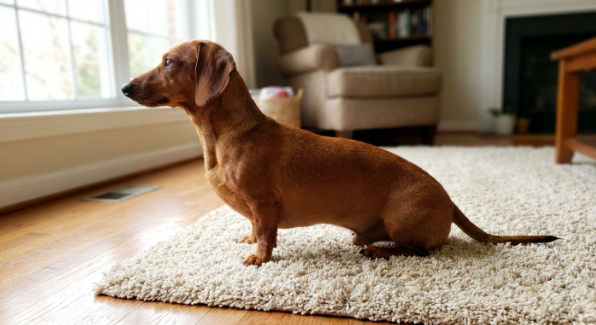
You are not being paranoid. Studies show that 1 in 4 dachshunds may experience back problems during their lifetime. Their distinctive body shape, a condition called chondrodystrophy, creates a structural liability that every dachshund parent needs to understand.
The good news is that you can significantly reduce your doxie’s risk. This guide covers everything you need to know about protecting your dachshund’s back, from daily habits to the best support products designed specifically for their unique proportions.
At Dachshund Space, we have built our community around understanding these brave little explorers. With over 10,000 satisfied customers and products designed specifically for dachshund bodies, we know what works.
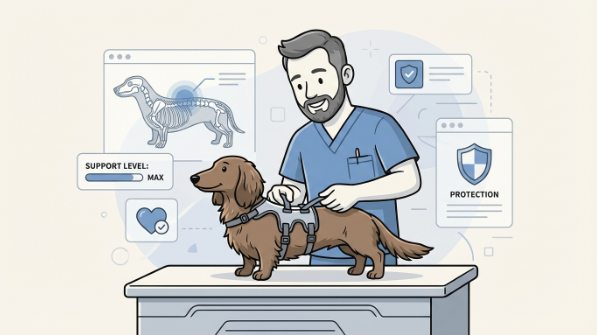
Understanding IVDD and your dachshund’s unique risk
What is IVDD?
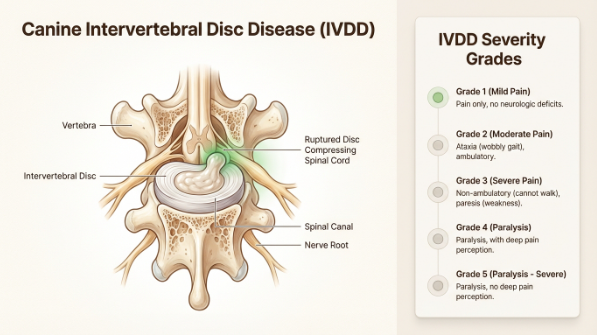
Intervertebral Disc Disease (IVDD) is the primary back condition affecting dachshunds. It occurs when the cushioning discs between the vertebrae slip or rupture, pressing on the spinal cord. This can cause everything from mild pain to complete paralysis.
Here is what makes dachshunds particularly susceptible: approximately 1 in 5 dachshunds carry a gene that creates mineral deposits within their spinal discs.
IVDD is typically graded on a scale from 1 to 5:
- Level 1: Back pain only
- Level 2: Movement issues begin
- Level 3: Unable to move legs
- Level 4: Can still feel toes but has lost mobility
- Level 5: Complete paralysis without toe sensation
The key thing to remember is that early intervention matters tremendously. Dogs who still have toe sensation have a 90% chance of walking again after treatment. Once they reach level 5, those odds drop to 50%.
Why dachshunds need special protection
Your dachshund’s body is essentially a long bridge supported by very short pillars. In standard dog breeds, the spine is proportionally shorter and weight distribution is more efficient. But your doxie’s elongated vertebral column means that even minor movements, like jumping off furniture or twisting quickly to chase a toy, place immense shearing forces on their discs.
These discs often calcify prematurely in dachshunds, making them brittle and prone to rupture. This is Type 1 IVDD, the most common form in the breed.
The emotional toll on owners is real. An IVDD episode can mean expensive emergency surgery, months of crate rest, or permanent lifestyle changes for your pet. Understanding the risks and taking preventive action is not overprotective. It is responsible pet ownership.
Prevention strategies that actually work: Dachshund Back Support
The best approach to IVDD is preventing it from happening in the first place. Here are the strategies veterinarians and dachshund experts consistently recommend.
Weight management
Extra pounds equal extra stress on the spine. It only takes being overweight by 10% of their ideal body weight to cause significant strain. For a 14-pound dachshund, that is just 1.4 extra pounds.
Keep your doxie lean by:
- Sticking to portioned meals rather than free feeding
- Using healthy training treats in moderation
- Ensuring you can see a visible waistline when looking down at your dog
If you need help managing your dachshund’s weight, check out our health-care products designed to support their overall wellbeing.
Exercise the right way
Dachshunds need daily activity to stay healthy, but moderation is key. The goal is building muscle tone without putting undue stress on the spine.
Good exercise options include:
- Short, consistent walks on flat surfaces
- Swimming (excellent low-impact activity)
- Puzzle toys and indoor games for mental stimulation
Activities to avoid:
- Steep hills and rough terrain
- High-impact running or jumping. These pooches have small legs, so you should not allow them to jumps from heights.
- Stair climbing (use baby gates to limit access). This rule should be very important for small puppies.
Home environment modifications
Your home setup can either protect your dachshund or put them at risk. Simple changes make a big difference.
Ramps are essential. Jumping on and off furniture puts tremendous strain on a dachshund’s back. Pet ramps allow them to access couches and beds safely. Train your pup to use them early, and be consistent about enforcement.
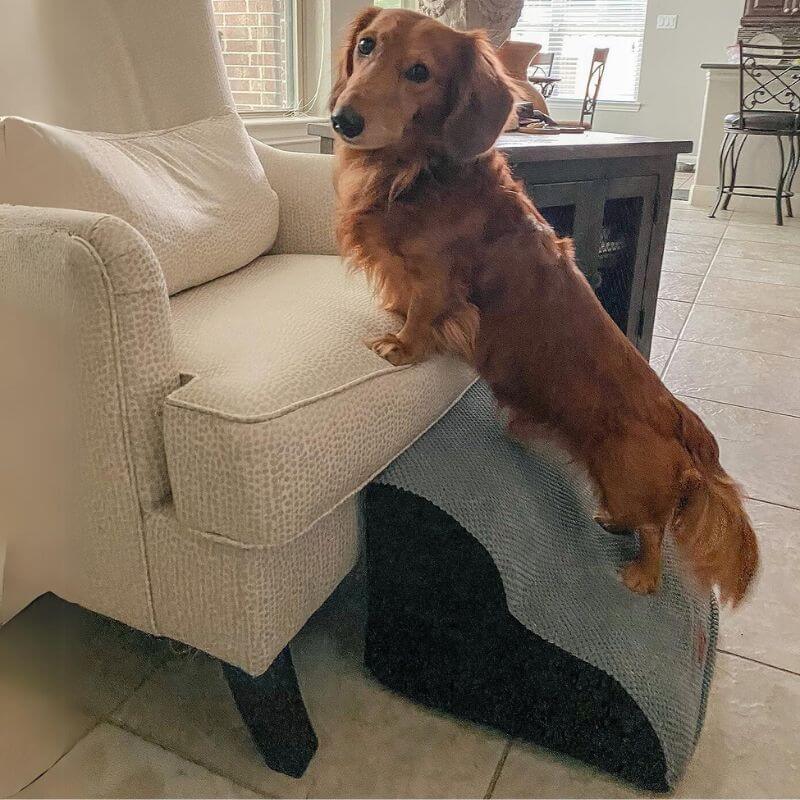
Baby gates work wonders. Installing gates on staircases reduces how often your dachshund attempts to navigate them. It does not mean they will never use stairs, but it puts you in control of limiting stair usage. If you’re not sure whether Doxies can climb stairs, read my blog post here.
Invest in orthopedic support. Memory foam beds provide proper spinal support during rest. Look for beds that accommodate their long body without forcing them to curl up unnaturally.

The harness vs. collar debate
This is one area where the right equipment matters enormously. Collars put direct strain on the neck and spine when your dog pulls. For a breed already prone to back issues, this is a risk you do not need to take.
Step-in harnesses that distribute weight evenly across the chest are the better choice. They reduce strain on the neck and give you better control during walks.
The key is teaching your dachshund to walk on a loose lead without pulling ahead of you. The pulling and jerking motion is what actually puts added strain on their spines. Consider investing in training sessions to master loose-leash walking. It enhances your bond and protects their back.
Browse our collection of dachshund harnesses designed specifically for your doxie’s unique body proportions.
Safe handling techniques for dachshunds
How you pick up and carry your dachshund matters more than you might think. Improper lifting is a common cause of back injuries.
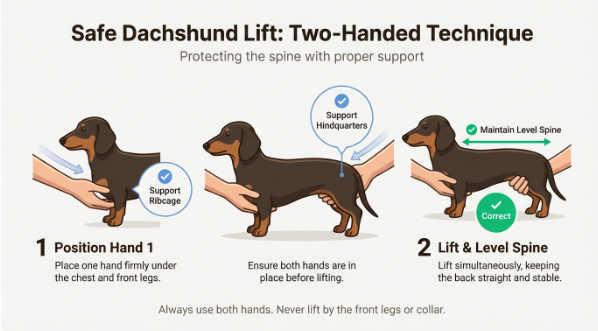
The two-handed lift method
Always use two hands when lifting your dachshund:
- Place one hand under their chest to support the front
- Place your other hand under their rump to support the back
- Keep their body level as you lift
- Avoid twisting motions that could stress the spine
Never lift a dachshund by their front legs alone or let their back end dangle. This creates unnatural spinal curvature and increases injury risk.
When to use a carrier
There are times when carrying your dachshund is the safest option:
- Long distances that would tire them out
- Navigating stairs in unfamiliar environments
- Post-injury recovery periods
- Crowded areas where they might get stepped on
A quality carrier designed for dachshunds provides proper support for their entire body. Look for carriers that:
- Support the chest and rump simultaneously
- Keep the spine in a neutral position
- Are easy for you to carry without straining
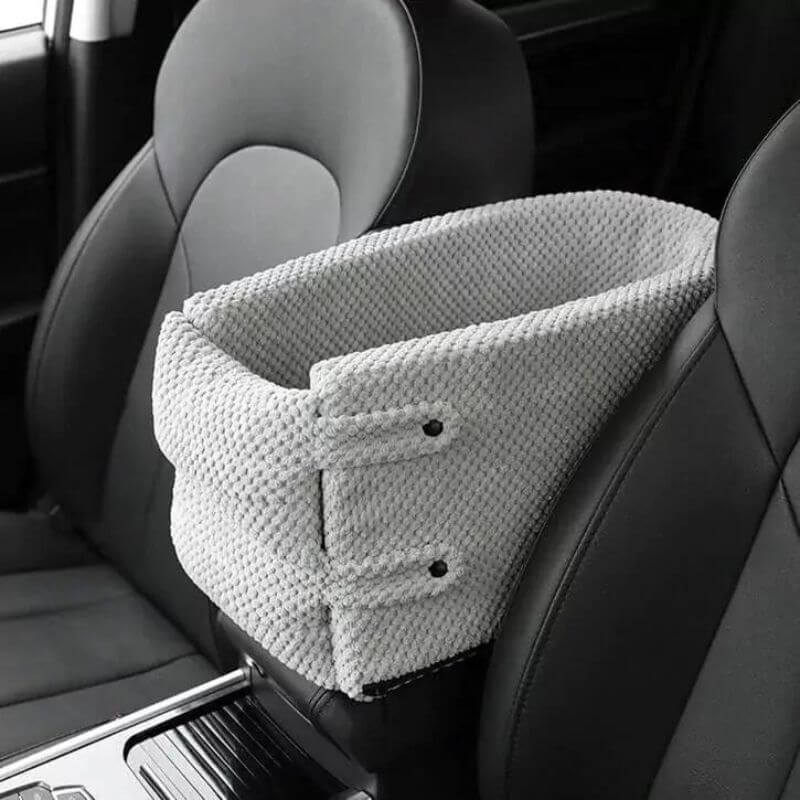
Our 2-in-1 portable dachshund carrier doubles as a car seat booster, giving your doxie safe transport options for every situation. Explore our full range of dachshund carriers to find the perfect fit for your lifestyle.
Teaching others to handle your doxie
Not everyone knows how to handle a dachshund properly. Take time to educate:
- Family members, especially children
- Pet sitters and dog walkers
- Veterinary staff (yes, even professionals sometimes need reminders)
- Well-meaning strangers who want to pick up your dog
Set clear boundaries. It is okay to tell people “please do not pick him up” or “support his back end if you do.” Your dog’s health is worth any momentary awkwardness.
Back support products: what works and what doesn’t
The market is full of products claiming to protect dachshund backs. Here is an honest assessment of what is worth your money.
Back braces: the debate
Back braces are essential support for dachshunds. The idea is that external stabilization can prevent the spine from moving in harmful ways.
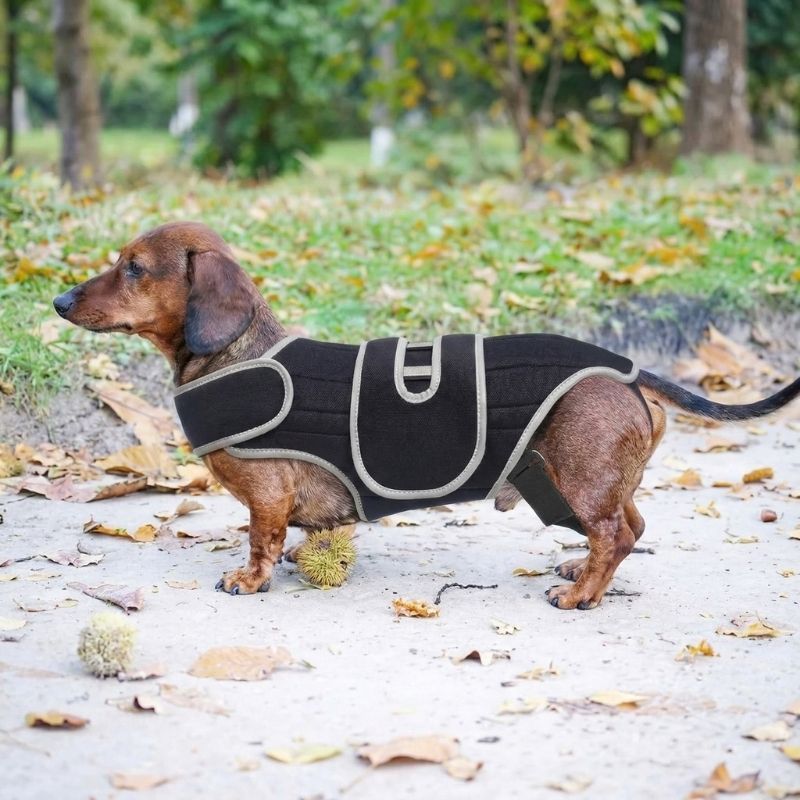
If you own a senior Dachshund who started to deal with mobility issues, then my advice is to check our Dachshund Back Brace. It keeps your dog’s spine stable and in a proper position. Thanks to velcros, you can set the size according to your dog’s body.
Back braces also have an important role in specific situations, particularly post-surgical recovery or for dogs with existing conditions.
Support harnesses and slings
Unlike back braces, support harnesses and slings serve a different purpose. They help dogs with mobility issues by supporting their rear end during walks or assisting them up stairs.
If your dachshund has experienced a back injury, a rear support harness can be invaluable for maintaining some independence while they recover. The key is choosing one that fits dachshund proportions properly.
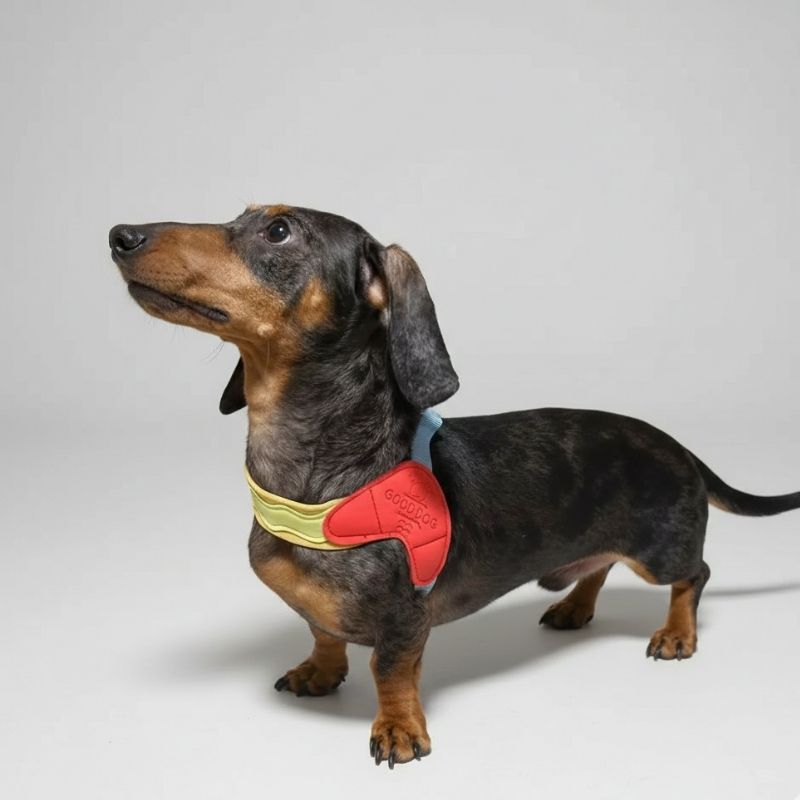
Our soft support doxie harness and space pop doxie harness are designed with your long-bodied buddy’s unique shape in mind. They provide control without restricting movement or putting pressure on vulnerable areas.
Carriers as back protection
A good carrier is one of the most underrated back protection tools. Every time you prevent your dachshund from jumping or climbing unnecessarily, you are protecting their spine.
Look for carriers that:
- Have rigid bottoms for spinal support
- Are sized appropriately for dachshund length
- Allow your dog to lie in a natural position
- Are comfortable enough for extended use
The Dachshund Space luxury transporter provides premium support and comfort for travel, vet visits, or any situation where walking might put your doxie at risk.

Recognizing warning signs and when to see a vet
Early intervention can mean the difference between rest and medication versus surgery. Know the warning signs.
Early warning signs
Call your veterinarian if you notice:
- Reluctance to move, climb, or jump
- Whining or crying when picked up
- Wobbling or unsteady back legs
- Changes in appetite or behavior
- Hunched posture or visible discomfort
These symptoms could indicate the early stages of IVDD. The sooner you act, the better the outcome typically is.
Emergency situations
Some symptoms require immediate emergency veterinary care:
- Sudden paralysis or inability to move legs
- Loss of bladder or bowel control
- Severe pain that does not respond to rest
- Complete loss of coordination
Time is critical in these situations. If your dachshund shows signs of paralysis, get to a veterinary neurologist immediately if possible.
Treatment options overview
If your dachshund is diagnosed with IVDD, treatment options depend on severity:
Conservative treatment: For mild cases (levels 1-2), rest combined with muscle relaxants, anti-inflammatory medication, and pain management may be sufficient. Crate confinement for 3-5 days is typically recommended, with restricted activity for several weeks.
Non-surgical interventions: Some veterinary neurologists offer laser procedures that cost about half of full surgery and take only 35 minutes. These can be effective for certain types of disc herniation.
Surgical intervention: For severe cases (levels 3-5), surgery may be necessary to relieve pressure on the spinal cord. The prognosis is best when surgery happens while the dog can still feel their toes.
Building a lifetime of back health for your dachshund
Protecting your dachshund’s back is not a one-time purchase or a single training session. It is a daily commitment that becomes part of your lifestyle together.
The strategies in this guide work best when applied consistently. Ramps only work if you use them every time. Harnesses only help if you put them on for every walk. Weight management requires ongoing attention.
But here is what makes it worthwhile: dachshunds with protected backs live longer, happier, more active lives. They can still be the brave little explorers they were bred to be. They just need a little help from the humans who love them.
Regular veterinary checkups are essential, especially as your dachshund ages. Your vet can spot early signs of back problems before they become serious and adjust your prevention strategy as needed.
At Dachshund Space, we understand the unique bond between dachshunds and their humans. Our products are designed specifically for the “long but tiny” proportions that make your doxie special. From harnesses that fit properly to carriers that support their backs, we have spent years perfecting solutions for wiener dogs.
Your dachshund gives you unconditional love, endless entertainment, and more personality than seems possible for such a small package. Protecting their back is one of the most important ways you can return that love.
Ready to give your doxie the support they deserve? Explore our dachshund back support solutions and join the thousands of dachshund parents who trust Dachshund Space to keep their long-bodied buddies safe, comfortable, and stylish.
For more dachshund care tips, health advice, and breed-specific guidance, visit our blog. Because when it comes to these special dogs, we believe fashion should always meet comfort and quality.
Frequently Asked Questions
How can I start protecting my doxie with dachshund back support at home?
Start with the basics: install ramps or steps for furniture access, switch from a collar to a step-in harness, use baby gates to limit stair access, and maintain a healthy weight through proper diet and portion control. These simple changes significantly reduce daily strain on your dachshund’s spine.
Are back braces effective for protecting your doxie with dachshund back support?
The effectiveness of back braces is debated among veterinarians. Prolonged use may even cause muscle atrophy. Consult your veterinarian before using a back brace, and consider them primarily for post-surgical recovery rather than everyday prevention.
What are the best products for protecting your doxie with dachshund back support during travel?
The best travel products include rigid-bottom carriers that support the entire spine, car seat boosters that prevent jumping, and harnesses designed for dachshund proportions. Look for carriers specifically sized for dachshund length, with features that keep your dog in a natural, supported position during transport.
How much does protecting your doxie with dachshund back support typically cost?
Prevention is much more affordable than treatment. Basic prevention (ramps, harnesses, baby gates) typically costs $100-300 total. Compare that to IVDD treatment: conservative management with medication might cost $500-1,500, while surgery can range from $3,000-8,000 or more. Investing in prevention products pays for itself many times over.
At what age should I start protecting my doxie with dachshund back support?
Start immediately, regardless of age. Puppies should be trained to use ramps from day one. Adult dachshunds benefit from lifestyle changes at any age. Senior dachshunds especially need back support as their discs become more fragile. It is never too early or too late to protect your dachshund’s spine.
What exercise is safe when protecting your doxie with dachshund back support in mind?
Safe exercises include short, consistent walks on flat surfaces, swimming (excellent low-impact cardio), and gentle indoor play on the ground level. Avoid steep hills, stairs, jumping, and high-impact running. The goal is maintaining muscle tone without stressing the spine. Always use a harness instead of a collar during walks.
Why we care about dachshund back health
At Dachshund Space, our focus has always been helping owners understand the unique needs of long-bodied dog breeds. Over the years we have worked with thousands of dachshund parents who want safer, better-fitting products designed specifically for their dog’s body shape.
Unlike many generic pet stores that design products for average dog proportions, dachshunds require special considerations due to their elongated spine and deep chest. That is why many of our products are created with features that support their natural posture and reduce unnecessary strain on their backs.
Our goal is not just to sell products, but to educate dachshund owners so they can make better decisions about their dog’s long-term health and comfort.
How we choose and recommend back-support gear
We don’t recommend products based on trends—we look at what helps reduce risky movement and supports safer handling. When we suggest ramps, harnesses, carriers, or orthopedic beds, we’re prioritizing practical features that matter for dachshunds: stable footing, full-body support, and a fit that works for a longer spine and deeper chest. We also pay attention to what dachshund owners report after real use—what actually gets used daily, what dogs accept without stress, and what helps owners prevent jumping and awkward lifting.






 Dachshund Jackets & Coats
 Dachshund Hoodies
 Dachshund Sweaters
 Dachshund Shirts
 Dachshund Life Jackets
 Dachshund Costumes
 Dachshund Pajamas

 Dachshund Harnesses
 Dachshund Collars


 Dachshund Backpacks


One thought on “Protecting Your Doxie with Dachshund Back Support: A complete guide”