

Why Are Dachshunds So Needy? 6 Real Reasons (And What to Do)


Dachshunds are famous for being velcro dogs. Here’s the real science behind their clinginess – and 5 practical ways to help them feel more secure.
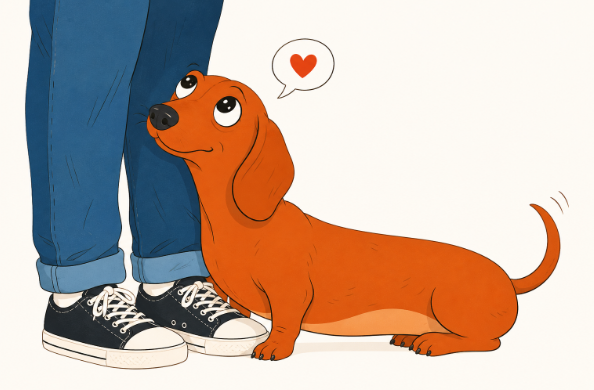
Dachshunds are needy because they were bred to work in close packs – strong social bonding is baked into the breed. The most common triggers for extra clinginess are separation anxiety, routine changes, boredom, learned behavior, sickness, and their deep pack instinct. Most dachshund “neediness” is normal and manageable: a solid routine, enough exercise, and teaching your dog that being alone is safe goes a long way. If the clinginess tips into destructive behavior or panic, that’s separation anxiety and worth treating seriously.
You grab a cup of coffee and head to the kitchen. Your dachshund is already there. You go to the bathroom. They’re sitting outside the door. You sit down at your desk. They’re on your feet.
Sound familiar?
Dachshunds have earned the “velcro dog” label honestly. They don’t just like being near you – they seem to physically require it. And if you’ve ever wondered whether this is a personality quirk, a training issue, or just… the breed, the answer is: mostly the breed, a little bit training, and sometimes something worth paying attention to.
Let’s get into it.
It’s in their DNA: the pack hunting origin
Dachshunds were developed in Germany more than 600 years ago, bred specifically to hunt badgers, rabbits, and other burrowing animals. The name literally means “badger dog” in German, and the design was intentional: a long, low-slung body that could follow prey into underground tunnels, combined with a fearless, stubborn temperament that wouldn’t back down once it got underground.
But here’s the part that’s relevant to your bathroom situation: they didn’t do this alone. Dachshunds were pack hunters. They worked in coordinated groups alongside other dogs and alongside humans. That tight social coordination – reading each other, staying together, not going rogue – was literally selected for over centuries.
That’s the foundation of the clinginess. A dachshund that wanders off alone isn’t acting like a dachshund. A dachshund that stays close to its pack is doing exactly what hundreds of years of breeding shaped it to do.
You can learn more about dachshund hunting history and what it means for their temperament today.
What’s actually happening in their brain
The American Kennel Club describes dachshunds as “playful, curious, and spunky” – but also notes they’re “devoted to the point of being stubborn.” That devotion isn’t incidental. Dachshunds form extremely strong attachments to their primary person, and their social intelligence is high enough that they’re acutely aware of where you are and what you’re doing at all times.
This combination – strong attachment, high social awareness, low tolerance for being alone – is what creates the velcro effect. Their brain is essentially running a constant background process of “where is my person, are they near, are they leaving?”
What makes dachshunds different from, say, a Shiba Inu (which can be just as stubborn but is far more independent) is that dachshunds weren’t bred to work independently. They were bred to work with. Independence wasn’t a virtue in their job description.
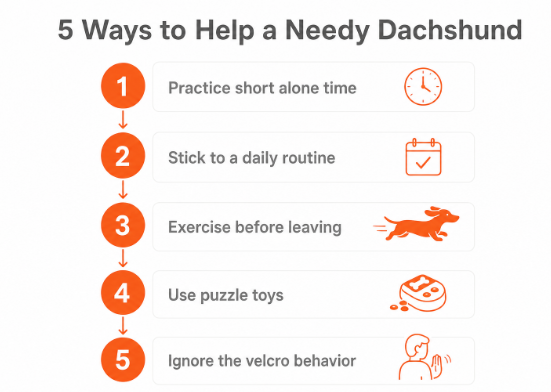
6 real reasons your dachshund is being extra needy right now
The baseline clinginess is breed-standard. But sometimes it ramps up – your dachshund is more attached than usual, more anxious, more desperate for contact. Here’s what’s usually driving it.
1. Pack instinct and early bonding
If you got your dachshund as a puppy, those first six months were formative in ways that directly shape their adult clinginess. Puppies who spent those months in close contact with their humans – lots of handling, sleeping nearby, being carried around – bond more intensely and sometimes develop stronger attachment behaviors as adults.
This isn’t a bad thing. It’s just the flip side of the warmth and loyalty dachshunds are known for. A dog that bonds deeply is also a dog that feels that bond deeply when it’s under threat.
2. Separation anxiety
This is the big one, and it’s worth separating (pun intended) from regular clinginess, because they require different responses.
Regular clinginess: your dachshund follows you everywhere, wants to be in physical contact, but settles when they’re near you.
Separation anxiety: your dachshund panics when you leave – destructive behavior, continuous barking or howling, toileting accidents despite being house-trained, attempts to escape, refusing to eat.
The PDSA notes that “dachshunds love human company so much they can develop separation anxiety if left alone,” and recommend homes where someone is around for most of the day. That’s not an overstatement – dachshunds as a breed genuinely struggle with extended alone time more than many other breeds.
3. Something in their routine changed
Dachshunds are creatures of habit to an almost comical degree. New home, new baby, new pet, a schedule change, a different food – any of these can spike their anxiety, which shows up as increased clinginess. They’re not sulking (well, maybe a little). They’re genuinely unsettled and turning to you as their anchor.
This is a good thing to know if you’ve noticed your dachshund suddenly becoming more velcro-ish than usual. Think back: did anything change in the last few weeks? There’s your answer.
Check out our guide to dachshund behavior problems and how to fix them for more on how routine disruption affects their behavior.
4. They’re sick or in pain
Dachshunds are prone to some specific health issues – notably IVDD (intervertebral disc disease) and back problems related to their long spine. Pain makes dogs clingy. If your usually independent dachshund suddenly wants to be glued to you, is reluctant to jump or climb stairs, or seems uncomfortable when you touch certain areas, it’s worth a vet visit.
This is the reason you should never brush off sudden behavioral changes as “just being needy” – a change in clinginess can be an early signal that something physical is going on.
5. Boredom and unspent energy
A dachshund with too little stimulation will follow you around because there’s literally nothing else to do. They were bred to have a job – sniffing, digging, tracking – and when that instinct has nowhere to go, it redirects toward you.
The fix here is usually more exercise (a properly tired dachshund is a calmer one) and more mental stimulation: puzzle feeders, sniff games, training sessions. You can check our dachshund toys for puzzle options that really do work for this.
6. Learned behavior – you accidentally trained it
This one is uncomfortable but true. Dachshunds are smart dogs, and they learn fast. If following you around, whining, or pawing at you consistently results in attention, cuddles, or treats – even just once in a while – they’ll keep doing it. Variable reinforcement (sometimes I get what I want, sometimes I don’t) is actually more compelling to dogs than consistent rewards.
If you’ve been scooping up your dachshund every time they look sad, you’ve been training them to look sad. The good news is this goes both ways: you can train calm, settled behavior just as effectively.
The r/Dachshund community on Reddit is full of owners who’ve pieced this together the hard way. One recurring theme in threads like “Anyone else’s dachshund a bit needy?” is the realization that the clinginess escalated precisely when owners started accommodating it – picking up the dog the moment they whined, letting them onto the bed to stop the howling, caving on alone time. The dog learned, fast, that these behaviors worked.
The jealousy factor at home
I used to have two dachshunds – a miniature and a standard. When I’d give attention to one, the other would physically wedge between us. Not aggressively. Just… decisively. Like a small, furry bouncer who had decided this particular hug had gone on long enough.
The mini, in particular, had a thing about the couch. If the standard dachshund was on my lap and the mini wasn’t, she’d pace, whine, and eventually just climb on top of both of us. There was no reasoning with her about personal space.
That dachshund jealousy is real, it’s well-documented in the breed, and it’s honestly part of what makes them so entertaining to live with. It’s the same social intelligence that makes them loyal and attuned – just pointed at sibling rivalry instead.
If you have multiple dogs, this is worth knowing. Dachshunds don’t share attention gracefully. They compete for it, openly and with great commitment.
Normal clinginess vs. separation anxiety – how to tell the difference
Not all neediness is the same, and the distinction matters for how you respond to it.
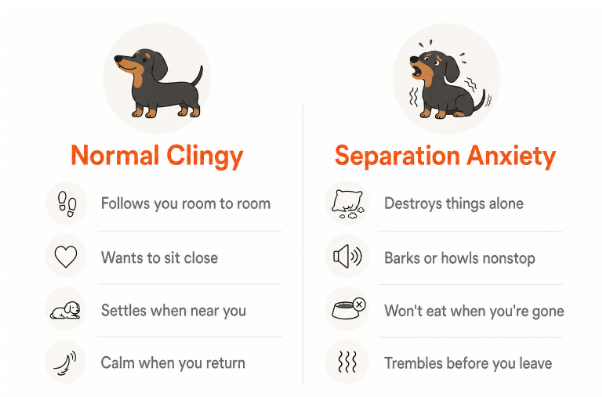
Normal clinginess versus separation anxiety in dachshunds – comparison infographic, as taken from Dachshund Space
Normal velcro behavior is manageable with consistency and training. True separation anxiety – the destructive, panicking kind – often needs a more structured approach: a desensitization program, possibly in consultation with a vet or certified animal behaviorist. Some cases respond to anti-anxiety medication used alongside behavioral work.
If you’re not sure which category your dachshund falls into, a useful test is to set up a camera and watch what they actually do when you leave. Many owners are surprised – sometimes the dog you think is devastated is actually fine within five minutes. And sometimes it’s worse than you realized.
A related read: can dachshunds be left alone? 5 things to know.
5 practical ways to help a needy dachshund
You can’t train out the breed trait – and honestly, you probably don’t want to, because that close bond is also why dachshunds are such extraordinary companions. But you can help your dog feel more secure and build a bit more independence.
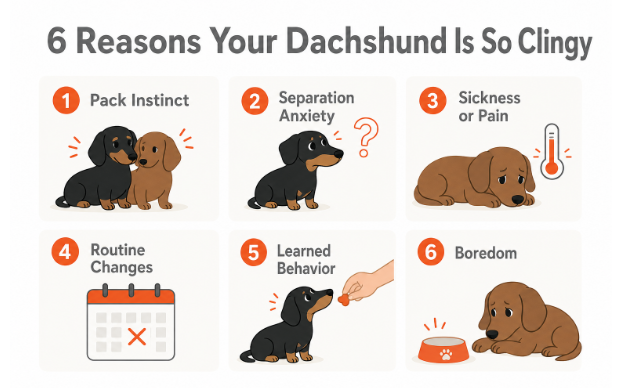
- Practice short, calm alone time – and build gradually. Start small: leave the room for 30 seconds, come back before they react. Build it up slowly over days and weeks. The goal is teaching them that you always come back, and that your absence doesn’t need to be treated as an emergency. Keep departures and arrivals low-key – big emotional goodbyes actually make anxiety worse.
- Stick to a predictable daily routine. Walk at the same time, feed at the same time, leave at the same time. Routine is genuinely calming for dachshunds. They can’t understand your schedule, but they can learn to predict it – and that predictability reduces background anxiety.
- Exercise before you leave. A physically tired dachshund is a dramatically calmer one. Even a 20-minute walk or play session before you head out can take the edge off their alone-time anxiety. This isn’t a cure, but it’s one of the most consistent short-term tools available.
- Give them something to do. A puzzle feeder filled with kibble, a frozen Kong, a chew – anything that occupies their brain and gives them a positive association with your departure. Some dachshunds learn to perk up when they see the departure routine begin because they know a treat is coming. That’s the association you want.
- Don’t reward the velcro behavior. This is the hard one. When your dachshund is pressed against your leg whining, the instinct is to pet them and reassure them. But that teaches them that whining and pressing gets rewarded. Respond to calm behavior instead – wait for a few seconds of settled, quiet behavior before giving attention. Even doing this inconsistently makes a difference over time.
For dogs with more significant anxiety, our dachshund behavior problems guide walks through a detailed 14-day plan for common issues including separation anxiety.
Also worth knowing: dachshunds and anxiety around fireworks and loud events often overlap with separation anxiety – same root cause, similar management approaches.
Try Dachshund Space
If your dachshund’s clinginess is sending you on a shopping trip for cozy solutions – a burrow bed they can retreat to, puzzle toys to keep them busy, or something to wear while they wait for you to come home – Dachshund Space is built specifically for the long and low. Everything is sized and designed with dachshund proportions in mind, from tunnel beds that satisfy their burrowing instinct to interactive toys that actually engage their hunting brain. A dachshund with a good burrow spot and a puzzle feeder is a calmer dachshund. It’s not a fix for separation anxiety, but it’s a genuinely useful piece of the puzzle.
Frequently Asked Questions
Why are dachshunds so clingy to one person?
Dachshunds were bred as pack hunting dogs that worked in tight cooperation, which means strong social bonding is literally in their DNA. They tend to pick one “primary person” – usually whoever feeds and walks them most – and attach intensely to that individual. This is a breed trait, not a problem to fix. You can read more about dachshund behavior patterns on our blog.
Are dachshunds the most clingy dogs?
Dachshunds consistently rank among the most velcro breeds, alongside Vizslas and Labrador Retrievers. Their clinginess comes from a mix of pack instinct, high social intelligence, and the fact that they were bred to work closely alongside humans – not independently. That said, individual personality varies a lot, and a well-socialized dachshund raised with regular alone time can develop a healthy level of independence.
How do I stop my dachshund from being so needy?
Start with short, calm alone-time sessions and gradually increase the duration. A consistent daily routine helps enormously, as does plenty of exercise before you leave. Puzzle toys and chew items give them something to focus on when you’re out. The key thing to avoid is reinforcing clingy behavior by fussing over your dog every time they follow you – respond to calm, settled behavior instead.
Is my dachshund needy or does it have separation anxiety?
Normal neediness means your dog follows you around and wants to be close, but settles peacefully when you’re home. Separation anxiety is more severe: destructive behavior when alone, continuous barking or howling, toileting accidents despite being house-trained, or trembling and panting before you leave. If you’re seeing those signs, a vet or certified behaviorist can help you put together a treatment plan.
Why does my dachshund follow me everywhere, even to the bathroom?
This is classic dachshund behavior – they want to be part of their pack at all times, and to a dachshund, you are the pack. The bathroom trip feels to them like a potential separation, so they come along to make sure you come back. It’s harmless in most cases, but if your dog shows signs of anxiety or distress, it’s worth looking into desensitization training.
Updated: 07/01/2026





 Dachshund Jackets & Coats
 Dachshund Hoodies
 Dachshund Sweaters
 Dachshund Shirts
 Dachshund Life Jackets
 Dachshund Costumes
 Dachshund Pajamas

 Dachshund Harnesses
 Dachshund Collars


 Dachshund Backpacks


2 thoughts on “Why Are Dachshunds So Needy? 6 Real Reasons (And What to Do)”