
Dachshund Bad Breath: Why It Happens and How to Fix It


If you’ve ever leaned in for a kiss from your wiener dog only to get hit with a whiff of something seriously off-putting, you’re not alone. Dachshunds are famous for getting close—so when dachshund bad breath shows up, you notice it fast. I’ve heard this question countless times from DachshundSpace readers and doxie owners: “Why does my Dachshund’s breath suddenly stink?” The good news is that most cases of dog bad breath are treatable once you find the real cause. The key is to avoid “cover-ups” and focus on what’s creating the odor in the first place.
In dogs, the most common reason for chronic bad breath is dental disease (plaque → tartar → gum inflammation/infection), which changes the bacteria in the mouth and produces strong-smelling compounds. Veterinary references like VCA Hospitals and the Merck Veterinary Manual highlight dental disease as a leading driver of halitosis.
This guide covers:
- why do dachshunds have bad breath
- how to identify the likely cause at home
- vet-backed treatment options and a dachshund bad breath cure plan
- safe natural and homemade solutions (and what to avoid)
Quick note: This is educational and not a substitute for veterinary care—especially if your Dachshund seems painful, sick, or the odor is sudden and severe.
Why do Dachshunds have bad breath so often?
Small-breed dogs tend to be more prone to periodontal disease than larger breeds, and that includes Dachshunds. And, if you’re wondering who takes the first place in dog bad breath, those are frenchies and English bulldogs. Periodontal disease is extremely common in dogs and is worse in smaller breeds. It happens for one practical reason.
Many small dogs have proportionally large teeth in a small jaw, which can create crowding—more tight spaces for plaque and food debris to hide.
That’s why mini dachshund bad breath can pop up early if dental care isn’t consistent.
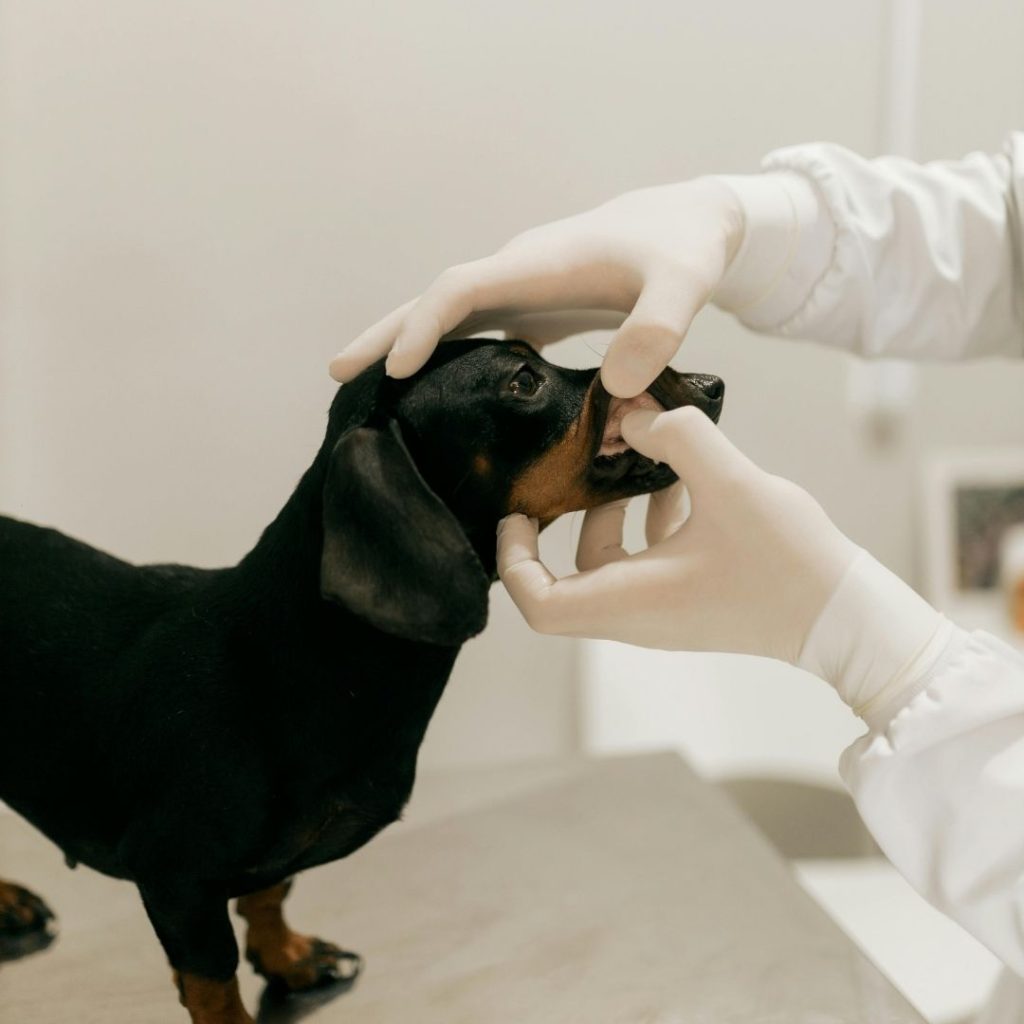
What causes bad breath in a Dachshund?
When someone says, “My dachshund has bad breath,” I start with the mouth, then work outward.
1) Plaque, tartar, and periodontal disease (the #1 culprit)
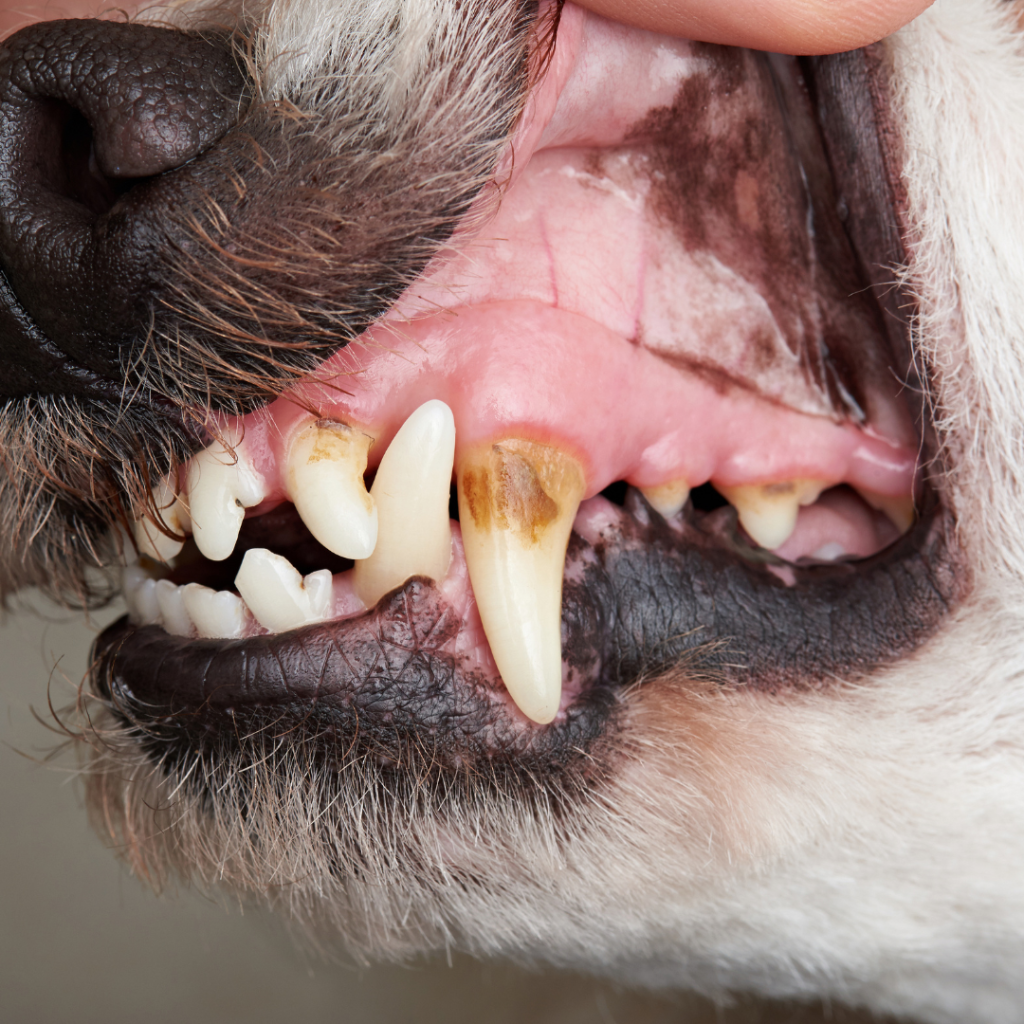
This is the most common reason bad breath in dachshunds happens. Plaque mineralizes into tartar, irritates gums, and can progress into periodontal disease—creating a persistent, foul smell.
Signs that often go with it:
- visible yellow/brown tartar near the gum line
- red, puffy, or bleeding gums
- pawing at the mouth, chewing differently, drooling
- a dachshund with bad breath that doesn’t improve after water or meals
2) Something stuck, decaying, or infected in the mouth
A hidden problem can cause sudden dachshund rotten breath:
- a piece of toy/chew stuck between teeth
- a broken tooth
- a tooth root infection/abscess
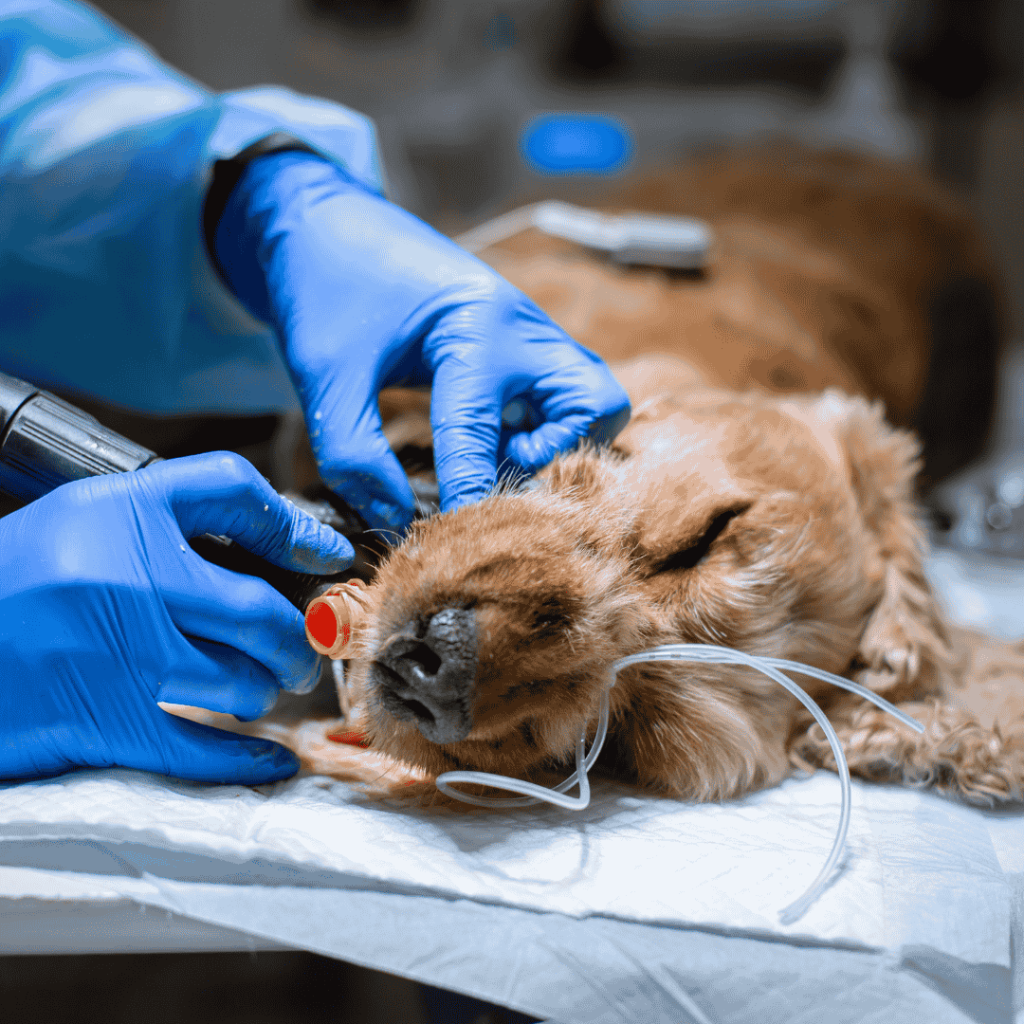
If you see facial swelling, pus, or your dog cries when chewing, treat it as urgent. This condition should not be treated at home. Even though it looks like a temporary condition that can be treated easily, it actually needs to be solved by a vet. In some cases, a vet will need to put a dog under a light anesthesia to easier pull out a stucked piece.
3) Digestion or nausea (especially if you see lip licking or vomiting)
If breath odor spikes with burping, gagging, lip licking, or vomiting, the cause may involve the GI tract (reflux, upset stomach, diet intolerance, “ate something gross”).
If vomiting is part of the picture, start here:
Why Is My Dachshund Vomiting? 7 Potential Causes
If your dog won’t eat (which can happen with mouth pain or nausea), check this:
Why Does My Dachshund Won’t Eat?
4) “Fishy” odor (often anal glands + licking)
A dachshund fishy breath complaint is sometimes not breath. It’s anal gland fluid on the coat, then licking. If your dog licks floors, lips, paws, or their rear end a lot, this is a helpful companion while you troubleshoot:
Why Do Dachshunds Lick So Much?
Fishy odor can be caused by yeast and bacterial infections too. I thaught that my dog had a fishy breath, but actually that smell came from its ears. When it started to scratch his ears and shake head intensely, I realized that the smell comes from ears.
5) Less common but important medical causes
Some systemic illnesses can change the smell of the breath. For example, kidney disease can cause oral inflammation and a distinctly foul odor, sometimes described as ammonia-like.
If you suspect a medical cause (especially with thirst/urination changes, weight loss, lethargy), a vet visit is the right next step.
Smell decoder: what your Dachshund’s breath odor can suggest
Smell alone can’t diagnose anything, but it can guide your next step.
- “My dachshund breath stinks like a boiled egg.” A sulfur/boiled-egg smell often comes from bacterial sulfur compounds in the mouth—common with dental disease.
- Dachshund rotten breath: commonly severe tartar/gum infection, a hidden tooth problem, or something decaying in the mouth.
- Dachshund fishy breath: frequently anal glands + licking, or fish-based food.
- Ammonia/urine-like breath: can be linked with kidney issues → get checked.
Why is it important to check your dog’s gums and teeth?
Gums will reveal a lot about your Dachshund’s health. They should be pink, wet, and can have some light pigmentation. If they look grey, dark red, or they’re sticky, then you should visit a vet. A dog’s gums are the first sign there’s something wrong with your dog’s breath.
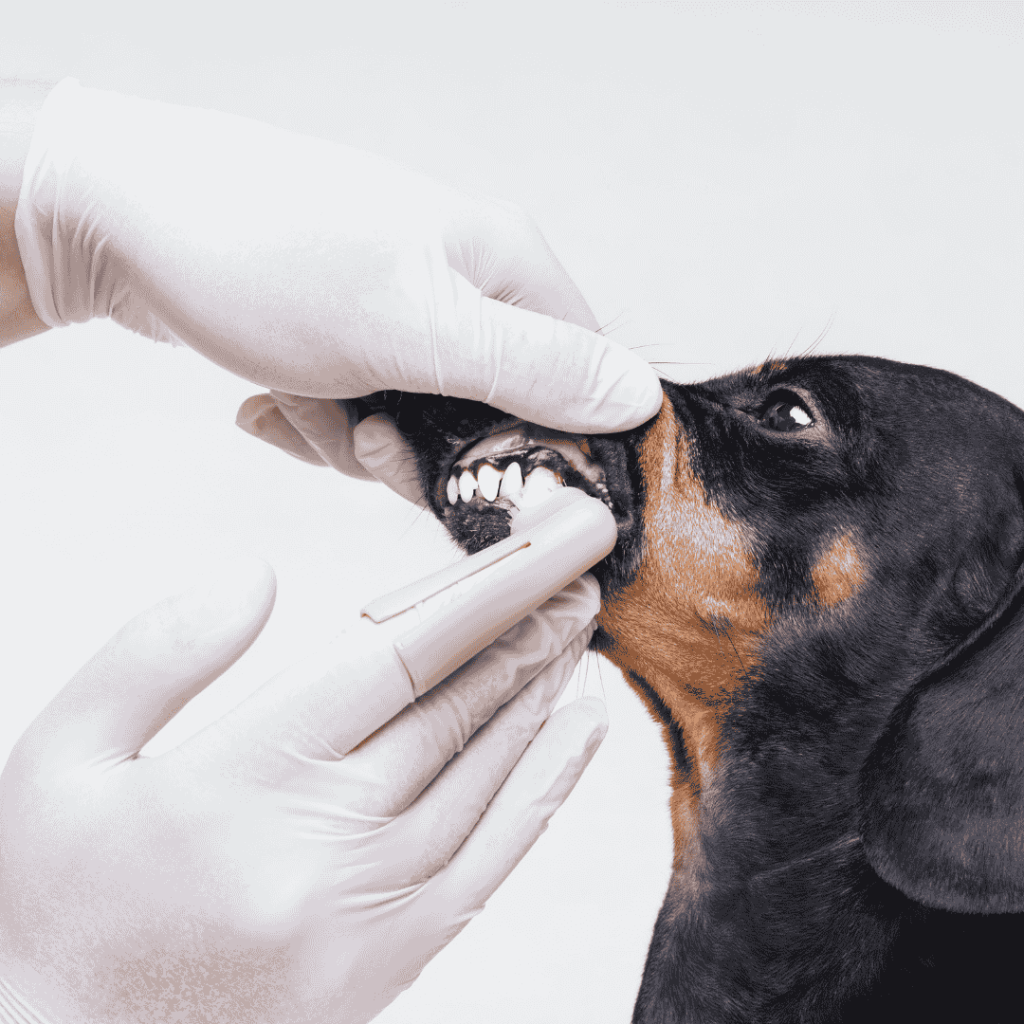
How to determine the cause of dachshund bad breath at home
Step 1: Do a quick “lip-lift” exam
In good light, lift the lips and look for:
- tartar near the gum line
- red/bleeding gums
- broken teeth, swelling, or anything wedged between teeth
If your Dachshund won’t let you check, assume discomfort and book a dental exam.
Step 2: Notice when the smell is worst
- worse after licking their rear end → anal glands are likely
- worse after meals only → food residue or diet-related odor
- constant, slowly worsening → dental disease is likely
Step 3: Look for extra clues
- vomiting, gagging, lip licking → nausea/reflux
- dropping food, chewing slowly, avoiding kibble → mouth pain
- major thirst/urination changes, weight loss → vet visit now
Dachshund bad breath cure: the plan that actually works
Most people want a single product, but lasting results come from a simple system:
- remove the source of odor (usually plaque/tartar/infection),
- prevent it from building back up.
1) Start with a veterinary dental exam
If tartar is heavy or gums are inflamed, home care won’t fix what’s happening under the gum line. Professional cleaning and a full oral exam are often needed, and dental guidelines emphasize professional care plus ongoing home care.
2) Brush the teeth (the gold standard)
The American Veterinary Medical Association recommends brushing daily when possible, and notes that brushing several times a week can still help.
Aim for the outer gum line (that’s where plaque builds fastest). Use pet toothpaste—never human toothpaste.
Tiny habit tip: start with 10 seconds per side, then build up. Consistency matters more than perfection.
3) Add the right “helpers” (and skip tooth-breakers)
The American Animal Hospital Association guidelines discuss home-care tools like dental chews, dental diets, rinses/gels, and water additives—and warn against very hard chews (bones/hooves/antlers) that can fracture teeth.
Helpful add-ons:
- a daily dental chew or dental diet
- water additives/oral rinses to reduce plaque adherence (they don’t remove existing tartar)
- products listed by the Veterinary Oral Health Council for plaque/tartar control
4) If diet is part of the problem, adjust it thoughtfully
Diet can influence breath (especially if the issue is digestive), but diet changes shouldn’t replace dental care. If you’re exploring fresh or raw options, do it safely and with balance in mind:
The Dachshund Raw Diet: A Complete Guide
Natural and homemade solutions
Natural remedies offer dachshund bad breath cure without chemicals. Coconut oil’s antibacterial properties freshen breath—add 1/4 tsp daily to food or rub on gums.
Dilute apple cider vinegar (1 tsp per cup water) in their bowl; its acids kill mouth bacteria. Fresh parsley or mint provides chlorophyll to neutralize odors—chop and mix into meals.
Propolis or taurine supplements bind sulfur compounds for quick relief. Frozen carrot sticks soaked in broth clean teeth naturally. Always introduce slowly to avoid tummy upset.
| Remedy | How to Use | Benefits |
| Coconut Oil | 1/4 tsp in food or gums | Kills bacteria, shines coat |
| Apple Cider Vinegar | 1 tsp/cup water | Antimicrobial, mineral boost |
| Parsley/Mint | Chopped in meals | Odor neutralizer, vitamins |
| Dental Chews | Daily treat | Plaque removal |
You should never use a human mouthwash, hydrogen peroxide rinses, and baking soda pastes to freshen your Doxie’s breath. Anything that contains xylitol is highly toxic to dogs.
A simple 7-day reset plan for dachshund bad breath (at home)
If your Dachshund has mild odor and no obvious pain, you can use this as a “starter” routine while you schedule a vet check:
Day 1–2:
- do the lip-lift exam and take a quick photo of the teeth (so you can compare later)
- switch to less sticky treats (avoid soft, sugary chews that cling to teeth)
- add one crunchy snack a day (carrot/cucumber)
Day 3–4:
- introduce pet toothpaste on your finger as a “treat”
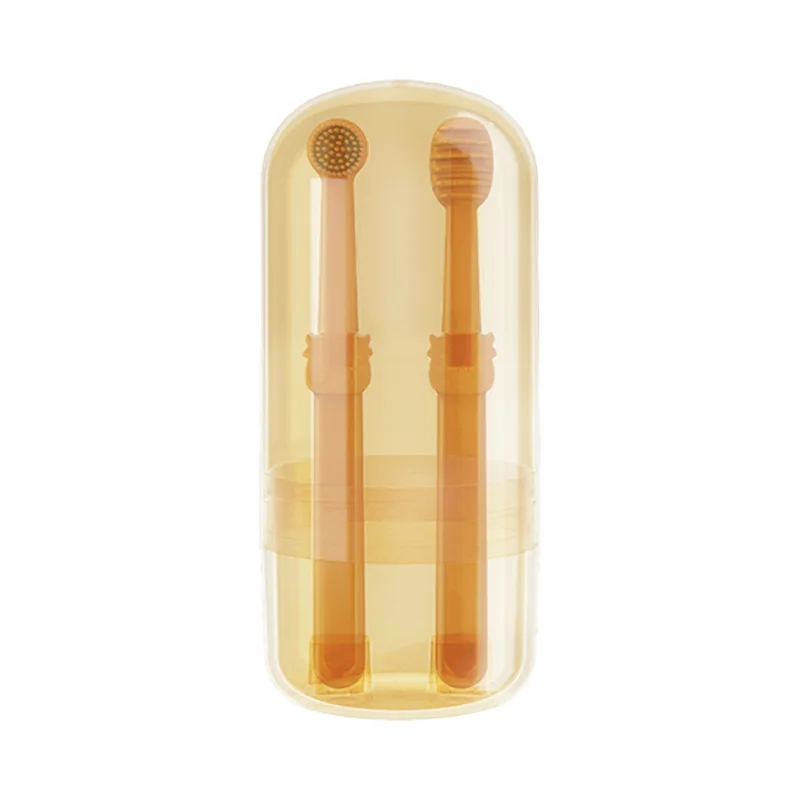
- brush for 10–20 seconds per side, focusing on the outer gum line. Our Dachshund Toothbrush is carefully made to suit dog jaws and teeth. It features a brush that effectively cleans their teeth.
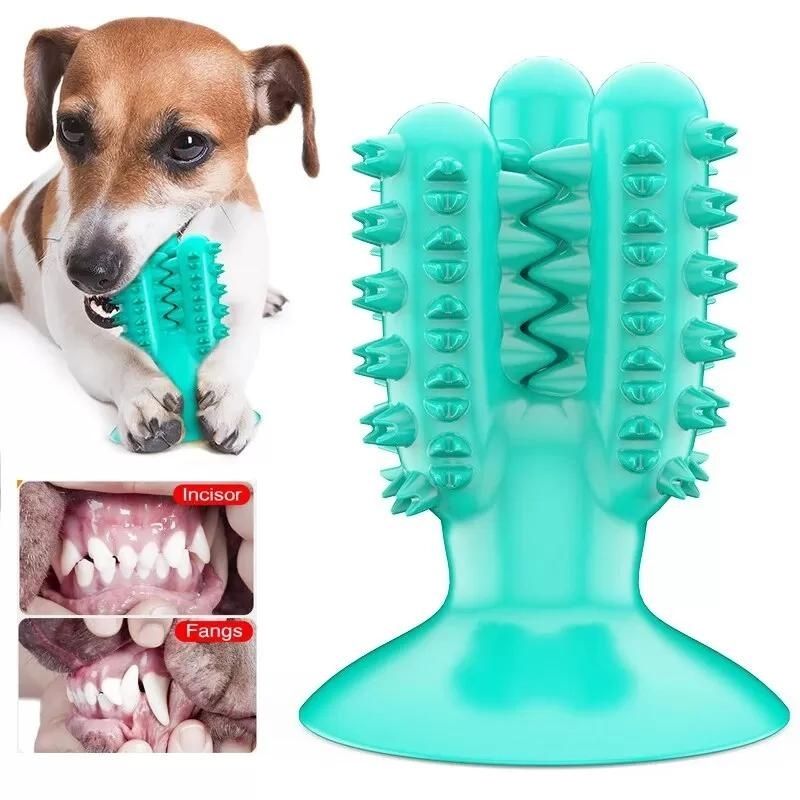
The Dachshund Toothbrush Chew Toy is my second recommendation for dealing with tartar and plaque. It features rubber pins and it can be easily attached to tiles. To keep your Doxie occupied, you just need to fill it with a dog toothpaste inside. As your dog chews it, he/she will get a pleasant massage and teeth brushing.
Day 5–7:
- increase brushing time gradually (aim for 60 seconds total)
- add a VOHC-listed dental chew on non-brushing days
- if you suspect a fishy odor, watch for scooting/rear licking and ask your vet about anal gland checks
If breath improves but returns quickly, that’s often a sign there’s tartar under the gums or a painful tooth that needs professional care.
Long-term maintenance (so it doesn’t come back)
For most Dachshunds, the best maintenance schedule is:
- brushing: 3–7 times per week (daily is ideal)
- dental chew or dental diet: most days
- vet dental exam: at least once a year (many small breeds benefit from more frequent checks)
Think of it like this: Brushing controls today’s plaque. Professional exams catch problems you can’t see.
When to see a vet urgently
Book a vet visit ASAP if your Dachshund has bad breath plus:
- bleeding gums, facial swelling, a broken tooth, or obvious mouth pain
- refusing food or dropping food while chewing
- vomiting/diarrhea + lethargy
- ammonia/urine-like or sweet/acetone breath
Quick FAQ
Why do dachshunds have bad breath even when their teeth look “okay”?
Because disease can hide rotten food under the gum line, and small breeds are at higher risk.
What’s the best dachshund bad breath cure at home?
Brushing with pet toothpaste + VOHC-listed dental products is the most reliable approach for ongoing control.
What should I do if my dachshund breath stinks like boiled egg?
Treat it as a dental red flag: check gums/tartar, start brushing if you aren’t already, and book a dental exam if the smell persists or you see inflammation.
Dealing With Dachshund Bad Breath
If your dachshund breath stinks—fishy, rotten, or like boiled eggs—don’t settle for masking it. Start with a quick mouth check, tackle plaque with brushing, and involve your vet if you see tartar, red gums, pain, or any whole-body symptoms. Once you solve the cause, fresher breath is usually the easy part.




 Dachshund Jackets & Coats
 Dachshund Hoodies
 Dachshund Sweaters
 Dachshund Shirts
 Dachshund Life Jackets
 Dachshund Costumes
 Dachshund Pajamas

 Dachshund Harnesses
 Dachshund Collars


 Dachshund Backpacks


