

Dachshund Coat Colors & Patterns (Chart + Photos + Rare Colors Guide)

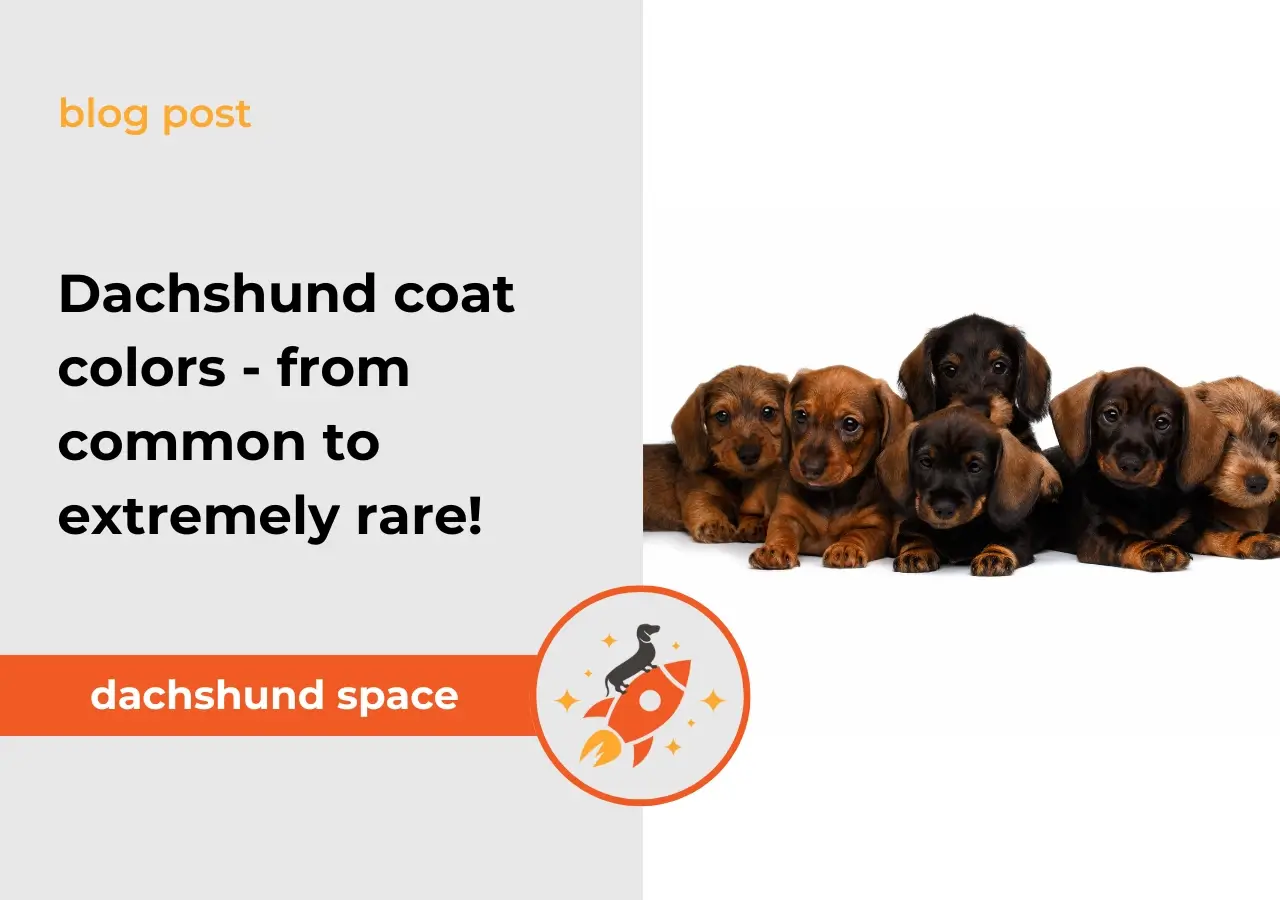
If you’ve ever tried to identify a dachshund’s coat color from a phone photo, you know the struggle: lighting changes everything, reds can hide dappling, and “rare” labels online are often… creative. This guide is here to help you identify dachshund coat colors and patterns confidently—with a quick chart, clear definitions, and practical visual cues. I also include a short section on responsible breeding notes (especially for dapples) and a FAQs section you can jump to when you’re in “what color is my dog?” mode.
Quick note: Breed standards and accepted descriptions can vary by registry and country. When I mention “patterns” (dapple, brindle, piebald, sable), I’m using the terms described in breed-standard style resources.
Dachshund coat types
When it comes to Dachshund coat types, there are three main varieties: smooth, long-haired, and wire-haired. You can find all about dachshund varieties here: https://dachshundspace.com/all-about-dachshund-diversity
- The smooth-coated Dachshunds have short, sleek fur that requires minimal grooming, and shedding is relatively low. Even though the Dachies don’t shed much, you still need to care for that lovely fur!
- On the other hand, longhaired Dachshunds boast beautiful flowing locks that demand more attention in terms of brushing and care. Their fur tends to be finer and can be prone to matting if neglected.
- Lastly, wirehaired Dachshunds possess a coarse outer coat with a dense undercoat, providing a rugged appearance. This type necessitates regular stripping or plucking to maintain the desired texture.
While all three coat types have their unique charm, each demands different grooming needs and personal preferences. Whether you prefer the low maintenance of smooth coats or the elegance of long-haired ones, or even the rough and rugged look of wire-haired Dachshunds – there’s a perfect option for every dog lover out there!
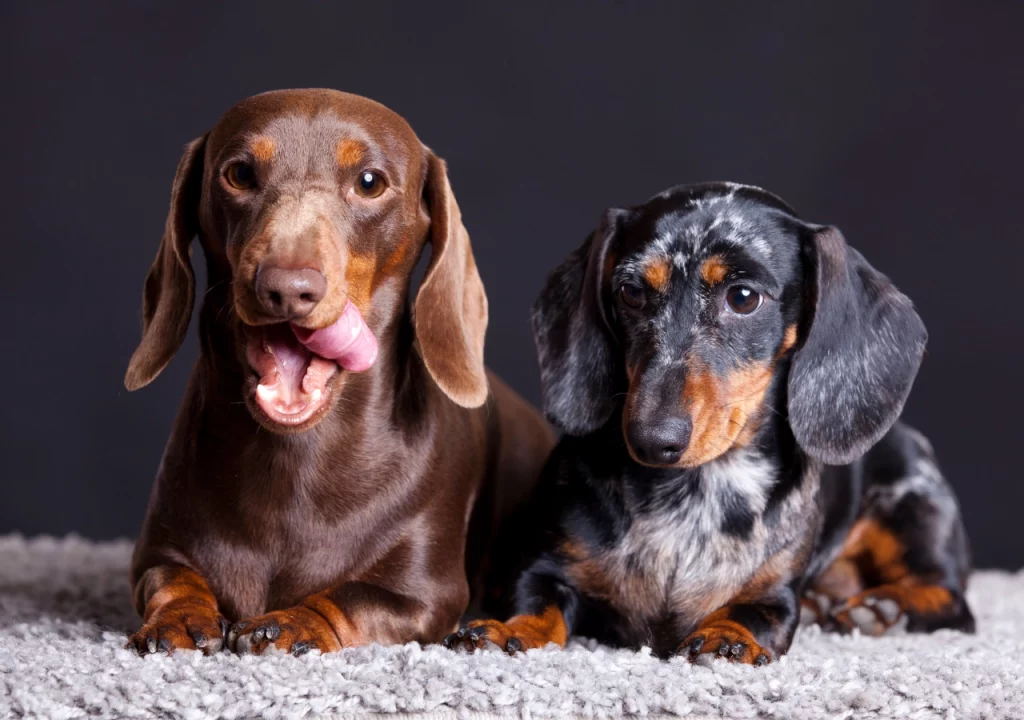
Dachshund coat colors and patterns at a glance
When people talk about Dachshund colors, it helps to separate two things:
- Base color (the main color of the coat)
- Markings/patterns (features layered on top of that base)
A Dachshund can be:
- One-colored (solid): one main color throughout the coat
- Two-colored: a main color plus lighter points/markings (tan or cream)
- Patterned: dapple, piebald, brindle, sable (and sometimes combinations)
Patterns can sit on top of many base colors, which is why the same pattern can look very different from dog to dog.
In case you want to read a detailed guide, then check the list of the Dachshund Club Of America.
Use this table as your shortcut. Start with the base color, then add the pattern (if any).
| What you’re seeing | Category | Quick description | Common confusion | Fast ID tip |
| Red / shaded red | Base color | Warm red coat, sometimes with darker overlay | Red dapple | Check for “ghost spots” in sunlight |
| Cream | Base color | Pale cream coat, may be shaded | Light red | Look at ears/back for shading |
| Black & tan / black & cream | Base color | Black coat + tan/cream points | Dark chocolate | Nose/nails usually darker/black |
| Chocolate & tan / chocolate & cream | Base color | Brown (liver) coat + tan/cream points | Black & tan | Browns look warmer; nose often brown |
| Wild boar (wire) | Base color (wire) | Mixed banded hairs, earthy tones | Sable | Best seen on wire coat texture |
| Dapple (merle) | Pattern | Mottled/lighter patches over base color | Brindle | Dapple is blotchy; brindle is stripy |
| Piebald | Pattern | Clear white areas + colored patches | “Double dapple” | Piebald has larger clean white areas |
| Brindle | Pattern | Tiger-striping over base color | Dapple | Brindle = stripes, not spots |
| Sable | Pattern/overlay | Dark-tipped hairs over lighter base | Shaded red | “Eyeliner” + darker hair tips |
How to identify your dachshund’s coat in 5 steps
Step 1: Find the base color (ignore patterns for a moment)
Ask: is the dog mostly red/cream, mostly black, mostly brown, or a mixed “wild” look (often wire)?
Step 2: Look for point markings
“Points” are the tan/cream areas typically on the eyebrows, muzzle, chest, legs, and under-tail (common in black & tan / chocolate & tan).
Step 3: Check for pattern clues (spots, stripes, or white patches)
- Blotchy/patchy light areas → likely dapple
- Clean white areas with colored patches → likely piebald
- Tiger stripes → likely brindle
- Dark hair tips/overlay → likely sable
Step 4: Use pigment as a hint (not a rule)
Nose and nail color can support what you’re seeing (black vs brown pigment often follows base color). Standards describe typical pigment expectations but real dogs vary.
Step 5: If you’re still unsure, use better light (and a second photo)
Natural daylight + a close-up of the shoulder/back often reveals dappling, sable overlay, or striping.
Base colors in dachshunds
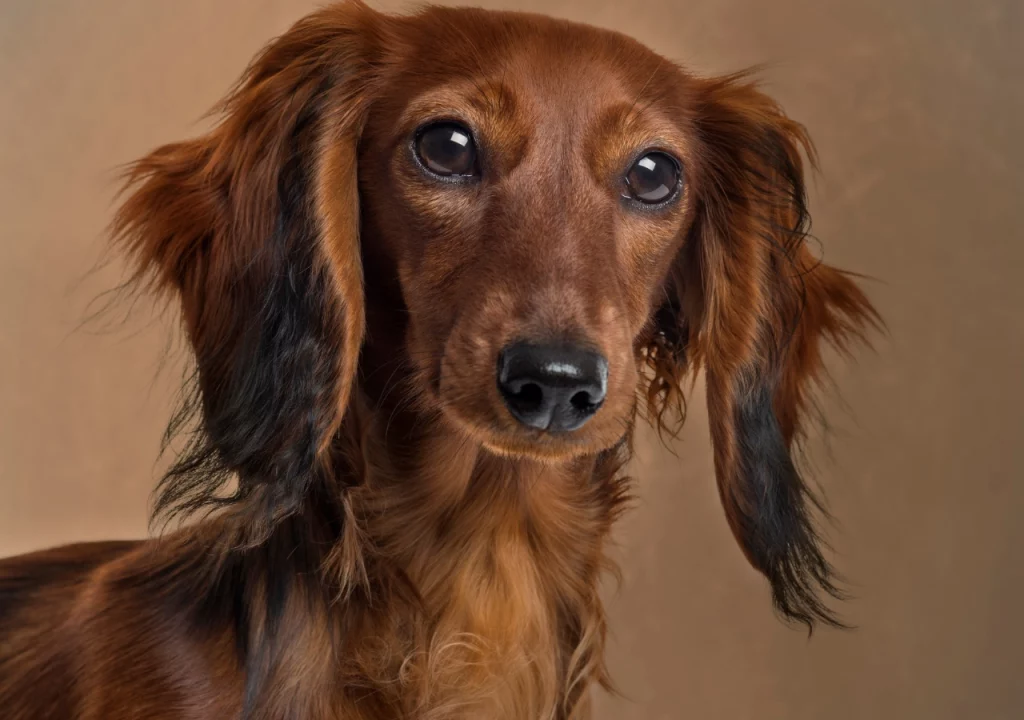
1) Red dachshund (solid red and shaded red)
What it looks like: A red coat can range from a light strawberry tone to a deeper rust. Some reds have darker hairs mixed in—often called shaded red (or an overlay).
Common confusion:
- Red dapple can appear “solid” indoors.
- Sable can look like shaded red.
Fast ID tip: Step outside. In daylight, dapple often shows as lighter patches; shaded red looks more like an even dark overlay, not distinct spots.
2) Cream dachshund (clear cream and shaded cream)
What it looks like: Cream Dachshunds or English cream dachshunds are pale—sometimes nearly ivory. Some have darker shading on ears/back.
Common confusion: light red, very pale chocolate, or “sun-faded” coats.
Fast ID tip: Look at the ears and spine—shading shows there first.
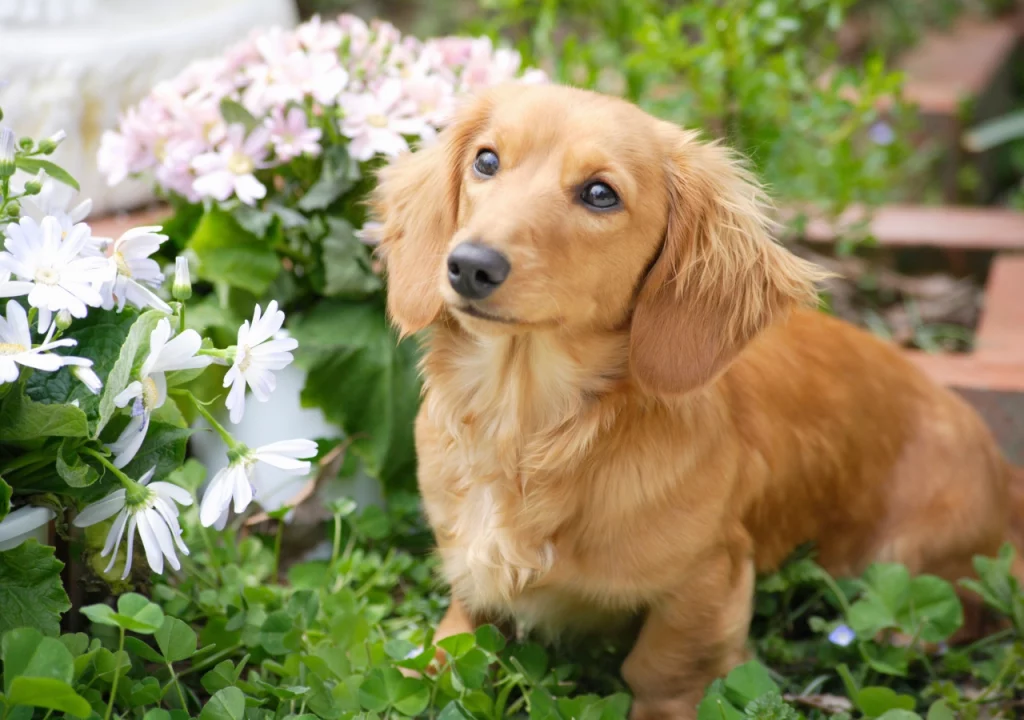
3) Black & tan / black & cream
What it looks like: A black base with tan or cream points (eyebrows, muzzle, chest, legs).
Common confusion: chocolate & tan (especially in warm lighting).
Fast ID tip: In natural light, black looks more “inky” and cool; chocolate reads warmer/browner. Pigment often aligns with this too.

4) Chocolate & tan / chocolate & cream
What it looks like: Brown (liver) base with tan or cream points.
Common confusion: black & tan photographed in warm light.
Fast ID tip: Look at the coat near the shoulder in daylight—true chocolate is clearly brown, not black.
5) Wild boar (mostly wirehaired)
What it looks like: A mix of banded hairs that creates an earthy, “salt-and-pepper” impression, most associated with wire coats.
Common confusion: sable.
Fast ID tip: Wild boar usually looks more mixed/peppered across the body rather than a smooth overlay.
6) Blue (gray) and Isabella (fawn) dachshunds
You’ll see “blue” (a diluted black) and “isabella/fawn” (a diluted chocolate) described online. These dilute colors can be striking, but it’s important to understand one key point:
Some dogs with dilute coats can be more prone to color dilution alopecia (CDA), a condition linked to dilution genes that may cause hair thinning and coat issues in some individuals. It doesn’t affect every dilute dog, but it’s a known association in veterinary references.
What it looks like:
- Blue often appears slate/gray.
- Isabella appears pale fawn/taupe.
Common confusion: sun-faded black or light chocolate.
Fast ID tip: Dilute colors tend to look evenly muted rather than “faded in patches.”
Read our blog post about Blue Dachshunds and Facts to Know About Them.
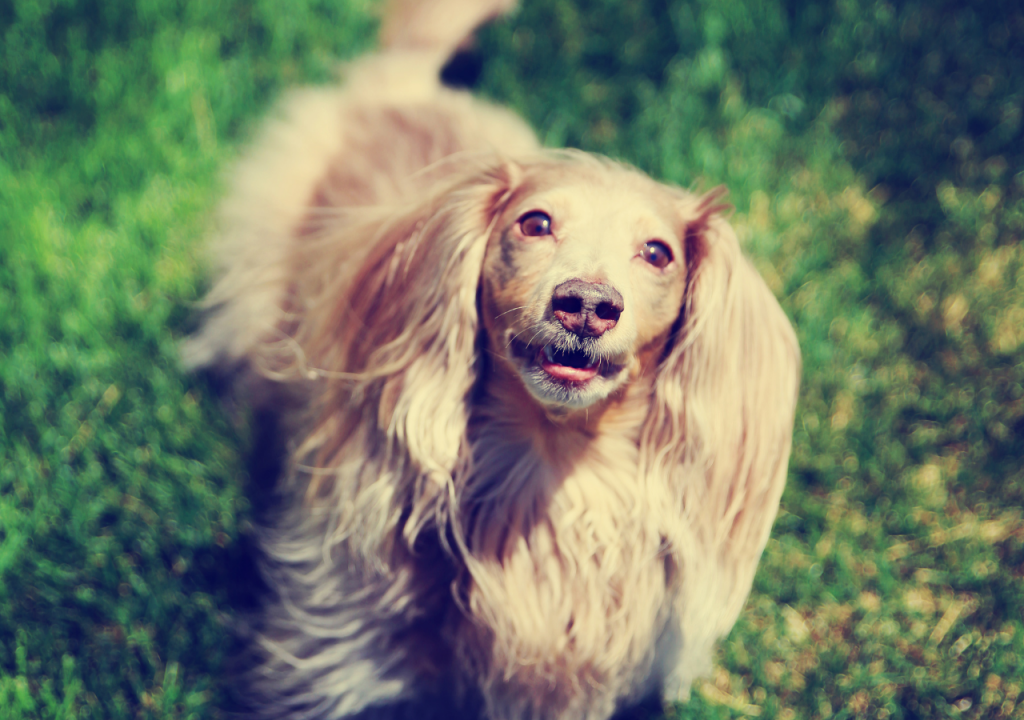
Coat patterns and markings (the ones people mix up most)
1) Dapple (merle) pattern
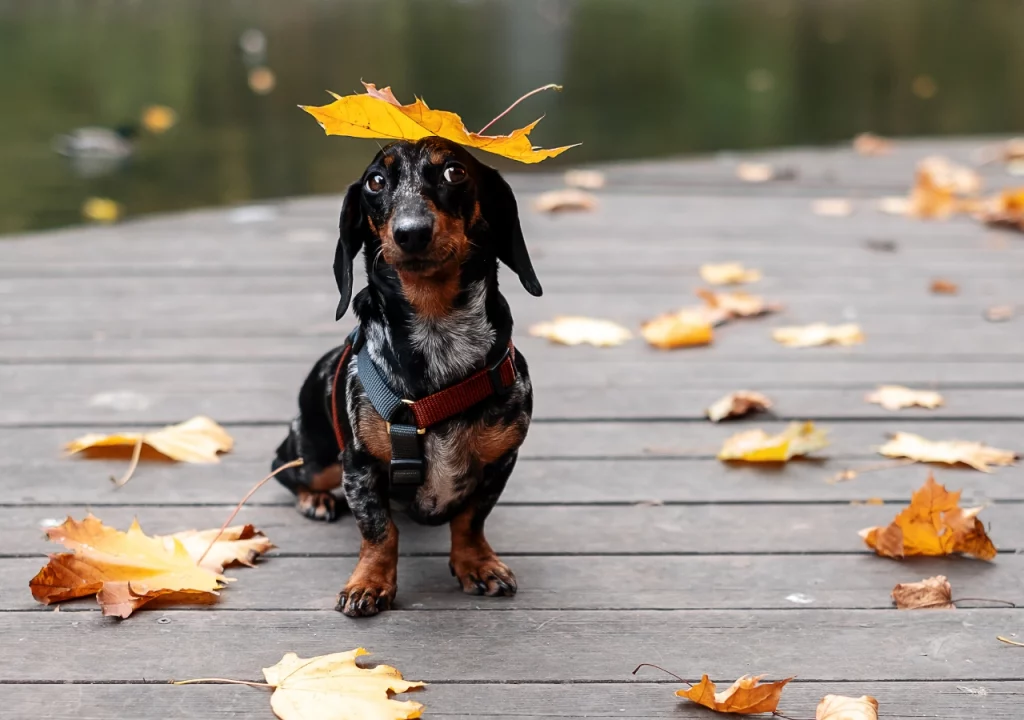
What it looks like: A mottled pattern with lighter patches over a base color (red dapple, black & tan dapple, chocolate dapple, etc.).
Common confusion: brindle (stripes) and “dirty” shading.
Fast ID tip: Dapple Dachshund looks blotchy, not stripy.
Responsible breeding note (important):
Breeding two dapples can produce “double dapples,” which are associated with a higher risk of serious vision/hearing problems; many breed health resources strongly discourage dapple-to-dapple matings, and some registries restrict registration of such litters.
2) Piebald pattern
What it looks like: Clear white areas plus colored patches. It’s distinct and usually easy to spot.
Common confusion: “double dapple” (because double dapples often show significant white too).
Fast ID tip: Piebald typically presents as clean, larger white areas with colored islands/patches—not the dapple mottling itself.
3) Brindle pattern
What it looks like: Tiger-like striping over the base color.
Common confusion: dapple.
Fast ID tip: Brindle = stripes. Dapple = patches/blotches.
The AKC standard materials describe brindle as a marking/pattern category (not a standalone base color).
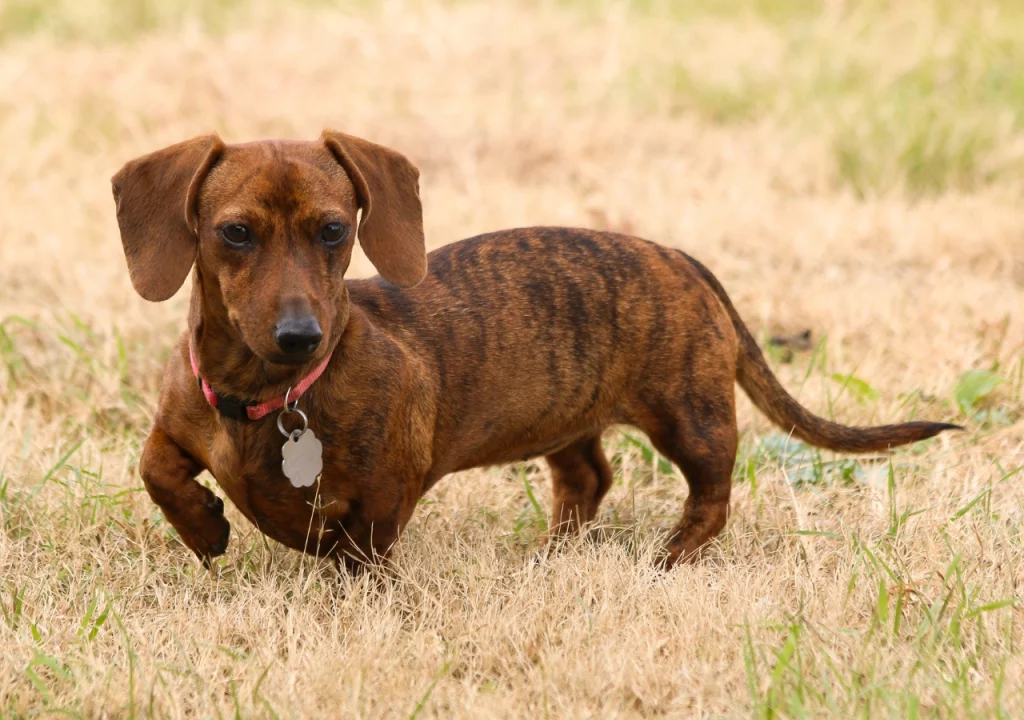
4) Sable pattern / overlay
What it looks like: Dark-tipped hairs over a lighter base color (often seen in longhaired coats). It can create a “shaded” look, especially around the ears and along the back.
Common confusion: shaded red.
Fast ID tip: Sable often shows distinct dark hair tips, not just a uniform darker wash.
The AKC materials list sable among recognized marking categories.

“Rare dachshund colors”: what that usually means
Online, “rare” is often used to mean less commonly seen, not necessarily “better,” “healthier,” or “more valuable.” Rare Doxies are often higher in price because they’re difficult to breed. However, if a breeder often sells a rare Dachshund color of the puppy, then it should be an alarming sign. Puppy mills often don’t check the puppy’s health. They only want to earn a fast money and don’t provide future owners with health info of their pups.
Some rare Doxie colors/patterns also come with extra responsibility (for example, avoiding risky pairings such as dapple-to-dapple).
If you’re choosing a puppy, prioritize:
- transparent breeder practices
- temperament and structure
- genetic/medical screening appropriate for the line
- honest explanations of coat genetics (without hype)
Here you can find rare dachshund coat colors and patterns:
| Color / pattern (as people call it) | Type | What it looks like | Why it’s often considered “rare” | Registry notes (important) |
| Gray / Blue & Tan | Two-colored (dilute) | Slate-gray “blue” base + tan points | Dilute gene is less common than the predominant colors; also avoided in some lines due to coat concerns | Listed as a two-colored option in the AKC standard; also included as a DCA “standard” base color . Some registries explicitly do not accept blue/isabella |
| Fawn / Isabella & Tan | Two-colored (dilute) | Pale fawn/taupe base + tan/cream points | Same “dilute = less common” situation; heavily marketed as “rare” | Included by AKC as fawn (Isabella) in two-colored; also listed in Dachshund Club of America color overview . Not accepted in some standards |
| Wild Boar (Agouti) in smooth/longhair | Color/pattern effect (commonest in wire) | Grizzled, banded hairs creating an overall “salt-and-pepper” look | Common in wirehaired lines, but less common outside wire, so people label it “rare” in smooth/longhair | AKC notes wild boar is most often seen on wirehaired coats but may appear on others . DCA also says it’s typically seen in wirehairs (sometimes smooths) |
| Red Boar / Chocolate-and-Tan Boar | Variation (mostly wire lines) | Wild boar effect + red or chocolate/tan variation | Requires specific lines/genes; not as commonly produced as the predominant colors | AKC explicitly lists these as variations under wild boar for wirehaired dachshunds |
| Brindle | Pattern | Dark tiger-like stripes over the base color (sometimes mainly visible in tan points) | Needs the brindle gene; in practice it’s simply less common in many pet populations | AKC defines brindle as a pattern (not a color) . DCA notes at least one parent must be brindle to produce it |
| Sable (true sable) | Pattern | Red dog with a dark overlay; individual hairs are double-pigmented/darker at tips | True sable is often misidentified; requires correct lineage/coat detail to confirm | AKC describes sable as a dark overlay on red dogs with double-pigmented hairs . DCA warns red longhairs with overlay are often mistaken; a true sable must have banded hairs and a sable parent |
| Piebald | Pattern | Clear white areas + colored patches | Can be restricted/avoided in some show lines depending on local standards; widely marketed as “rare” | AKC defines piebald as a pattern with clearly defined white patches and lists strict disqualifications . Some standards discourage it strongly |
| Double Dapple (not a “rare color” — a high-risk combo) | Genetic outcome | Often lots of white + asymmetry, may be obvious at birth | It’s “rare” because responsible breeders avoid it | DCA warns breeding two dapples can produce double dapples with higher risk of deafness/eye defects . Some standards label it unacceptable |
Read our blog post about: What Is the Rarest Dachshund Color? 4 Facts To Keep In Mind
Puppy coats vs adult coats: why your dachshund may “change color”
It’s normal for coats to shift slightly as your dog matures:
- shading can become more obvious (or fade)
- dappling can be clearer in certain lighting
- longhaired coats may show overlay patterns more distinctly as feathering grows
If you’re unsure, retake photos in daylight every few months and compare.
FAQs: Dachshund coat colors and patterns
What’s the most common dachshund coat color?
Red is extremely common, but popularity varies by region and breeder lines.
Is dapple the same as merle?
In dachshunds, “dapple” is the commonly used term for the merle-type pattern.
Can a red dachshund be dapple?
Yes—red dapples exist, and the pattern can be subtle indoors.
Is brindle a color or a pattern?
Brindle is described as a marking/pattern, not a base color.
What is a double dapple dachshund?
A “double dapple” typically results from breeding two dapples. This combination is associated with a higher risk of significant hearing/vision issues and is widely discouraged by breed-health resources.
Is piebald the same as double dapple?
No. Piebald is a separate pattern with white areas and colored patches. Double dapple refers to a dapple gene combination, often with higher risk. When breeding two merle / dapple wiener dogs, there are high chances that puppies will have problems with hearing and vision.
Are blue and isabella dachshunds unhealthy?
Not automatically—but dilute coats are associated with a higher risk of color dilution alopecia in some dogs. If you own a dilute dachshund, monitor coat quality and discuss concerns with a vet. Often, these dogs require eating dog food that is free of artificial colors, flavors and by-products. These ingredients are often connected to skin problems in dogs, so it’s better to find a food that doesn’t contain them.
How can I tell black & tan vs chocolate & tan?
Check the coat in daylight: chocolate is clearly brown. Pigment (nose/nails) can also be a clue.
Do coat colors affect personality?
Coat color isn’t a reliable predictor of temperament. Early socialization, breeding choices, and training matter far more.
Should I do a DNA test to confirm color?
If you’re genuinely stuck (especially with subtle dappling or overlay), a DNA test can clarify genetics—just choose a reputable lab and interpret results carefully.









 Dachshund Jackets & Coats
 Dachshund Hoodies
 Dachshund Sweaters
 Dachshund Shirts
 Dachshund Life Jackets
 Dachshund Costumes
 Dachshund Pajamas

 Dachshund Harnesses
 Dachshund Collars


 Dachshund Backpacks


6 thoughts on “Dachshund Coat Colors & Patterns (Chart + Photos + Rare Colors Guide)”