

Dachshund Howling: Why Your Wiener Dog Howls and How to Handle It


If you’ve ever heard your dachshund let out a dramatic “awooo” in the middle of the day (or night), you’re not alone. Dachshunds are known for being surprisingly vocal pups. From excited barks to whines and the occasional howl, these little hounds aren’t shy about using their voices. In this post, we’ll reveal everything about dachshund howling. Why they do it, what it means, and how to manage it.

Do Dachshunds Howl?
Even though they’re small dogs, dachshunds are fully capable of howling just like any other breed. In fact, many dachshunds will howl in response to certain stimuli or to express themselves, thanks to their ancestral instincts.
Howling is a form of vocal communication that all dogs inherited from their wolf ancestors. That means your weenie dog has the DNA of a little howler! That said, howling is usually less common in dachshunds than their trademark barking.
Howling in this breed often signifies loneliness or anxiety, or is an attempt at long-distance communication. In short: yes, dachshunds do howl – but some may do it more than others, and often there’s a reason behind the noise.
Dachshunds are generally a vocal breed overall. They were bred as hunting hounds, which meant being vocal was part of the job. The name “dachshund” literally means “badger dog” in German – these fearless little dogs would go into badger burrows, and they had to bark or howl to signal their location to hunters.)
This history contributes to their chatty nature. Many dachshunds are known to bark, yelp, or “talk” a lot in addition to the occasional howl. So, if your dachshund likes to express himself with a howl here and there, it’s not unusual. It’s just part of his doggy communication toolkit!
Why Do Dachshunds Howl?
So why is your dachshund breaking into song? Dachshunds howl for many of the same reasons other dogs do – but let’s break down the most common causes. Understanding why your dachshund is howling is key to addressing it (if it becomes a problem) or at least knowing what your pup is trying to tell you. Here are some common reasons dachshunds howl:
Communication & Pack Instinct
Howling is a natural form of communication for dogs. In the wild, wolves howl to signal their presence to the pack or call scattered pack members together. Our domesticated dogs have retained some of that instinct. A dachshund might howl to say “Here I am!” to other dogs or people. For example, if there are other dogs in the neighborhood howling or a distant siren sounds, your dachshund may join in as a way of responding to that “call.” It’s like a small dog’s way of singing along and staying in touch with the pack. Howling carries over long distances, so it’s an instinctive way for a dog to announce their presence or find others.

Responding to Sounds
Many dachshunds will howl when they hear certain high-pitched or loud sounds. Common triggers include ambulance or fire-engine sirens, musical instruments, or even a person howling (yes, if you howl, your doxie might howl back!). Dogs often interpret these sounds as if they were fellow canines howling, so they respond in kind. Don’t be surprised if your pup throws his head back and howls when a noon firehouse siren goes off – he’s basically saying, “I hear you!” Howling at triggers usually stops when the sound stops, so these episodes are often brief. It’s an instinctual reaction, not your dachshund trying out for a singing contest.
Seeking Attention or Expressing Excitement
Dachshunds love their humans and hate being ignored. Some will howl as a dramatic way to get your attention. It’s the canine equivalent of “Hey, look at me!” If you’re occupied or not giving them the treat/toy they want, a persistent dachshund might resort to a howl or loud “yowl.”
Even negative attention (like you yelling “Stop howling!”) can inadvertently reinforce this behavior, because from the dog’s view, at least you’re responding. On the flip side, howling can also happen when they’re happy or excited.
Your dachshund might let out a joyful howl when you come home from work or during playtime, as an expression of positive emotion. It’s not always sad or needy – sometimes it’s a celebratory little howl because they just can’t contain their excitement!

Loneliness or Separation Anxiety
One common reason for dachshund howling is anxiety or distress at being left alone. Dachshunds form very strong bonds with their owners (they adore their people!), so being separated can cause them to feel anxious. If your dachshund howls when home alone, it could be a sign of separation anxiety.
Essentially, your pup is crying out because they miss you and are stressed that you’re gone. This howling often comes with other signs of distress – pacing, whining, or destructive behavior. Neighbors might mention your weenie dog serenades while you’re away.
Dogs howl in these cases as a way to call their “pack” (you) back to them or to express their loneliness. It’s a heartfelt “Where are you? I need you!” in dog language. (Don’t worry, we’ll discuss how to help with this later on.)

Boredom in Dachshunds
Sometimes a dachshund howls simply because they’re bored and looking for something to do. These dogs have a good amount of energy and curiosity. If left unstimulated, a bored dachshund might howl just to entertain themselves or to see if it elicits any reaction. Think of it as your pup trying to make some excitement happen when nothing is going on. This can especially be the case with dachshunds who are not getting enough play or exercise. A bored dachshund might also howl to self-soothe or because being under-stimulated makes them a bit anxious. Essentially, if their day is too quiet, they might make noise to fix that!
Alert or “Alarm” Howling
Dachshunds may howl to alert you to something they perceive as important. Because of their history as watchdogs and hunters, they have a keen sense of their environment. If your dachshund hears or sees something unusual – a stranger at the door, a knock, or even an animal in the yard – they might respond with a flurry of barks that escalate into a howl. It’s their way of saying “Heads up! Something’s happening!”
This alarm howling is rooted in their protective instinct. For instance, a dachshund might howl at the sound of the doorbell or a knock on the door, combining a howl with barking to make sure you notice. In the wild, canines howl to alert the pack of intruders or to ward off threats, and your little guardian is doing the same – just on a domestic scale.
Pain or Discomfort
Finally, dachshunds may howl if they are hurt or not feeling well. A howl can be a response to sudden pain – for example, some owners notice their dog howls when jumping off the couch if the pup has a sore back or joints (dachshunds are prone to back issues).
Dogs can’t speak, so a howl might be a way to say “ouch” or “I need help”. If your dachshund starts howling out of the blue, or more than usual, and you can’t link it to any external trigger, pay attention – it could be indicating discomfort or illness.
Look for other clues
limping, refusing to move, whimpering, or other changes. They sometimes howl when something internal is wrong because they’re seeking your help or trying to communicate that they’re in distress. Always rule out medical issues if the howling is sudden or excessive.

Why Does My Dachshund Howl With Me?
If your dachshund ever howls along while you sing, hum, or laugh, it’s not just cute—it’s instinctive. Dogs, especially dachshunds, may join in because howling together strengthens social bonds, much like how humans enjoy singing in groups.
Your pup sees you as part of their pack, and howling with you is their way of saying, “I’m with you—we’re a team!” This behavior is often triggered by certain tones or pitches in your voice that remind them of howling sounds.
It’s not that they’re critiquing your singing; rather, they’re responding to what feels like a pack activity. Experts say this is a natural, affectionate response that helps dogs feel connected to their humans. Dachshund owners often find it fun and even teach their dogs to “sing” on command.
As long as your pup is relaxed and happy, joining in a howling duet is perfectly harmless. Just keep in mind that your mini doxie’s voice can carry, so if you’ve got close neighbors, be considerate of the volume. In the end, your dachshund howling with you is a sweet sign of bonding and togetherness—it’s their way of saying, “We belong together, and this is our song.”
Why Are Wiener Dogs So Vocal?
Dachshunds have a reputation for being little chatterboxes. Owners often joke about dachshund “talking” – those grumbles, growls, barks, and howls that almost sound like they’re trying to speak English (or argue back when you tell them no!). So, why are these wiener dogs so vocal? There are a few reasons, rooted in both their breed history and personality:
Breed Heritage
Dachshunds were bred for hunting badgers and other burrowing animals. A successful badger dog needed to be bold and loud. When a dachshund chased prey underground, it had to bark or howl to let the hunter know where it was and if it had cornered the badger. This means that over generations, vocal dogs were the ones who succeeded and passed on their genes. That hunting background hard-wired a tendency to use their voice to communicate situations. Dachshund howling or baying was useful to signal a find or call for backup. Even though your modern pet dachshund isn’t chasing badgers, that ingrained trait can make them more likely to vocalize at stimuli. In short, they were bred to be loud and heard.

Hound Group Traits
Dachshunds are part of the hound family. Many hound breeds (like Beagles or Bassets) are known for their vocal nature – think of the baying of a hound on a trail.
While dachshunds have a distinct bark (often surprisingly deep for their size), they share that hound trait of being vocal. Hounds use sound to work (in packs) and to communicate with hunters, so it’s not surprising your sausage dog has a lot to say. They might not howl as much as a Husky or a Beagle, but they definitely make their presence known with various sounds.
Big Personality in a Small Body
Wiener dogs are notorious for having big dog attitudes in a small-dog package. They’re brave, curious, and sometimes a bit stubborn. This personality often comes with expressing themselves vocally. If something is exciting, scary, or new, a dachshund often won’t just quietly observe – they will react, often with barking or other noises.
They’re also highly social with their families, which means they’ll “talk” to you in their way. For example, your dachshund might grunt or give a short howl when you’re slow to feed them dinner, as if to say “hurry up, human!”. They can be quite opinionated! Being vocal is one way these smart little dogs communicate their needs and feelings.

Attention-Seeking
Dachshunds love attention and can be quite clever about getting it. Many learn that making noise (barking or howling) gets a reaction from us. So a dachshund might become extra vocal simply because it works – we respond, even if it’s to say “Quiet!” or laugh at their antics.
Over time, this can make them more talkative. It’s as if they think, “Well, making noise got Mom’s attention last time, so I’ll try it again.” This isn’t to say they’re always scheming; often they genuinely just feel something strongly and express it out loud. But they definitely notice when using their voice leads to interaction.
Expressiveness
Ultimately, dachshunds are just an expressive breed. They wear their hearts on their sleeves (or rather, in their voices). Other breeds might be more stoic or quiet, but a dachshund will let you know exactly how they feel. If they’re happy, you’ll hear excited barks and maybe howls.
If they’re upset or want something, you might hear whines or those funny “dachshund arguments” (some owners know the sound of a dachshund “complaining” – a mixture of groan, bark, and howl that is quite dramatic!). This expressiveness is part of their charm. It does mean wiener dogs can be noisier than, say, a retriever, but it’s usually because they’re so bonded with their humans and environment that they comment on everything.
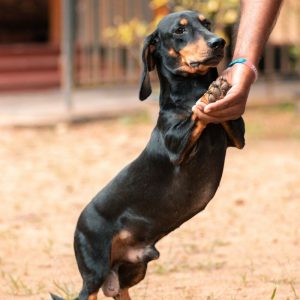
How to Stop Dachshund Howling
A little howling here and there can be funny and even endearing. But what if your dachshund’s howling is getting out of hand? Excessive howling (especially at odd hours) can become a problem for you, your family, or the neighbors.
Thankfully, there are several strategies to manage and reduce howling. Training a vocal dachshund takes patience, but it is doable. Here are some tips on how to stop or minimize dachshund howling:
Identify the Cause
First, try to figure out why your dachshund is howling. The solution depends on the cause. Are they bored? Lonely? Responding to a noise? In pain? Observing patterns will help. For example, if you notice your dog only howls when left alone, you know it’s likely separation anxiety and you can address that specifically. If it’s at sirens, then it’s a trigger-based howl. Understanding the trigger will guide your approach – there’s no one-size-fits-all fix.
Don’t Encourage It (Even Accidentally)
It’s important not to unintentionally reinforce the howling. If your dachshund howls for attention or treats and you always give in, you’re teaching them that howling works to get what they want.
Try your best to ignore attention-seeking howls. That means no scolding (negative attention can still reinforce, because it’s attention) and no immediately petting or treating to hush them, either. Instead, wait for a moment of quiet, then reward the quiet with praise or a treat. Your dachshund can learn that staying calm and quiet is how to earn your attention, not by howling. This can be tough love – those sad “arroooos” are hard to ignore – but consistency is key.
Teach a “Quiet” Command
Training your dachshund to understand a cue like “Quiet” or “Enough” can be a lifesaver. Start by positive reinforcement training. When your dog is calm and not making noise, say “Quiet” and reward them with a treat and praise.
You can also trigger a small bark by knocking on a table, then say “Quiet” and immediately reward when they stop. Do this repeatedly so they associate the word quiet with the act of not vocalizing and getting a treat. With time, you can gently use “Quiet” during a howling episode. When they pause even for a second, mark that moment (say “Yes! Quiet.”) and reward.
Never yell “Quiet” in anger during the howl – that usually doesn’t work and can confuse or excite them more. Keep it a game and reward-based. Dachshunds are smart; with patience, they’ll catch on to the command and you’ll have a way to ask for silence on cue.
Provide Lots of Exercise and Enrichment
A tired dachshund is a quieter dachshund. One big reason for howling (and other mischief) is pent-up energy or boredom. Make sure your vocal little friend is getting enough physical exercise and mental stimulation each day.
This can include walks, play fetch, or tug-of-war (mindful of their back, of course), and also brain games. Dachshunds love to use their nose – try treat puzzle toys for Dachshunds or hide-and-seek games with kibble. If your dog is busy and satisfied, they’re less likely to howl out of boredom.
Daily play and training sessions will channel their energy into something productive. Think of it as “preventative medicine” for howling: if they’ve chased a ball for 20 minutes and then solved a food puzzle, they’ll likely snooze instead of sing.

Reduce Trigger Exposure
If your dachshund howls at specific triggers (like every time they hear a siren or the neighbor’s dog), you can take steps to minimize or neutralize those triggers. For example, if they howl looking out the window at passersby, try closing the blinds or curtains to remove the visual trigger. For sound triggers, you might use a white noise machine or calming music to drown out the outside noises.
Some owners find that leaving a TV or radio on low volume can help mask disruptive sounds when the dog is home alone. Essentially, creating a calm environment with fewer sudden triggers can help your dachshund stay quiet.
There are even specially composed dog-calming music playlists out there. Give your pup a comfy safe spot (like a familiar bed or crate) in a quiet part of the house – a place they feel secure. This can reduce anxiety-driven howling.
Use Positive Distractions
You can preempt howling by redirecting your dachshund’s attention before they get worked up. If you know around 5 PM every day the neighborhood kids shoot off noisy skateboards and that sets your dog off, plan to engage your dog at 4:55 PM with a yummy chew or a treat-dispensing toy.
By keeping them occupied during the usual trigger time, they might not even start howling. For dogs who howl when left alone, sometimes leaving them with a safe chew toy or a treat puzzle can distract them at least for a while after you leave. It’s not a cure for separation anxiety, but it can lessen the immediate stress. Mental enrichment is your friend – a dog busy figuring out how to get the peanut butter out of a stuffed toy is not howling at the same time.
Address Separation Anxiety (if applicable)
If you suspect your dachshund’s howling is due to separation anxiety (they howl only when you’re gone), you’ll need to work on making them more comfortable solo. This can be a gradual process. Start with very short absences (even just a minute outside the door) and slowly increase the time, so they learn that you always come back.
Keep departures and arrivals low-key – don’t do long, emotional goodbyes or dramatic hellos, as those can heighten their anxiety. You can also practice leaving the house at random times (so they don’t only associate howling with a strict routine of you leaving for work).
Some owners use techniques like leaving a worn T-shirt of theirs in the dog’s bed (your scent can comfort them). In more severe cases, consult your vet about anti-anxiety options or a trainer for desensitization exercises. Doggy daycare or a pet sitter is also an option to break up long alone stretches, so your pup isn’t lonely and howling all day.
Check for Medical Issues
If training and environmental tweaks aren’t helping and the howling seems out of character, get a vet to check your dachshund. As mentioned, howling can be a way to express pain or discomfort. Rule out problems like back pain (very common in dachshunds), ear infections (which can cause dogs to howl or cry), or other illnesses.
A quick vet exam can either identify a problem and treat it – which may resolve the howling – or give you peace of mind that it’s behavioral. Don’t skip this step if the howling started suddenly or your dog seems off in any way physically. It’s always better to be safe and ensure your pup isn’t howling because they’re hurting.
Consider Calming Aids
For particularly anxious or vocal dachshunds, there are calming products that might help. While we won’t name specific brands, options include things like dog-appeasing pheromone diffusers/sprays (which emit a scent that can soothe dogs), calming chew supplements with natural ingredients, or snug anxiety wraps (vests that gently swaddle the dog, giving a sense of security).
Even simple approaches like a comfy crate (if your dog is crate-trained and likes it) can create a safe “den” that reduces howling triggers. Some owners use white noise machines or calming music, as mentioned, or even dog relaxation CDs to help keep their pup mellow. These tools don’t replace training, but they can take the edge off while you work on the behavior.
Be Patient and Consistent
Training a vocal dachshund not to howl excessively won’t happen overnight. Consistency is crucial. Everyone in the household should respond to howling the same way (for example, if one person ignores the dog’s howling but another gives in and pets them, the mixed message can confuse the pup).
Stick to your plan, whether it’s ignoring and rewarding quiet, or practicing the “quiet” command daily. Celebrate small wins – maybe today they howled for 5 minutes instead of 10 when you left the house, or they stopped howling on command once (even if it was just for a moment). Progress is progress.
Avoid punishing your dachshund for howling; yelling or scolding can make an anxious dog more anxious, or they might think you’re howling with them and get louder! Positive reinforcement and gentle guidance work far better. With time, your dachshund can learn to tone down the howling to a manageable level.
If despite your best efforts, the howling is still a major issue, don’t hesitate to seek professional help. A certified dog trainer or animal behaviorist can assess your specific situation and provide tailored strategies.
In some cases, a trainer might spot triggers or patterns you missed, or teach you advanced techniques for desensitizing your dog to whatever sets them off. Vets and behaviorists can also work together if medication or therapy is needed for extreme dog anxiety.

Dealing With Dachshund Howling: Conclusion
Dachshund howling is just one aspect of their quirky, lovable nature. Whether it’s giving them extra playtime to cure boredom or practicing the “quiet” command with plenty of treats, a little effort can go a long way in managing a vocal dachshund.
Howling, barking, and “dachshund talk” are forms of dog communication and emotion. The goal is simply to understand and guide it. With patience, training, and maybe a few creative tricks, you can teach your weenie dog when it’s okay to howl (like the occasional howl-along duet with you) and when it’s time to be quiet. In the end, striking a balance will help you appreciate your dachshund’s chatty charms without it becoming a nuisance.






 Dachshund Jackets & Coats
 Dachshund Hoodies
 Dachshund Sweaters
 Dachshund Shirts
 Dachshund Life Jackets
 Dachshund Costumes
 Dachshund Pajamas

 Dachshund Harnesses
 Dachshund Collars


 Dachshund Backpacks


One thought on “Dachshund Howling: Why Your Wiener Dog Howls and How to Handle It”