

How to Potty Train a Dachshund: Schedule, Tips & Troubleshooting


Potty training a Dachshund can feel weirdly personal—one minute your doxie is cuddled up like an angel, and the next minute you’re staring at a mystery puddle, wondering how such a tiny dog can produce so much chaos.
The good news: Dachshund potty training isn’t about “dominating” or out-stubborning your dog. It’s about routine, management, and rewarding the exact behavior you want. Once your Dachshund understands where to go, when to go, and what happens when they get it right, things move fast.
Below is a complete, practical plan you can start today—plus an age-based schedule, night tips, apartment options, and fixes for common setbacks.
Quick Start (Day 1): Do This and You’ll See Progress Faster
If you do nothing else, do these 7 things for the next week:
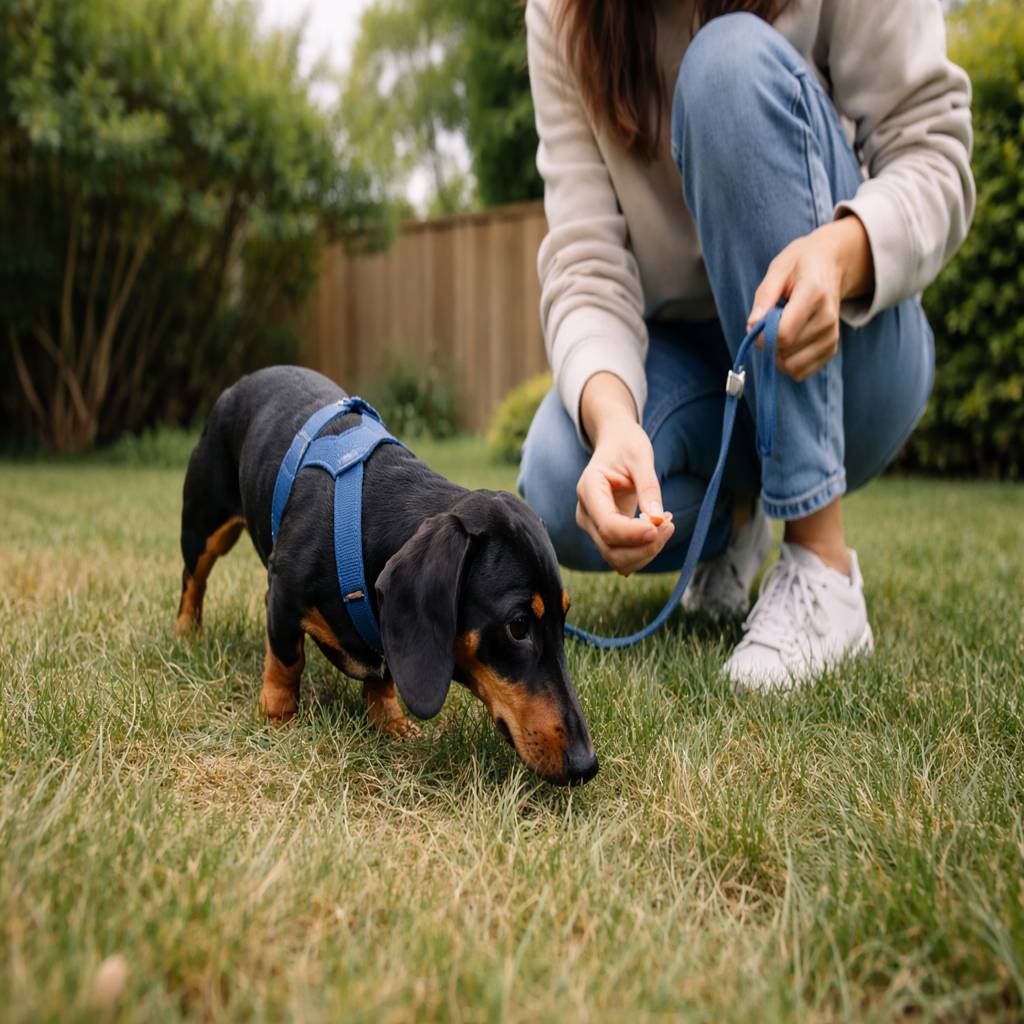
- Pick one potty spot outside (same patch of grass/area every time). Dogs love a routine and a feeling of safety. By taking him/her always to the same patch, he/she will be able to recognize the place he/she already been to the toilet.
- Take your Dachshund out on leash (yes—even if you have a yard). When a dog is not potty trained well, he/she can escape easily. The reason is quite simple. Аll those smells, animals, and new ‘’thing’’ your dog sees are like an explosion for his/her senses.
- Use one cue phrase (“Go potty” or “Do your business”) and say it once. Do not explain your dog what to do with ‘’too many words’’.
- Reward within 1–2 seconds after they finish (treat + happy praise). That’s how your Wiener dog will make a positive association with the activity.
- Potty breaks after every trigger: sleep, play, training, meals, and water chugging.
- Supervise indoors or confine (crate/playpen/leash tether to you).
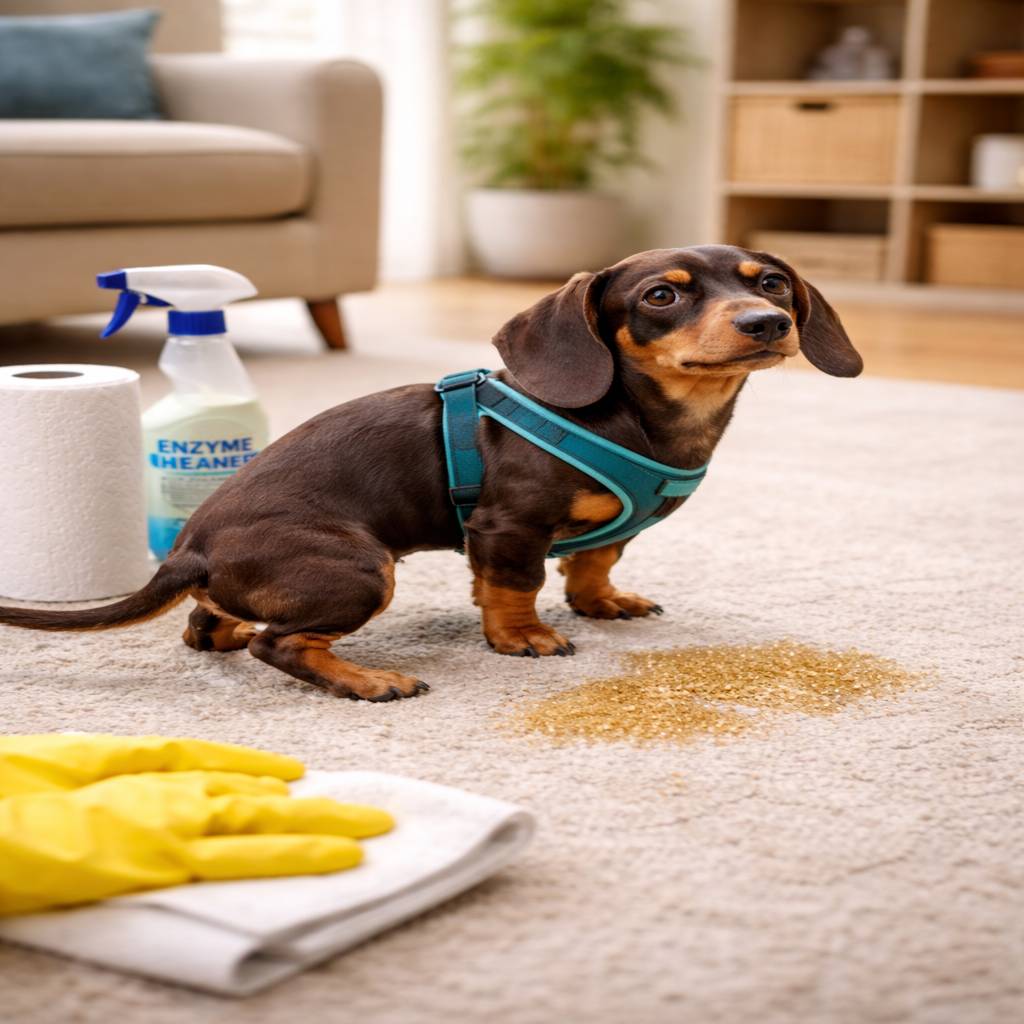
- Clean accidents with an enzymatic cleaner so the scent doesn’t invite repeats.
That’s the core of how to potty train a Dachshund: fewer opportunities to get it wrong, and a big payoff when they get it right.
Why Dachshunds Can Be Tricky to House Train (And Why That’s Normal)
Dachshunds aren’t “bad” at potty training—they’re just… Dachshunds.
- They were bred to follow scent and focus hard on what interests them (which is rarely your schedule).
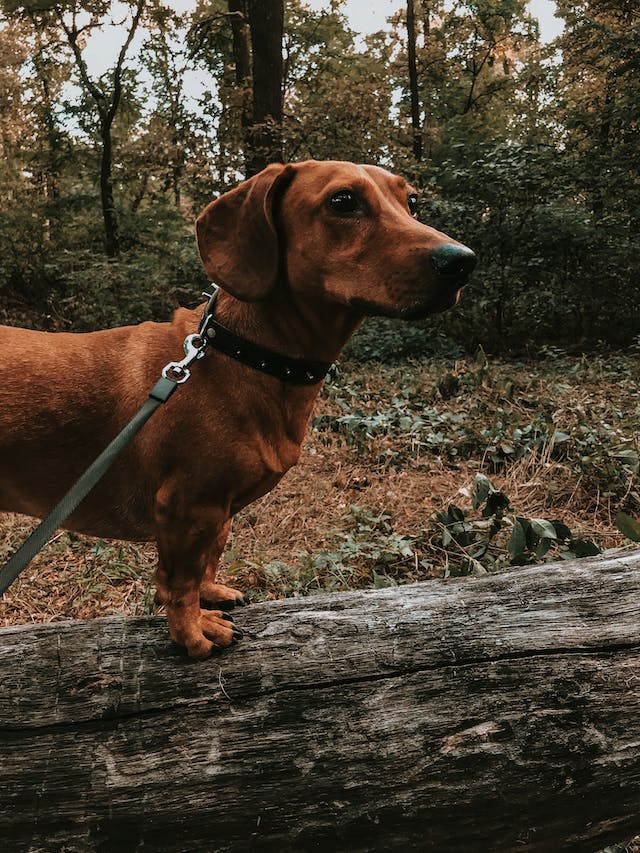
- Many doxies have strong opinions about rain, cold grass, wind, or wet pavement. This means that you can’t take your Doxie for a walk in extreme weather conditions. That’s why it’s always a good idea to have a waterproof raincoat, quality dog boots, and a cooling vest by your side.
- Puppies have limited bladder control, and even adult Dachshunds can struggle if left too long without a break.
The solution is not harsh corrections. Veterinary behavior guidance generally supports training that focuses on teaching desired behaviors and avoiding punishment-based methods, because punishment can increase fear and reduce learning quality.
How To Potty Train a Dachshund? Simple Steps To Follow
Step 1: Set Up Your Home So Accidents Are Hard to Happen
Before you start the “training,” set up the environment. This is what turns potty training from exhausting to manageable.
Your potty training toolkit
- A crate or playpen (or both)
- Enzymatic cleaner
- Training treats (tiny + high value)
- A leash + harness
- Paper towels + disposable gloves (you’ll thank me later)
- Optional: bell for door, potty log notes on your phone
The supervision rule (the one that changes everything)
For the first phase, your Dachshund is always in one of three states:
- Outside potty break
- Actively supervised (you can see them)
- Confined (crate/playpen)
If your doxie is wandering the house “free,” they’re basically being invited to practice accidents.
If you want a deeper crate routine (and how to avoid crate crying), use this guide: How to Crate Train a Dachshund. It pairs perfectly with potty training because the crate helps you predict when your dog needs to go.
Step 2: Choose a Potty Spot and Make It a Habit
Pick one outdoor spot and stick with it.
The leash matters
Going out on leash keeps potty time boring and predictable. It also prevents the classic Dachshund move: “I went outside to sniff, forgot to pee, came back in, peed immediately.”
Add a cue + a “reward marker”
- Cue: “Go potty”
- Marker: “Yes!” (or a clicker) the second they finish
- Reward: treat immediately after the marker
Reward-based training is not “spoiling.” It’s how you communicate clearly.
Step 3: Use a Schedule That Matches Your Dachshund’s Age
A schedule beats guessing. And guessing is how you end up cleaning the rug at 2 a.m.
How long can a puppy hold it?
A common guideline is the “month + 1 hour” rule for puppies (example: 3 months old ≈ about 4 hours max under ideal conditions). That’s a maximum, not a goal—especially during training.
Potty training schedule by age (starting point)
Use this as a baseline, then adjust based on your dog’s habits.
|
Age |
Potty breaks during the day |
Notes |
|
8–10 weeks |
every 30–60 minutes |
short wake windows, very frequent breaks |
|
10–12 weeks |
every 60–90 minutes |
add structure after meals + naps |
|
3–4 months |
every 2–3 hours |
use crate/playpen to prevent “wandering accidents” |
|
5–6 months |
every 3–4 hours |
many pups improve fast here |
|
Adult |
every 4–6 hours |
more often if anxious, elderly, or health issues |
Always take them out after these triggers
- waking up (nap or morning)
- meals (5–20 min after eating)
- play sessions (right after)
- training sessions (right after)
- big drinks of water
Step 4: Make Going Outside Worth It (Better Than Any Carpet)
Here’s the secret sauce: the reward has to beat the alternative.
Treat rules that speed up potty training
- Use “potty-only” treats for the first 1–2 weeks (something special).
- Treat after they finish, not while they’re circling.
- Keep treats tiny so you can reward often without upsetting their stomach.
If you’re consistent, your Dachshund starts thinking:
“Outside potty = jackpot.”
Step 5: The Indoor Plan (So You Don’t Lose Your Mind)
Indoor time is where most potty training fails—not because owners don’t care, but because the puppy gets too much freedom too soon.
Use one of these “management modes”
- Tether method: clip leash to your waist so your doxie stays near you.
- Playpen zone: great for work calls and cooking.
- Crate naps: predictable timing = predictable potty breaks.
Step 6: Night Potty Training (Without Turning Into a Zombie)
Night training is mostly about preventing rehearsal of accidents.
Night plan
- Last potty break: right before bed
- Keep the crate close to you so you hear movement
- If your puppy wakes and fusses, assume it’s a potty need first (quietly, no play)
Should you limit water at night?
For puppies, don’t restrict water harshly—just avoid big drinks right before bed. Your vet can advise if you’re unsure.
If your puppy keeps waking at night
Set one planned alarm for a quick potty trip (boring, quiet, treat, back to bed). Then gradually push it later over several nights.
Step 7: Apartment Potty Training and Pee Pads (Pros, Cons, and a Smart Transition)
Pee pads can help in high-rise life or extreme weather, but they can also teach: “soft indoor surfaces are toilets.” That’s why some dogs start targeting rugs.
If you use pads:
- Keep the pad in one consistent location
- Reward pad use the same way you would outside
- Start transitioning by moving the pad closer to the door, then outdoors (or to a balcony potty tray)
If your goal is 100% outdoor potty, use pads as a temporary tool—not the long-term plan.
The Most Common Dachshund Potty Training Problems (And Fixes That Work)
1) “My Dachshund won’t pee outside”
This is often weather discomfort, distraction, or uncertainty.
Fix
- leash + same spot every time
- stand still, boring posture, no walking loops until they go
- reward heavily when they finally do it
- consider a coat in cold months so your doxie is less focused on being miserable
2) “They pee as soon as we come back inside”
That usually means they didn’t actually empty outside.
Fix
- extend the potty break by 2–3 minutes, but keep it boring
- don’t go back inside until they pee (when possible)
- reward as if they just won an Oscar
3) “Regression: they were doing great, now accidents again”
Regression is normal during growth spurts, schedule changes, travel, or stress.
48-hour reset
- increase potty breaks
- reduce freedom indoors
- return to leash potty trips
- reward like it’s week one
If your Dachshund is also struggling with alone-time stress (which can trigger accidents), this is useful: Separation Anxiety in Dachshunds.
4) “They only potty when I’m not looking”
This can happen when a dog has been punished for accidents in the past or feels unsafe eliminating around people. Guidance from animal welfare organizations commonly recommends avoiding punishment for accidents and focusing on reinforcement and management instead.
Fix
- reward potty behavior more consistently
- supervise more closely
- confine when you can’t supervise
- keep your tone calm during cleanup
5) “Poop accidents but pee is fine”
Sometimes stool schedule isn’t consistent, or your dog needs more predictable meal timing.
Fix
- feed on a consistent schedule
- potty break 10–20 minutes after meals
- keep a simple log for 3 days and patterns usually appear
How to Potty Train an Adult Dachshund (Rescue-Friendly Plan)
Adult Dachshunds can learn fast—sometimes faster than puppies—because they have better bladder control. The main difference: you’re often replacing old habits.
Adult plan (simple and effective)
- Treat the adult dog like a puppy for 10–14 days:
- frequent breaks
- supervision/confinement
- leash potty trips
- immediate rewards
- Remove freedom until they’re consistent.
- If they’ve been marking indoors, belly bands can help as a temporary management tool (not a cure).
If the adult dog is anxious when left alone (and accidents happen during absences), this can help: Can Dachshunds Be Left Alone?
When Potty Accidents Might Be Medical (Not Training)
If your Dachshund suddenly starts having accidents, or strains to pee, don’t assume it’s “behavior.” UTIs and other issues can cause house-soiling.
Common UTI signs can include frequent small urinations, straining, accidents in the house, and blood in urine.
Call your vet if you notice:
- sudden increase in accidents after progress
- straining or discomfort
- blood in urine
- excessive licking of genitals
- strong urine odor + frequent squatting
How Long Does It Take to Potty Train a Dachshund?
Most Dachshunds show noticeable improvement within 1–3 weeks with consistent management and rewards. Reliable “no accidents” maturity often takes longer, especially for young puppies.
A better way to track progress:
- fewer accidents per week
- faster potty outside after waking
- clear signals (circling, sniffing, heading to the door)
- longer time between breaks without accidents
FAQ about potty training a Dachshund
Should I rub my dog’s nose in it?
No. It doesn’t teach “where to go.” It can teach fear, hiding accidents, and avoiding eliminating in front of you.
What’s the best way to clean accidents?
Use an enzymatic cleaner so the odor doesn’t encourage repeat marking.
Should I bell-train my Dachshund?
It can work well—just teach it intentionally: ring bell → go outside → reward. Don’t let it become “ring bell = playtime.”
Dachshund Potty Training: The Formula That Works
If you remember only one thing about how to potty train a Dachshund, make it this:
Predict breaks + prevent accidents + reward the right behavior immediately.
And if you want to build a full “training foundation” around this:
- Pair potty training with crate training.
- Address anxiety that can trigger accidents with separation anxiety tips.
If you’re prepping for a new puppy, bookmark your Dachshund puppy essentials checklist.






 Dachshund Jackets & Coats
 Dachshund Hoodies
 Dachshund Sweaters
 Dachshund Shirts
 Dachshund Life Jackets
 Dachshund Costumes
 Dachshund Pajamas

 Dachshund Harnesses
 Dachshund Collars


 Dachshund Backpacks


3 thoughts on “How to Potty Train a Dachshund: Schedule, Tips & Troubleshooting”