
How to treat and recognize allergies in dachshunds


If your dachshund can’t stop scratching or their ears seem constantly irritated, allergies might be the culprit. These small sausage dogs are more likely to have allergies than many other breeds due to genetics and body shape. Their long, low bodies keep them close to the ground, where pollen, grass, and other allergens linger. This makes them more likely to react to triggers in the environment.
Understanding how to recognize and treat allergies in your dachshund isn’t just about comfort. It’s about preventing secondary infections, reducing vet visits, and helping your brave little explorer enjoy life to the fullest. In this guide, we’ll cover everything you need to know: the types of allergies dachshunds face, how to spot the symptoms, when to seek veterinary help, and practical treatments you can use at home.

Why dachshunds are prone to allergies
Dachshunds have a genetic predisposition to skin sensitivities that makes them more susceptible to allergic reactions. According to veterinary research from the Merck Veterinary Manual, most allergies appear after six months of age. Most affected dogs show symptoms between one and three years old. This timing coincides with when their immune systems fully mature and begin reacting to environmental triggers.
Their physical build creates additional challenges. Unlike taller breeds, dachshunds’ bellies and chests stay close to the ground on walks. This increases contact with grass, pollen, and other outdoor allergens. Their long ears are adorable, but they can trap moisture and debris. This can cause yeast and bacteria to grow, especially during allergies.
Corn allergies are particularly common in dachshunds compared to other breeds. Many commercial dog foods use corn as a filler ingredient, which can trigger reactions in sensitive dogs. Understanding these breed-specific tendencies helps you stay vigilant and catch problems early.
For tips on maintaining healthy skin, read our article on avoiding dachshund skin problems.
Common types of allergies in dachshunds
Allergies in dachshunds generally fall into four main categories. Each type has distinct triggers and requires different management approaches.
Environmental allergies (atopic dermatitis)
Environmental allergies, also called atopic dermatitis, occur when your dachshund’s immune system overreacts to harmless substances in their surroundings. Common triggers include tree pollen, grass pollen, weed pollen like ragweed, mold spores, and dust mites.
These allergies can be seasonal or year-round. Seasonal allergies typically flare during spring and fall when pollen counts peak. Year-round allergies often stem from indoor triggers like dust mites or mold that persist regardless of the season.
Because dachshunds spend so much time close to the ground, they absorb environmental allergens through their skin and paws more readily than taller breeds. This makes environmental management particularly important for keeping symptoms under control.

Food allergies and sensitivities
Food allergies develop when your dachshund’s immune system identifies certain ingredients as threats. The most common culprits include beef, chicken, dairy products, eggs, corn, wheat, and soy. Corn allergies are especially prevalent in dachshunds, making it important to read food labels carefully.
It’s worth noting the difference between a food allergy and a food intolerance. True allergies trigger an immune response that can cause skin issues, digestive problems, or both. Intolerances typically affect only the digestive system without involving the immune system.
If you suspect food allergies, your vet will likely recommend an elimination diet trial lasting 8 to 12 weeks. During this period, your dog eats only a hypoallergenic or novel protein diet. If symptoms improve and return when regular food is reintroduced, you’ve identified the problem.
Learn more about choosing the right food in our guide to the best dog food for dachshunds.
Flea allergy dermatitis
Flea allergy dermatitis is one of the most common allergic conditions in dogs. It isn’t caused by the flea bite itself, but by an allergic reaction to proteins in flea saliva. For a sensitive dachshund, even a single flea bite can trigger intense itching and inflammation.
The most common location for flea allergy symptoms is the base of the tail and lower back. Affected dogs will bite and scratch vigorously at this area, often removing large patches of hair and creating open sores that can become infected.
Strict flea control is essential for managing this condition. Modern monthly flea preventives make it possible to maintain a flea-free environment, but you must treat all pets in the household and address any flea infestations in your home promptly.
Contact allergies
Contact allergies occur when your dachshund’s skin reacts to direct contact with certain substances. Common triggers include shampoos and grooming products, laundry detergents and fabric softeners, cleaning products, certain fabrics like wool or synthetic materials, and specific grasses or plants.
Symptoms typically appear only on areas that contacted the allergen, such as the belly, paws, or any spot where a collar or clothing touches the skin. Identifying contact allergens usually involves process of elimination: remove potential triggers one by one until symptoms improve.
Recognizing allergy symptoms in your dachshund
Catching allergy symptoms early makes treatment more effective and prevents secondary complications. Here’s what to watch for. The AKC’s guide to dog allergies provides additional context on recognizing these symptoms.
Skin and coat symptoms
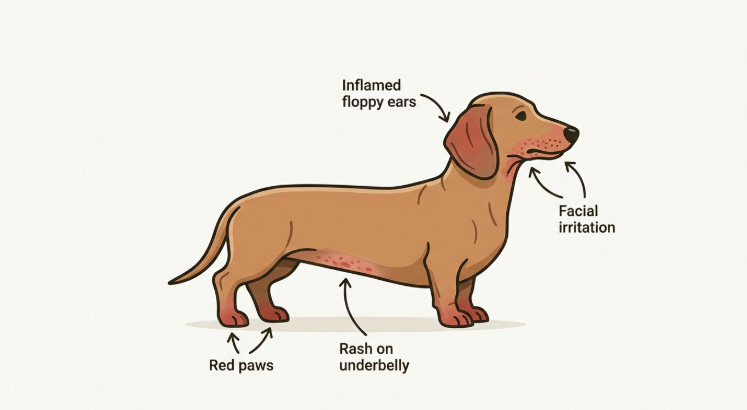
The most common sign of allergies is persistent itching. Your dachshund may scratch incessantly, bite at their skin, or rub against furniture for relief. Look for redness, inflamed patches, or rashes, particularly on the belly, paws, and ears. Hair loss often follows excessive scratching, creating bald patches or thinning coat.
Dry, flaky skin and dandruff can indicate allergic dermatitis. Some dogs develop darkened or thickened skin in chronically affected areas, sometimes called “elephant skin.” A strong odor from the skin or ears often signals secondary yeast or bacterial infections that require veterinary treatment.
Behavioral signs
Paw chewing and licking is a classic allergy symptom in dogs. You might notice your dachshund obsessively licking their paws, sometimes until the fur turns brown from saliva staining. Face rubbing against carpets or furniture and constant ear scratching are also common behaviors.
Restlessness and agitation often accompany allergic discomfort. Your normally relaxed dachshund might seem unable to settle down, pacing or shifting positions frequently. Some dogs become less active overall, avoiding play or exercise because they feel miserable.
Ear problems
Chronic ear infections are a frequent companion to allergies in dachshunds. Watch for head shaking, pawing at the ears, redness inside the ear canal, and unusual odor or discharge. The long, floppy ears of dachshunds trap moisture and debris, making them particularly susceptible to infections when allergies compromise the skin barrier.
Digestive and respiratory symptoms
Food allergies can cause vomiting, diarrhea, gas, or general digestive upset. These symptoms typically appear shortly after eating the offending ingredient. While less common, some dachshunds experience respiratory symptoms like sneezing, runny eyes, or coughing, particularly with environmental allergies.
When to seek emergency care
Most allergy symptoms, while uncomfortable, aren’t emergencies. However, seek immediate veterinary attention if you notice facial or throat swelling, difficulty breathing, sudden weakness or collapse, or severe vomiting and diarrhea. These signs could indicate anaphylaxis, a life-threatening allergic reaction that requires immediate treatment.
For more information about skin issues, read our article on dachshund skin bumps and solutions.
Diagnosing allergies: When to see your vet
While some mild allergy symptoms can be managed at home, professional diagnosis ensures you’re treating the right condition and not missing something more serious.
Home observation vs. professional diagnosis
Start by keeping a symptom diary. Note when symptoms appear, what your dachshund was doing or eating beforehand, and any seasonal patterns. This information helps your veterinarian identify potential triggers and narrow down the type of allergy.
However, many skin conditions look similar to allergies. Mites, fungal infections, and hormonal imbalances can all cause itching and skin problems. A veterinarian can rule out these conditions through physical examination and diagnostic testing.
Diagnostic methods
For suspected food allergies, your vet will recommend an elimination diet trial lasting 8 to 12 weeks. Your dog eats only a hypoallergenic diet containing proteins they’ve never encountered before. If symptoms resolve and return when regular food is reintroduced, you’ve confirmed a food allergy.
Environmental allergies can be identified through blood tests or intradermal skin testing. Blood tests measure antibody levels against specific allergens. Intradermal testing involves injecting small amounts of potential allergens into the skin and observing reactions. These tests help formulate immunotherapy treatments tailored to your dog’s specific sensitivities.
What to expect at the vet visit
Your veterinarian will start with a thorough physical examination, paying special attention to the skin, ears, and coat. They’ll ask about your dog’s history, symptom timeline, and any patterns you’ve noticed. Skin scrapings or ear swabs may be examined under a microscope to rule out mites or infections.
Be prepared for the diagnostic process to take time. Food trials require weeks of strict dietary control. Allergy testing may be scheduled as a separate appointment. Your patience during this process ensures accurate diagnosis and effective treatment.
For a broader overview of dachshund health concerns, visit our guide to dachshund health problems.
Treatment options for dachshund allergies
Managing allergies typically requires a multi-pronged approach that combines veterinary treatments with home care strategies.
Veterinary treatments
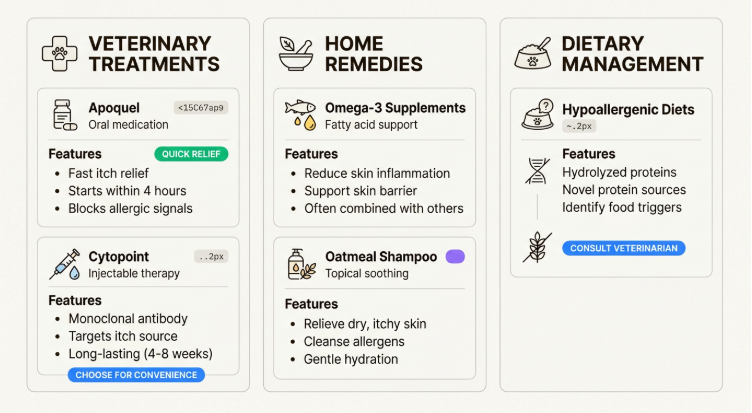
Anti-itch medications provide immediate relief from allergic itching. Apoquel and Cytopoint are commonly prescribed options that block itch signals effectively. Antihistamines like Benadryl or Zyrtec may help mild cases, though they’re less effective in dogs than humans. Always consult your vet before giving any medication, as dosages differ significantly from human recommendations.
Corticosteroids such as prednisone reduce inflammation and suppress the immune response causing allergic symptoms. While effective, long-term steroid use carries side effects, so veterinarians typically reserve these for severe flare-ups or short-term relief.
Immunotherapy involves customized allergy shots or oral drops formulated based on your dog’s specific sensitivities. This treatment gradually desensitizes the immune system to allergens. According to research from the Merck Veterinary Manual, approximately 50% of treated dogs see significant improvement, while another 25% require less steroid medication. However, improvement may take 6 to 12 months to become noticeable.
Antibiotics and antifungals treat secondary infections that develop when scratching breaks the skin barrier. Ear medications address chronic ear infections common in allergic dachshunds. These treatments resolve immediate problems but don’t address the underlying allergy.
Home remedies and management
Omega-3 fatty acid supplements support skin health and reduce inflammation. According to PetMD, fish oil supplements containing EPA and DHA take 4 to 6 weeks to show effects, so they’re best used as preventive care rather than emergency treatment. Quality supplements designed for dogs ensure proper dosing and purity.
Medicated and oatmeal shampoos soothe irritated skin and remove allergens from the coat. Look for products specifically formulated for dogs, as human shampoos disrupt the natural pH balance of canine skin. Bathing frequency depends on severity: weekly baths help some dogs, while others do better with less frequent washing to avoid drying out the skin.
Regular paw wiping after outdoor walks removes pollen and allergens before your dachshund can absorb them through licking or skin contact. Keep hypoallergenic grooming wipes by the door for quick cleanups.
Environmental control makes a significant difference. Air purifiers reduce indoor allergens, frequent vacuuming removes dust and pollen from carpets, and washing bedding in hot water eliminates dust mites. During high-pollen seasons, limit outdoor time during peak pollen hours, typically early morning and late afternoon.
Flea prevention is non-negotiable for any dog with allergies. Even if fleas aren’t the primary trigger, their bites can worsen existing skin conditions. Use veterinarian-recommended monthly preventives year-round.
Dietary management
For food allergies, strict avoidance of trigger ingredients is the only effective treatment. This means carefully reading every food label, including treats, flavored medications, and dental chews. Many owners find that limited ingredient diets or novel protein formulas (using proteins like duck, venison, or fish that your dog hasn’t eaten before) resolve food allergy symptoms completely.
Some dogs benefit from prescription hypoallergenic diets that use hydrolyzed proteins. These proteins are broken down into components too small to trigger an immune response. While more expensive than commercial foods, they provide a reliable option when elimination diets fail to identify specific triggers.
Learn more about optimal nutrition in our guide to the best diet for a dachshund.
Protective clothing as part of allergy management
One often overlooked strategy for managing environmental allergies is using protective clothing. At Dachshund Space, we understand that your long-bodied buddy needs specialized solutions.
Lightweight shirts and bodysuits create a physical barrier between your dachshund’s skin and environmental allergens. When your dog wears a protective layer during walks, pollen and grass contact is minimized. This is especially valuable during high-allergy seasons when outdoor exposure is unavoidable.
The key benefits of protective clothing include:
- Reduced allergen contact: A barrier layer prevents direct skin exposure to grass, pollen, and irritants
- Easy cleanup: Simply remove and wash the garment after outdoor time instead of trying to bathe your dog frequently
- Targeted protection: Focus coverage on the belly, chest, and legs where dachshunds have the most ground contact
- Comfort: Modern dog apparel is designed for movement and breathability
For best results, choose lightweight, breathable fabrics that won’t overheat your dachshund. Look for options specifically designed for the dachshund body type that accommodate their long backs and deep chests without restricting movement.
Browse our selection of dachshund shirts designed to fit your long-bodied buddy comfortably. We also offer options for miniature dachshunds and a variety of dachshund coats for different weather conditions.
Preventing allergy flare-ups
Prevention plays a crucial role in keeping your dachshund comfortable and reducing the need for medications.
Regular grooming removes allergens from the coat before they can irritate the skin. Brush your dachshund several times weekly to distribute natural oils and remove debris. For dogs with environmental allergies, a quick wipe-down with a damp cloth after outdoor time removes surface allergens.
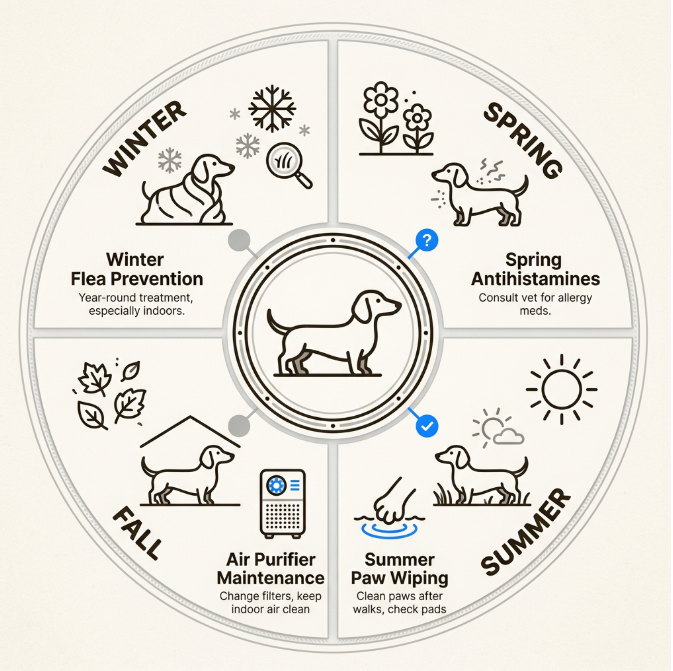
Seasonal preparation helps you stay ahead of predictable allergy periods. Start preventive treatments like antihistamines or omega-3 supplements before allergy season begins. Monitor pollen forecasts and adjust outdoor activities accordingly. Some owners find that scheduling walks for times when pollen counts are lower, such as after rain, reduces symptom severity.
Home environment management creates an allergen-minimized sanctuary. Use HEPA air filters, wash bedding weekly in hot water, and vacuum frequently with a HEPA-filtered vacuum cleaner. Consider hard flooring instead of carpet in areas where your dachshund spends the most time, as carpets trap allergens.
Consistent flea control prevents the additional burden of flea allergy dermatitis. Even one flea bite can trigger a reaction in sensitive dogs, making prevention far easier than treatment.
For shampoo recommendations, check out our guide to the best shampoo for dachshunds.
Keep your dachshund comfortable and allergy-free
Allergies in dachshunds can be frustrating, but they’re manageable with the right approach. The key is combining veterinary care with consistent home management. Work with your veterinarian to identify specific triggers, follow through with recommended treatments, and make environmental adjustments that reduce your dog’s exposure to allergens.
Remember that allergies are chronic conditions, not one-time problems. Most dachshunds with allergies require lifelong management, but that doesn’t mean they can’t live happy, comfortable lives. Early intervention prevents secondary infections and complications, keeping your dog healthier overall.
At Dachshund Space, we’re committed to supporting your long-bodied buddy’s wellbeing. From protective clothing that reduces allergen exposure to health care products designed specifically for dachshunds, we’re here to help you keep your little sausage dog comfortable, stylish, and ready for adventure.
If you suspect your dachshund has allergies, don’t wait to seek help. The sooner you identify and address the problem, the sooner your brave little explorer can get back to enjoying life without constant itching and discomfort.
Frequently Asked Questions
What are the most common signs that my dachshund has allergies?
The most common signs include excessive scratching or licking, particularly of the paws, red or inflamed skin, chronic ear infections, hair loss, and digestive issues like vomiting or diarrhea. Dachshunds with environmental allergies often show symptoms seasonally, while food allergies cause year-round problems.
How can I tell if my dachshund has food allergies or environmental allergies?
Food allergies typically cause year-round symptoms that don’t vary with seasons, often including digestive upset alongside skin issues. Environmental allergies usually flare during specific seasons and primarily affect the skin, ears, and paws. Your veterinarian can help distinguish between the two through elimination diet trials and allergy testing.
When should I take my dachshund to the vet for allergy symptoms?
Schedule a vet visit if symptoms persist more than a few days, if your dog seems uncomfortable or distressed, if you notice signs of infection (odor, discharge, or open sores), or if home remedies aren’t providing relief. Seek emergency care immediately for facial swelling, difficulty breathing, or collapse.
Can I give my dachshund human allergy medication like Benadryl?
Some human antihistamines are safe for dogs, but dosages differ significantly from human recommendations. Never give medication without consulting your veterinarian first. Some human medications, particularly decongestants containing pseudoephedrine, can be dangerous or fatal to dogs.
Will my dachshund outgrow their allergies?
Unfortunately, allergies typically worsen with age rather than improving. Some puppies may seem to outgrow mild sensitivities as their immune systems mature, but most dogs with established allergies require lifelong management. Early intervention and consistent treatment help prevent symptoms from becoming more severe over time.
How much does allergy testing for dogs typically cost?
Allergy testing costs vary by region and testing method. Blood tests generally range from $200 to $400, while intradermal skin testing performed by a veterinary dermatologist can cost $500 to $1,000 or more. Immunotherapy treatments, if recommended, add ongoing costs. Discuss options with your veterinarian to determine the most cost-effective approach for your situation.
Are there natural remedies that actually work for dachshund allergies?
Omega-3 fatty acid supplements have solid evidence supporting their effectiveness for skin health and inflammation reduction. Regular bathing with oatmeal shampoo provides temporary relief for many dogs. Local honey is sometimes recommended for seasonal allergies, though clinical evidence is limited. Always talk about natural remedies with your veterinarian. Some can affect medicines or hide symptoms that need professional care.











 Dachshund Jackets & Coats
 Dachshund Hoodies
 Dachshund Sweaters
 Dachshund Shirts
 Dachshund Life Jackets
 Dachshund Costumes
 Dachshund Pajamas

 Dachshund Harnesses
 Dachshund Collars


 Dachshund Backpacks


12 thoughts on “How to treat and recognize allergies in dachshunds”